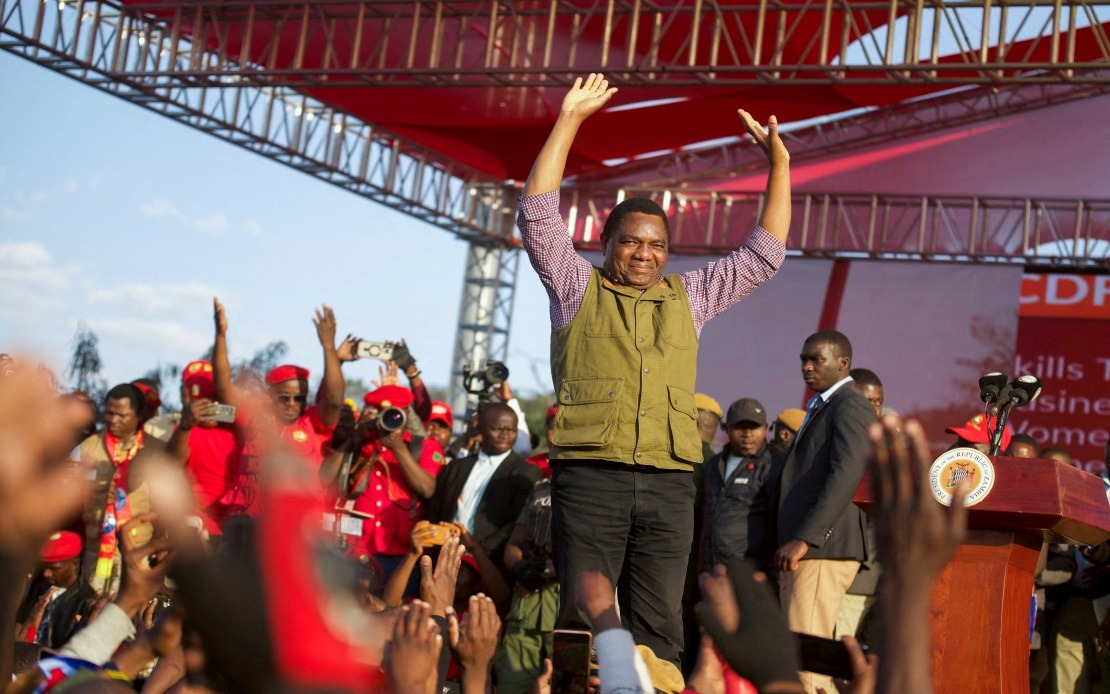
Zambian President Hakainde Hichilema has secured a decisive return to office, winning re-election with more than 2.9 million votes according to results announced by the Electoral Commission of Zambia in the early hours of Tuesday. The 64-year-old leader's victory represents a clear endorsement from voters, establishing him for a second consecutive presidential term following the election held last Thursday.
Hichilema's margin of victory far exceeds the constitutional threshold of 50 per cent plus one vote required to win the presidency outright. This commanding performance eliminates any possibility of a runoff election and confirms the solidity of his electoral mandate. The Electoral Commission chairperson, Mwanagala Zaloumis, confirmed the result at the national election centre in Lusaka, noting that the remaining votes from selected polling stations across five of the nation's 226 constituencies would not alter the election outcome in any meaningful way.
The president's main challenger, Brian Mundubile of the National Restoration Party for Unity and Progress (NRPUP), garnered 1.8 million votes but fell substantially short of Hichilema's tally. This significant gap underscores the breadth of support Hichilema has maintained since his initial election. The scale of the differential suggests that Hichilema's economic and governance agenda has retained substantial backing among Zambian voters, despite the typical challenges faced by incumbent leaders.
In a statement released through Facebook shortly after his victory was formally announced, Hichilema expressed gratitude to Zambian citizens for their continued confidence in his leadership. His message emphasised humility and a commitment to serving the nation, framing his re-election as a validation of his administration's direction. The tone struck by the president-elect reflects an acknowledgment of the mandate granted by voters and sets expectations for his incoming second term.
Celebrations erupted across Lusaka well before the official announcement, with residents from diverse backgrounds gathering in the streets despite the early morning hours. The spontaneous outpouring of public enthusiasm demonstrates the energy surrounding Hichilema's campaign and the relief some Zambians felt regarding the election outcome. The sustained celebrations after the result was declared highlighted the emotional significance many attributed to the vote.
Collins Maoma, the national chairperson of Hichilema's United Party for National Development (UPND), addressed reporters following the official declaration of results. Maoma called on the president to maintain the leadership qualities that have evidently resonated with voters, while emphasising that the Zambian electorate has once again demonstrated faith in the governing party's direction. His remarks reinforced the UPND's interpretation of the election as vindication of its policy record.
For Malaysia and other Southeast Asian democracies observing regional political trends, Hichilema's re-election carries relevance in demonstrating how African incumbent leaders can secure voter confidence in competitive electoral environments. Zambia's electoral process, despite some outstanding results still being tallied from a small number of constituencies, proceeded with sufficient transparency to allow timely announcement of the victor. The absence of widespread electoral dispute suggests that the voting process maintained institutional credibility.
The UPND's continued control of Zambia's presidency positions the party to pursue continuity in its economic and governance initiatives. Hichilema's administration has pursued policies aimed at debt restructuring and economic stabilisation following years of fiscal strain. His re-election mandate provides political breathing room for sustaining these initiatives without the immediate prospect of an incoming opposition government reversing course.
Hichilema's victory also reflects patterns of incumbent resilience in Southern African politics, where sitting presidents have often retained office when they maintain reasonable economic performance and institutional legitimacy. The Zambian result occurs within a regional context where electoral outcomes have sometimes produced surprise results, making Hichilema's decisive win noteworthy for its clarity.
The second term ahead for Hichilema will test whether his administration can translate electoral endorsement into tangible improvements in living standards and infrastructure development. Zambians will be watching closely to see whether the policy priorities outlined during the campaign translate into concrete achievements. The coming months will reveal how effectively the UPND leverages its renewed mandate to address persistent economic challenges.

