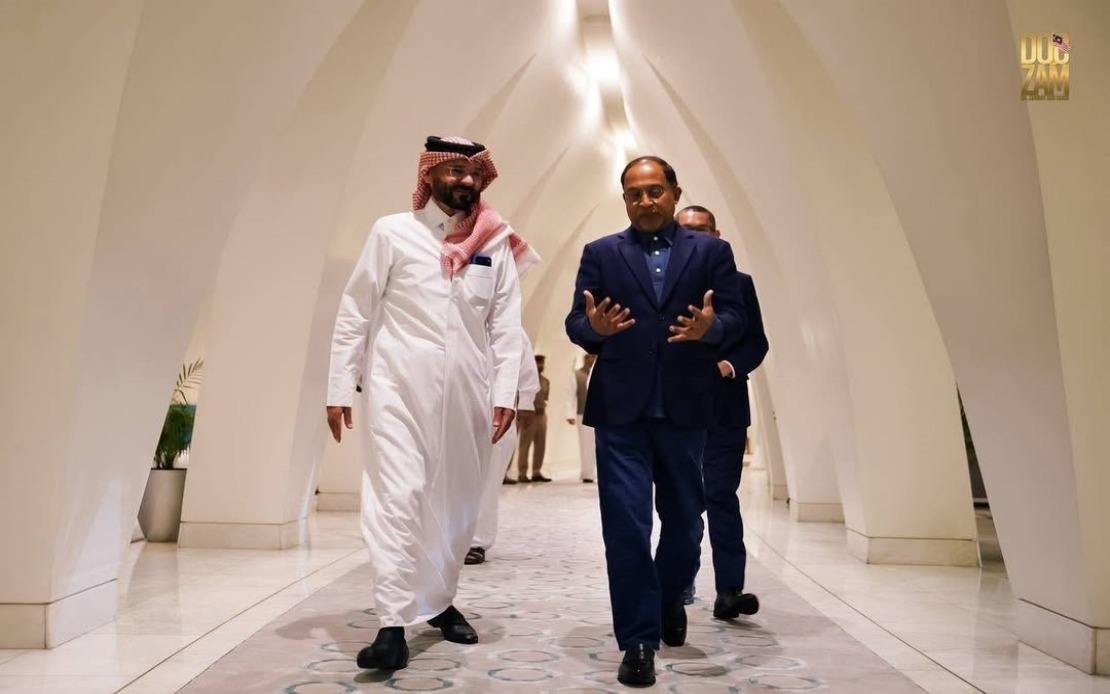
Malaysia's Higher Education Minister Datuk Seri Dr Zambry Abd Kadir touched down in Doha early Tuesday morning to represent the nation at state ceremonies honouring the death of Qatar's Father Amir, Sheikh Hamad bin Khalifa Al Thani. The visiting delegation signifies Malaysia's commitment to honouring longstanding diplomatic ties with the Gulf state during this period of national mourning in Doha.
Zambry announced his diplomatic mission through social media, stating that he would present his condolences to the current Amir, Sheikh Tamim bin Hamad Al Thani, during a scheduled audience at Lusail Palace on the same day. The minister conveyed Malaysia's formal expressions of sympathy to the leadership and populace of Qatar for their loss, underscoring the bilateral relationship between the two nations.
Sheikh Hamad bin Khalifa Al Thani, who steered Qatar through a transformative period of its modern history, succumbed on Sunday morning at the age of 74, according to the official Amiri Diwan announcement. His passing marks the end of an era for the nation, closing a chapter that witnessed Qatar's emergence as a significant regional and global player.
The deceased leader held the position of Amir for nearly two decades, from 1995 until 2013, when he voluntarily transferred executive authority to his son, the incumbent Sheikh Tamim. This transition was regarded as a significant moment in the Gulf, demonstrating a planned succession that contrasted with succession patterns in some neighbouring states. During his tenure, Sheikh Hamad implemented sweeping reforms and positioned Qatar on the world stage through major infrastructure projects and strategic investments.
In response to Sheikh Hamad's death, Qatar's government declared a four-day period of national mourning commencing Sunday, July 12. Throughout this observance, all ministerial offices, government organisations and state institutions across the country will remain shuttered. This extended closure reflects the magnitude of the occasion and allows the nation time for collective remembrance and ceremonial observances honouring the former leader's contributions.
The gesture of sending a high-ranking ministerial representative demonstrates Malaysia's diplomatic protocol and respect for the Qatari royal family. Ministerial delegations of this nature typically serve multiple purposes—expressing formal condolences, strengthening bilateral relations during significant moments, and ensuring Malaysia's voice is heard within regional networks. For Malaysian readers, such representations underscore how the nation maintains its position within the broader Gulf cooperation framework and values these Middle Eastern partnerships.
Sheikh Hamad's reign fundamentally reshaped Qatar's trajectory. Prior to his leadership, the nation was relatively modest in global influence. His vision and policies catalysed rapid modernisation, diversification of the economy beyond hydrocarbon dependence, and strategic positioning in international affairs. Major initiatives including the establishment of media networks, hosting international sporting events, and ambitious infrastructure development became hallmarks of his era.
The succession from Sheikh Hamad to Sheikh Tamim occurred during a significant geopolitical period in the Gulf region. The handover of power in 2013 was presented as part of a broader vision for continuity and stability within the emirate. Sheikh Tamim has continued many of his father's strategic initiatives while navigating contemporary regional challenges including diplomatic disputes and evolving global relationships.
For Malaysia and other Southeast Asian nations, maintaining strong ties with Gulf states like Qatar remains strategically important. Qatar hosts significant numbers of Malaysian workers, serves as an investment destination, and represents a source of energy resources. The bilateral relationship extends across trade, education, and people-to-people exchanges. Zambry's presence at the funeral ceremonies signals Malaysia's recognition of this importance and commitment to sustaining these connections across different political administrations.
The loss of Sheikh Hamad also carries symbolic weight across the Islamic world and the broader international community. His leadership style, legacy of development, and role in regional diplomacy will likely be subjects of extensive analysis and reflection. For Malaysia, which shares both Islamic heritage and developmental aspirations with Qatar, the moment provides an opportunity to reflect on shared values and continued cooperation under the new Amir's leadership.
As the four-day mourning period unfolds in Qatar, diplomatic missions from around the world, including Malaysia's representation through Zambry, will participate in various state ceremonies and private audiences. These formal occasions serve as venues for reinforcing international relationships and demonstrating solidarity with the Qatari people during their time of national reflection and commemoration.

