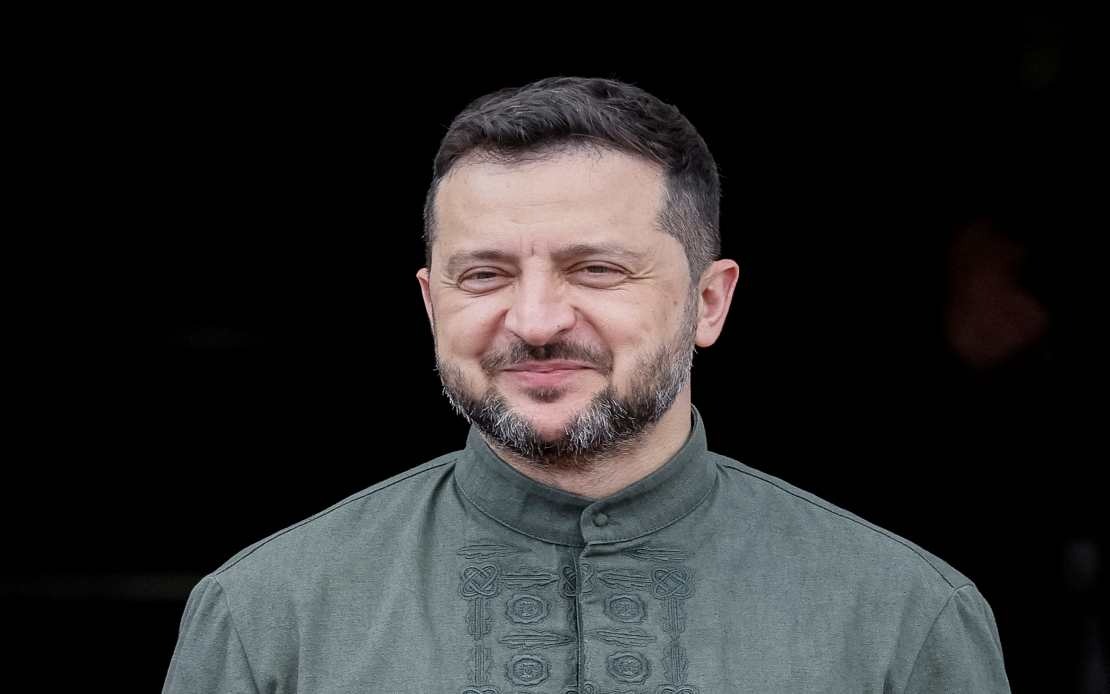
Ukrainian President Volodymyr Zelensky has signed into law a controversial plan to establish a national pantheon honouring historical figures central to Ukrainian national identity, an action that threatens to deepen a diplomatic rift with Poland, one of Kyiv's most steadfast allies in its struggle against Russian invasion. The legislation, which passed through parliament in July, has reignited historical grievances between the two neighbouring nations over the portrayal of wartime figures whose legacies remain deeply contested across the region.
The pantheon will be constructed in Kyiv and serve as both a memorial site and burial ground for Ukrainian leaders and historical figures dating back to the medieval Kyivan Rus period. However, the primary source of international tension stems from its intended inclusion of members of the Ukrainian Insurgent Army, known by its Ukrainian acronym UPA, an underground nationalist movement that operated during World War II. Reaffirming his commitment to the project, Zelensky declared before an assembly of war veterans on Saturday that "the Ukrainian pantheon will definitely be built, and only Ukrainians will decide who is a hero for us," signalling that external pressure would not alter Kyiv's course.
Poland's historical grievance centres on documented mass atrocities perpetrated by UPA elements, particularly in the Volyn region of what is now western Ukraine during the German occupation. Historical records indicate that tens of thousands of Poles and Jews were systematically murdered in pogroms that constitute some of the era's most brutal ethnic violence. From Warsaw's perspective, elevating such figures to national hero status represents a whitewashing of genocide rather than an honest reckoning with historical responsibility—a position that has found resonance among Holocaust scholars and survivors' organisations worldwide.
The timing of Zelensky's signature compounds an already fractured relationship. Just weeks earlier, in June, the Ukrainian government had awarded a military unit the honorary designation "Heroes of the UPA," prompting Poland's government to take the unprecedented step of withdrawing the Order of the White Eagle, its highest state decoration, which had been conferred upon Zelensky in recognition of his leadership. The escalating tit-for-tat exchanges have extended beyond executive action, with several Ukrainian and Polish politicians returning honours and decorations awarded by the neighbouring country, transforming historical grievance into performative diplomatic theatre.
The Polish government's initial response following the parliament's July vote came through President Karol Nawrocki's office, which delivered a pointed message: from Poland's standpoint, honouring individuals convicted of genocide contradicted Ukraine's stated aspiration to align itself with Western values and institutions. This framing is significant, positioning Poland as the guardian of liberal democratic norms while characterising Ukrainian historical revisionism as fundamentally incompatible with European integration—a subtle but powerful rhetorical manoeuvre given Ukraine's desperate need for Western support during wartime.
For Southeast Asian observers, this episode illuminates the complexities inherent in managing historical memory within multi-ethnic nation-states undergoing existential crises. The Ukrainian leadership faces genuine pressure to mobilise nationalist sentiment and historical narratives in sustaining public morale against Russian aggression, yet doing so through figures whose legacies carry enormous emotional weight for neighbouring populations creates diplomatic costs that extend well beyond bilateral relations. The standoff reflects how contested history becomes a tool of statecraft, particularly when nations require international solidarity for survival.
Ukraine's position—that it alone possesses the authority to define its national heroes—carries intuitive appeal in an age celebrating national sovereignty. However, this sovereignty argument collides with Poland's equally valid concern about historical memory. For Poles, particularly those whose families were decimated in Volyn, the Ukrainian decision to monumentalise UPA fighters represents not merely a different interpretation of history but an active negation of their suffering. This tension between national self-determination and regional historical responsibility remains unresolved across Central and Eastern Europe, where multiple nations harbour competing narratives about overlapping territories and populations.
The broader context matters considerably. Poland remains among Ukraine's most crucial allies, having provided weapons, humanitarian assistance, and staunch diplomatic support throughout Russia's invasion. Warsaw has absorbed millions of Ukrainian refugees and consistently advocated for Kyiv within European and NATO forums. For Zelensky to proceed with legislation that he must know wounds Polish national sentiment suggests either that internal Ukrainian political pressures regarding national identity supersede alliance management, or that Kyiv calculates Poland's commitment to Ukrainian survival as too fundamental to genuinely fracture over historical grievances.
Regional implications extend further still. The deterioration in Ukrainian-Polish relations potentially weakens the Eastern European bulwark against Russian influence at a moment when coordinated Western resolve remains crucial. Hungary's already ambivalent stance toward Ukrainian interests could be emboldened by evidence of fractures among Ukraine's supporters. Furthermore, the episode demonstrates how unresolved World War II legacies continue destabilising contemporary geopolitics, a cautionary tale for post-conflict societies elsewhere grappling with memorialisation and reconciliation.
For Malaysia and other Southeast Asian nations navigating complex historical memories across plural societies, the Ukrainian-Polish dispute offers uncomfortable parallels. Communities within single nations often harbour fundamentally different relationships to shared history, and attempts to impose singular national narratives risk alienating constituencies whose ancestors experienced those events differently. The pantheon controversy illustrates how even defensive, survival-driven nationalism can generate international friction when it refuses to acknowledge the historical suffering of others.
Zelensky's signature on the pantheon legislation signals that Kyiv will not recalibrate its historical positioning to accommodate Polish sensibilities, at least not in the immediate term. Whether this represents confidence that the alliance will weather the storm or miscalculation about Poland's patience remains uncertain. What is clear is that Ukraine's urgent need to construct coherent nationalist identity during wartime has collided with Poland's equally legitimate requirement that neighbouring nations acknowledge rather than glorify the suffering inflicted upon Polish citizens.

