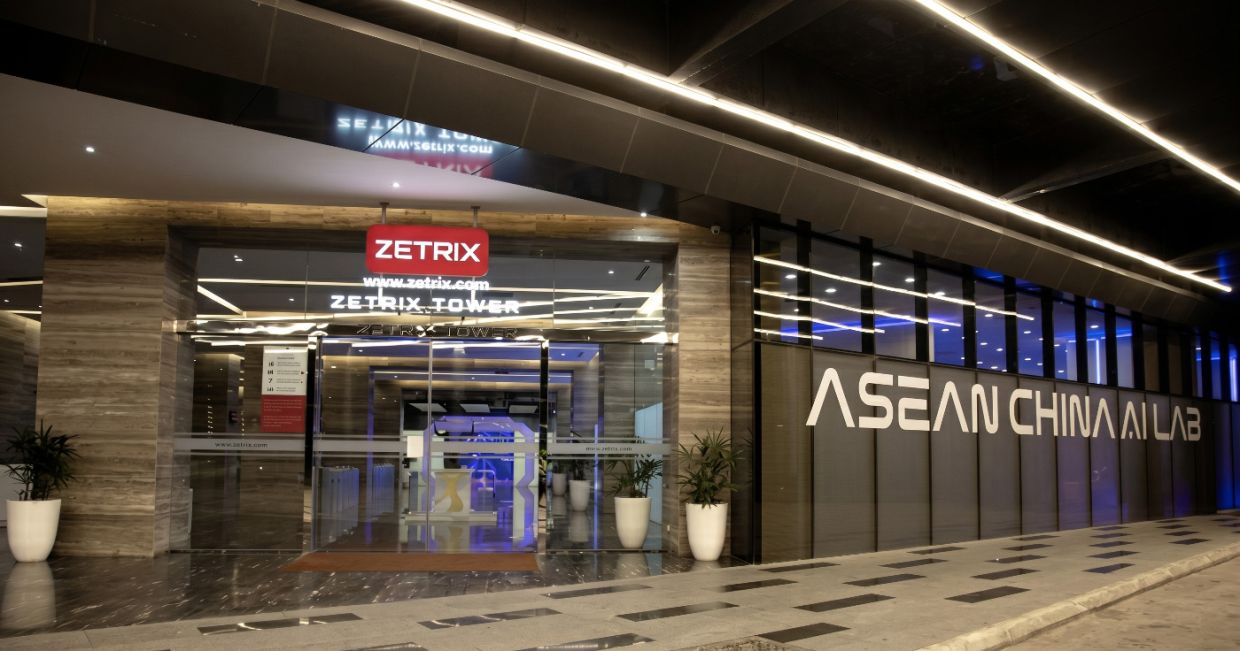
Zetrix AI Bhd moved swiftly to contain damage to investor confidence after its share price suffered a catastrophic fall on Friday, issuing a categorical denial that the company has any connection whatsoever to criminal graft allegations facing a prominent former government minister. The technology firm's statement came in response to an unusual market activity inquiry from Bursa Malaysia Securities Bhd, triggering a formal clarification that addresses what the company characterises as unfounded rumours linking its operations to the legal troubles of Datuk Seri M. Saravanan, who held the human resources portfolio.
Datak Seri M. Saravanan faces three corruption charges lodged at the Sessions Court on August 28, with allegations centring on his official approval of foreign worker quotas during his ministerial tenure. The nature of these charges and the scrutiny attached to his name appear to have triggered investor panic, creating a cascade of selling pressure that devastated the stock's valuation. The connection between the minister's legal predicament and Zetrix AI's business operations remains unclear to the broader market, suggesting that speculation rather than substantive corporate linkage drove the trading frenzy.
In its exchange filing, Zetrix AI management explicitly stated that the company is neither implicated in nor associated with Saravanan's charges, emphasising that no factual foundation exists for market rumours suggesting otherwise. This categorical disavowal represents standard corporate procedure when unfounded speculation threatens shareholder value, yet the company's need to issue such a statement underscores how quickly reputational contagion can spread through equity markets, particularly when public figures face criminal allegations. The company suggested that trading activity reflected concern among investors who may have misunderstood or misinterpreted information circulating regarding the minister's legal case.
The scale of Friday's sell-off demonstrated the speed at which technology stocks—particularly those with smaller market capitalisations or less established track records—can experience valuation destruction when negative sentiment gains traction. Zetrix AI's shares plummeted by 30 sen, representing a devastating 50.4% decline, settling at 29.5 sen as approximately 1.05 billion shares changed hands. The extraordinary volume suggests panic-driven liquidation rather than measured profit-taking, indicating that investors viewed the rumoured connection as materially significant to their investment thesis, regardless of whether factual basis existed for such concerns.
Following consultations with its board of directors, principal shareholders, and other stakeholders with material knowledge of the company's affairs, Zetrix AI confirmed the absence of any undisclosed corporate developments that might legitimately explain the market turbulence. The company stated it was unaware of any negotiations, discussions, or arrangements at any stage that could account for the unusual trading activity, effectively ruling out scenarios where Saravanan held a hidden stake or exercised material influence over company operations. This comprehensive sweep of internal inquiries was designed to provide maximum reassurance that the stock's collapse reflected external speculation rather than genuine insider knowledge of problematic corporate relationships.
The distinction between reputational contagion and substantive corporate exposure carries particular weight in Malaysia's business environment, where government connections often feature prominently in investor calculations. Zetrix AI's predicament illustrates the vulnerabilities faced by smaller-capitalisation companies when senior political figures become embroiled in high-profile legal proceedings. Even tenuous or entirely imaginary connections to controversial politicians can trigger severe market penalties, particularly in technology sectors where retail investors may dominate trading flows and information asymmetries remain pronounced.
Datak Seri M. Saravanan's corruption charges specifically address the approval of foreign worker quotas, a policy domain that affects multiple Malaysian industries dependent on migrant labour, including manufacturing, construction, and hospitality sectors. If the former minister faces conviction on charges relating to quota administration, the implications could extend to businesses that benefited from quota allocations during his tenure. However, Zetrix AI's denial suggests the company operates in the technology space rather than sectors with direct dependency on foreign worker programmes, making any operational connection to the minister's alleged misconduct implausible from a fundamental business perspective.
The company's statement that it was unaware of any other possible explanations for the unusual activity reflects the frustration that technology firms and their management often experience when caught in the crossfire of unrelated political scandals. Market efficiency theory suggests that share prices should reflect only information genuinely material to corporate earnings potential and financial position. Yet behavioural finance research consistently demonstrates that investor psychology proves susceptible to association, particularly when narratives prove compelling regardless of logical foundation. Zetrix AI's inability to identify any concrete basis for the trading spike highlights how reputational contamination operates independently of fundamental corporate factors.
The severity of Friday's decline raises questions about stock liquidity and the resilience of Zetrix AI's investor base. When technology stocks suffer 50% single-day losses, recovery often proves difficult even after management successfully rebuts negative speculation. Investors who purchase shares at depressed valuations following panic-driven sell-offs frequently find that sentiment remains negative for extended periods, particularly if the company maintains a low profile or fails to generate positive news flow. Zetrix AI's challenge now involves not merely clearing the air regarding the minister's charges, but actively rebuilding confidence among a market apparently prone to connecting dots between its operations and external political developments.
The incident underscores vulnerabilities in Malaysian capital markets regarding information flow and investor decision-making processes. Technology companies listed on Bursa Malaysia often lack the visibility and analyst coverage enjoyed by larger-capitalisation firms, leaving retail investors more susceptible to speculation and rumour. The absence of sophisticated fundamental analysis among certain investor segments means that reputational contagion can persist even after management issues categorical denials. Going forward, Zetrix AI may need to pursue sustained investor relations efforts to ensure that market participants correctly understand the company's business model, operations, and independence from political developments unrelated to its core activities.

