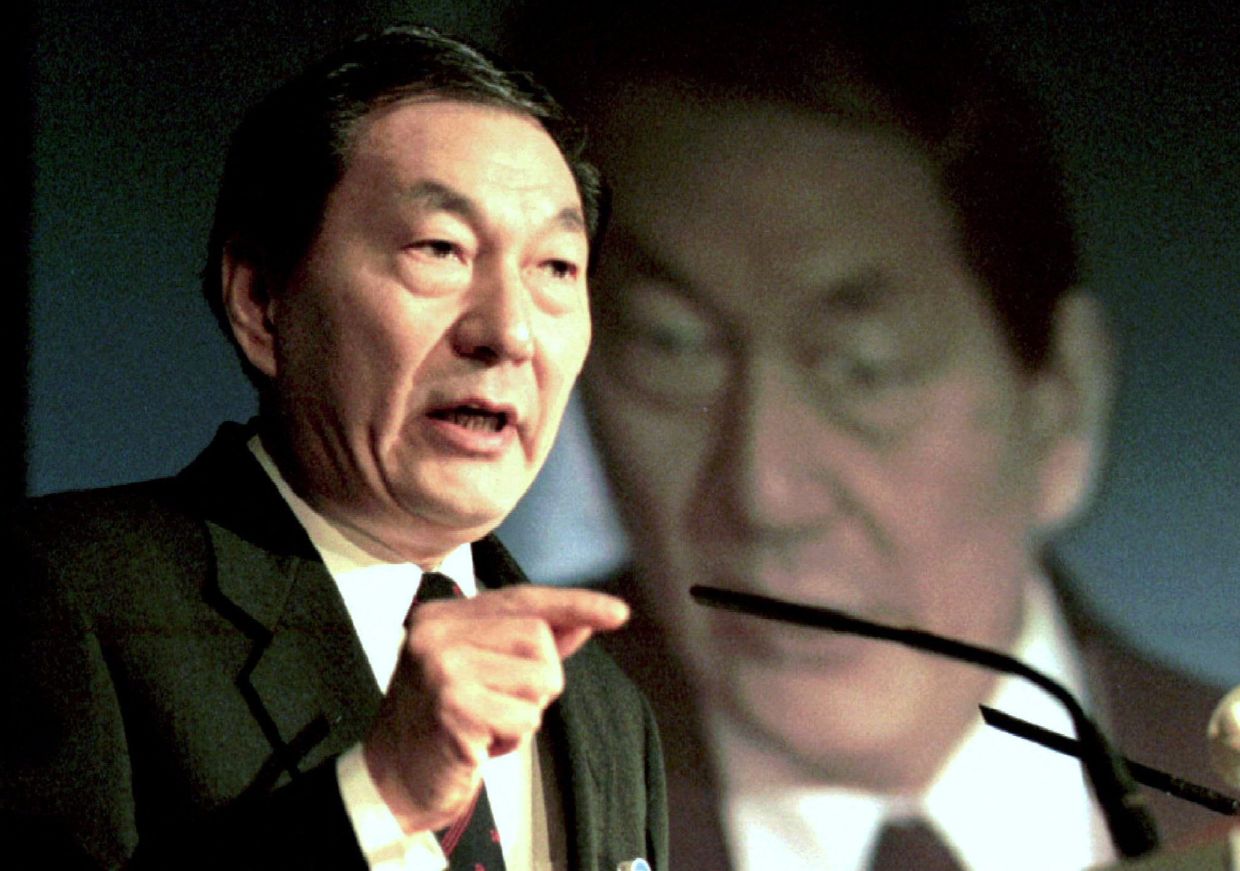
Zhu Rongji, the transformative premier who fundamentally restructured China's state-owned sector and shepherded the nation's historic entry into the World Trade Organization, has passed away in Beijing at the age of 98. The senior statesman died on Wednesday, August 12, following treatment for an undisclosed illness, according to official state media Xinhua News Agency. His departure marks the end of an era for a generation of Chinese leaders who embraced market-oriented economic experimentation during a critical period of national development.
During his tenure as premier from 1998 to 2003, and more broadly as China's chief economic architect through the 1990s, Zhu orchestrated sweeping reforms that dismantled large segments of the inefficient state enterprise system. His aggressive restructuring programme witnessed the closure of tens of thousands of underperforming operations across telecommunications, banking, petroleum production, and manufacturing, fundamentally altering the employment landscape. These measures, though economically necessary by most assessments, displaced approximately 30 to 40 million workers—a wrenching social adjustment that tested the country's administrative capacity and social stability mechanisms during a period of rapid change.
Zhu's willingness to embrace painful short-term measures for longer-term structural gains distinguished his approach from many contemporaries. As China's senior economic policymaker, he guided the nation through multiple crises, including the catastrophic 1997 Asian financial turmoil and persistent double-digit inflation that threatened macroeconomic stability. His decisions to recapitalise the banking system by establishing asset-management companies in 1999, which absorbed 1.4 trillion yuan in non-performing loans from the country's four largest banks, proved instrumental in preserving financial system integrity. These interventions enabled Chinese banks to eventually list publicly beginning in 2005 and gradually adopt market-oriented practices—achievements that would have been impossible without the painful debt-clearing mechanisms he championed.
The contrast between Zhu's market-liberalising philosophy and subsequent policy directions reflects fundamental tensions within China's leadership regarding the optimal role of state control. Current President Xi Jinping has explicitly advocated for a "stronger, better, and bigger" state-controlled economy to serve what Beijing describes as strategic national interests. This represents a marked philosophical departure from Zhu's pragmatic embrace of private-sector dynamism as a growth engine, signalling competing visions about China's economic future that resonate with debate across Southeast Asia regarding optimal state-market balances.
Zhu's pivotal role in engineering China's 2001 accession to the World Trade Organization cannot be overstated for regional economics. His October 1997 meeting with European Union Trade Commissioner Pascal Lamy proved crucial in breaking negotiating deadlocks that had stalled China's integration into the global trading system. This admission subsequently transformed international commerce and investment patterns, creating unprecedented opportunities for multinational corporations while establishing the institutional framework through which Beijing would eventually accumulate the world's second-largest economy. Today, China's GDP stands eleven times larger than at the time of WTO entry—though trade disputes concerning alleged violations of market principles persist.
International observers consistently noted Zhu's distinctive qualities as a technocratic leader. John Thornton, former co-president of Goldman Sachs who met Zhu during negotiations surrounding China Mobile's 1997 Hong Kong flotation, recalled a premier absorbed in granular operational details typically reserved for corporate financial officers rather than national leaders. Thornton described how Zhu monitored a training session on Hainan island where Goldman Sachs executives demonstrated institutional setup procedures to Chinese telecom officials, peppering participants with technically sophisticated questions that reflected sophisticated understanding of modern financial systems. This hands-on engagement illustrated Zhu's conviction that national leaders must master technical economic mechanisms rather than merely articulate strategic vision.
As governor of the People's Bank of China from 1993 to 1995, Zhu had already pioneered experimental programmes inviting foreign financial institutions into domestic markets, while initiating China's inaugural worldwide bond sale. These opening moves, modest by today's standards, represented radical departures from previous isolation. His willingness to expose domestic institutions to international competition reflected confidence that exposure would catalyse modernisation—a calculation that, despite subsequent disputes regarding fair competition, proved broadly accurate in developing institutional capacity.
Zhu cultivated an image as an unusually candid, even witty political leader comfortable in international forums. During a 1999 Washington press conference with President Bill Clinton, when confronted with allegations regarding Chinese political donations to the Democratic Party, Zhu responded with characteristic irreverence. "This shows that some Americans really have underestimated us," he quipped, noting that if political contributions could purchase influence, China's $146 billion foreign-exchange reserves could deploy far more than the alleged $300,000, adding "That would be too foolish!" His fluent English and sardonic humour earned him respect among Western counterparts often accustomed to more formal diplomatic interaction.
Zhu's personal commitment to rectitude became crystallised in his leadership of anti-corruption initiatives and bureaucratic streamlining efforts that earned him the colloquial moniker "one-chop Zhu," referencing the official seals required to authorise government documents. His explicit goal of reducing administrative approval requirements reflected conviction that excessive bureaucratic layering suffocated entrepreneurial initiative. During a 2000 legislative session, Zhu articulated modest aspirations for his historical legacy: "I only hope that after I leave office, the Chinese people will say that he was a clean official, not a corrupt one." Such statements, whether sincere or calculated, positioned Zhu as distinct from many peers within a system notorious for malfeasance.
Zhu's formative experiences profoundly shaped his economic philosophy. Born in October 1928 in Hunan province, he attended Tsinghua University from 1947 to 1951 studying electrical engineering before joining the Communist Party in the foundational month of 1949. During Mao's brief Hundred Flowers Campaign, when controlled criticism was momentarily permitted, Zhu publicly criticised Maoist economic policies for generating irrational growth—a courageous intervention that resulted in rightist designation and demotion. Subsequently, he endured five years working rural communes during the Cultural Revolution, raising livestock and cultivating crops. These experiences of ideological persecution likely reinforced conviction that ideology must yield to practical economic results and institutional functionality.
After rehabilitation in 1978, Zhu ascended through successive government positions, serving as Shanghai's mayor from 1987 before becoming vice premier in 1991 and achieving Politburo Standing Committee membership in 1992. His Shanghai tenure witnessed experimental economic policies that informed his subsequent national approach. Upon relinquishing the premiership to Wen Jiabao in 2003, Zhu redirected energies toward elevating his alma mater Tsinghua University's international prominence and channelling book royalties toward rural educational institutions—philanthropic pursuits reflecting his values regarding human capital development. Zhu maintained a family legacy within financial sectors, with his son Levin Zhu directing China International Capital Corp investment banking operations while his daughter Zhu Yanlai held senior management roles at Bank of China (Hong Kong), ensuring family participation in the modernised financial systems he had helped construct.

