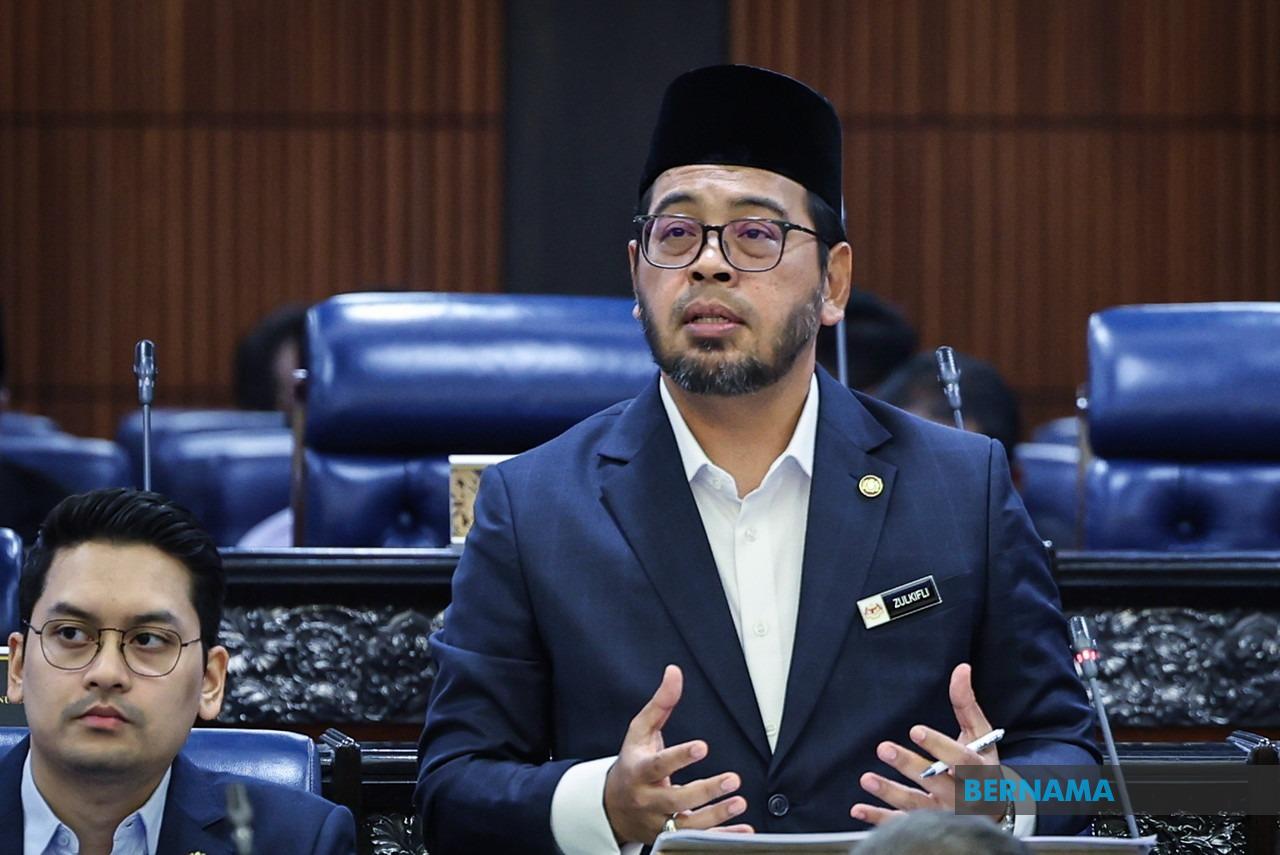
Religious Affairs Minister Dr Zulkifli Hasan has exposed systematic financial manipulation at Lembaga Tabung Haji (Tabung Haji or TH), the Islamic pilgrimage fund that serves millions of Malaysian depositors. Speaking during parliamentary debate on findings from the Royal Commission of Inquiry into TH's operations, Zulkifli employed a poignant household analogy to illustrate how the institution deceived the public about its true financial health, painting a picture of apparent prosperity masking underlying insolvency.
Using the example of a single mother called Mak Cik Senah, Zulkifli explained the mechanics of the deception. While depositors appeared satisfied receiving dividend payments exceeding their contributions, this satisfaction obscured a fundamental legal violation. Malaysian corporate law stipulates that dividends can only legitimately be distributed when an institution's total assets exceed its combined liabilities and obligations. TH's management circumvented this requirement through deliberate accounting manipulation, transforming what should have been a bankruptcy signal into an announcement of profitability.
The core methodology of TH's misconduct involved artificially inflating asset valuations on paper, creating an optical illusion of financial health. Zulkifli characterised this practice as paying dividends from "invisible money," a mechanism analogous to fraudulent schemes like Ponzi structures or the infamous Skim Pak Man Telo that devastated countless Malaysian investors. The RCI investigation confirmed that financial statements submitted before 2018 were deliberately doctored to portray high profits, enabling management to declare distributions that bore no relationship to TH's actual financial performance.
Crucially, the RCI determined that these profit declarations violated the Tabung Haji Act itself. At the time distributions were announced, TH's asset pool—encompassing depositor savings—did not exceed its liabilities, rendering the institution technically insolvent even as it celebrated dividend announcements. This direct breach of statutory requirements represents not merely poor management but systematic legal violation in service of maintaining investor confidence through deception.
The technical instrument enabling this fraud was a valuation methodology called Realisable Asset Value, or RAV, conducted outside the scope of audited financial statements. By deploying this parallel valuation system, TH management created alternate financial pictures that inflated apparent asset values beyond what legitimate audited accounts would show. These inflated figures then justified the paradoxical distribution of substantial dividends from an institution drowning in deficits. The approach exemplified what Zulkifli termed "creative accounting"—a euphemism for falsification that violated Malaysian Financial Reporting Standards and fundamentally distorted the truth about TH's position.
International auditor PricewaterhouseCoopers identified the extent of this manipulation in a 2018 report, documenting that merely RM556 million of TH's claimed RM4.6 billion in assets had been assessed by professional valuers. The remaining RM4 billion-plus existed primarily as paper valuations unsupported by independent professional assessment. This shocking disproportion reveals an institution where the vast majority of reported assets lacked credible substantiation, yet these phantom values underpinned decisions to pay dividends to millions of ordinary Malaysians who had entrusted their hajj savings to the fund.
The consequences of this sustained deception became inescapable by 2018. The widening chasm between assets and liabilities eventually forced the federal government into an extraordinary intervention: injecting more than RM10 billion to prevent Tabung Haji's complete collapse. This rescue was not discretionary but existential, protecting not only the accumulated savings of depositors but preserving an institution carrying deep religious and cultural significance for Malaysia's Muslim community. Without government intervention, the consequences for individual depositors would have been catastrophic, transforming what Zulkifli described as the loss of "Mak Cik Senah's money" into a mass betrayal of public trust.
The opportunity cost of this bailout extends far beyond TH's balance sheet. Zulkifli pointedly observed that RM10 billion represents sufficient resources to construct dozens or even hundreds of hospitals, schools, mosques, and public facilities serving Malaysian communities. This rhetorical flourish underscores a fundamental reality: funds required to remedy corporate misconduct represent wealth diverted from productive public investment, making financial manipulation not merely a technical accounting failure but a drag on broader national development priorities.
The Tabung Haji scandal illuminates institutional vulnerabilities within Malaysia's regulatory framework. Despite statutory oversight obligations, the fraud persisted across multiple reporting cycles, requiring international audit firms' intervention to expose realities that domestic supervisors failed to detect or prevent. The reliance on RAV valuations existing outside audited statements effectively created dual accounting systems where management could present benign pictures to regulators while reality diverged sharply elsewhere. This institutional blindspot raises questions about oversight mechanisms governing religiously-affiliated funds and whether adequate independence exists between fund management and regulatory bodies.
The broader implications extend across Southeast Asia's Islamic finance sector. Tabung Haji operates as a flagship institution within Muslim-majority Malaysia, and its near-collapse demonstrates how even established, culturally-embedded organizations can succumb to systematic fraud. Other countries managing hajj funds or Islamic social institutions must examine whether comparable vulnerabilities exist in their own regulatory frameworks, particularly regarding asset valuation methodologies and dividend distribution restrictions. The TH case establishes that sophisticated financial manipulation can persist over multiple years despite ostensible audit requirements, potentially affecting other regional institutions.
Zulkifli's parliamentary intervention serves a crucial accountability function, placing detailed explanations of institutional failure and remediation into the public record. By demystifying the technical mechanisms of financial manipulation through accessible analogies, the minister communicates why ordinary Malaysians should understand what occurred at TH and why government intervention became unavoidable. This pedagogical approach suggests recognition that public confidence in Islamic institutions requires transparent explanation of how existing safeguards failed and what corrective measures now apply to prevent recurrence.

