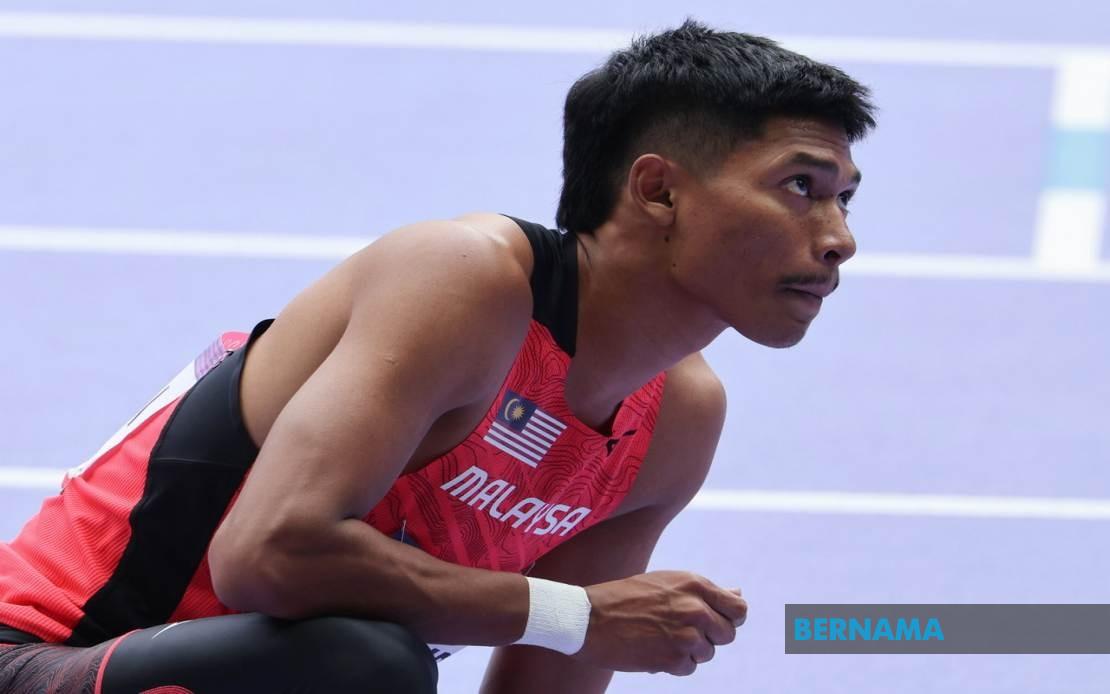
Muhammad Azeem Mohd Fahmi, Malaysia's national 100-metre record holder, has signalled his intention to establish his professional athletics career domestically following the conclusion of his four-year undergraduate programme at Auburn University in the United States. The 22-year-old sprinter, who holds the national benchmark of 10.09 seconds, announced in Kuala Lumpur on June 20 that he will forego any immediate return to the United States, viewing Malaysia as the ideal base for his continuing pursuit of excellence in track and field.
Azeem's decision reflects a broader trend among young Malaysian athletes who are increasingly choosing to leverage international education while anchoring their competitive careers at home. His commitment to remain in the country signals confidence in the emerging infrastructure and support systems available to elite national sports performers. The sprinter's choice also underscores the personal dimension of athletic decision-making, where family considerations and emotional wellbeing intersect with professional advancement.
The athlete articulated that his extended absence from Malaysia—spanning the entirety of his university years—has crystallised his priority to reconnect with his immediate family. He emphasised the psychological and emotional importance of proximity to parents, siblings, and his established network of coaches and associates who have been instrumental in shaping his development as a competitor. This emphasis on relational support over geographic advantage reflects a maturing perspective on the multifaceted requirements for sustained athletic excellence.
Central to Azeem's training architecture going forward is a transatlantic coaching partnership that preserves continuity while adapting to his new domestic base. His American coach, Ken Harnden, will retain overall responsibility for the strategic direction of Azeem's preparation, designing comprehensive training programmes that maintain the high standards established during his university tenure. This arrangement ensures that the methodological rigor developed at Auburn remains embedded in his regimen, preventing any regression in technical or physiological conditioning.
To operationalise this framework, local coach Muhammad Amir Izwan Tan Abdullah has been designated as the primary day-to-day supervisor, managing the practical execution of training sessions and monitoring Azeem's progress against established benchmarks. This dual-coach model has become increasingly common in Malaysian athletics, allowing elite performers to access world-class strategic guidance while benefiting from the accessibility and contextual familiarity of a coach based within the country. The arrangement also reflects the growing professionalism of Malaysian athletics support systems, which now routinely coordinate with international expertise.
Azeem's intentions extend beyond immediate athletic pursuits into longer-term educational aspirations. He has articulated plans to pursue a master's degree, though he has deliberately sequenced this ambition behind an intensive period of athletic focus. By imposing a temporal separation between his undergraduate completion and subsequent advanced studies, he demonstrates strategic clarity about maximising the narrow window of peak competitive years. The sprinter's willingness to defer higher learning reflects pragmatic understanding that athletic achievement windows are time-bound, while educational opportunities remain relatively accessible across broader age ranges.
The sprinter's decision carries implications for Malaysian athletics' ability to retain and develop world-class talent. Successfully anchoring an athlete of Azeem's calibre within the domestic system enhances the competitive depth available for national team selection and provides an aspirational reference point for younger competitors. His presence on the local circuit elevates training standards and encourages the formation of competitive communities that benefit multiple athletes across events and disciplines.
Azeem's trajectory also underscores Malaysia's capacity to produce internationally credible performers within competitive tertiary institutions. Auburn University, a recognised programme within the American collegiate athletics system, provided a developmental environment that enabled him to establish a national record. That achievement was realised within a structured competitive ecosystem vastly larger and more densely populated with elite performers than Malaysia's domestic circuit, yet he chose to return and compete primarily within regional and national contexts. This decision inverts traditional patterns where Malaysian athletes typically pursue overseas-based professional careers following university completion.
The return of internationally trained athletes like Azeem to domestic competition strengthens Malaysia's positioning within the Southeast Asian athletics landscape. His presence elevates the profile and competitive standard of regional competitions, potentially attracting greater investment from sponsors and broadcasters. Furthermore, his continued accessibility within Malaysia facilitates knowledge transfer and mentorship of younger sprinters, creating developmental pathways that benefit the broader talent pipeline.
From a personal perspective, Azeem's commitment to Malaysia reflects evolved thinking about what constitutes a satisfying athletic career. The traditional model privileged geographic relocation and overseas professional opportunities as markers of success. Contemporary athletes increasingly recognise that sustained excellence emerges from holistic wellbeing, which for Azeem encompasses family proximity, cultural rootedness, and psychological stability. This reframing suggests that future recruitment of Malaysian talent need not exclusively emphasise overseas opportunities, as quality domestic conditions and relational support systems possess genuine competitive value.
The sprinter's immediate focus will involve transitioning from the university athletics calendar to the international competitive circuit, where rankings and seasonal records assume heightened significance. With the dual-coaching framework now operational and his academic obligations concluded, Azeem possesses optimal conditions for concentrating wholly on performance development. His choice to remain in Malaysia positions him advantageously for participation in upcoming Southeast Asian championships and regional qualifiers, while maintaining pathway access to continental and world-level competitions.
Azeem's decision contributes to a developing narrative within Malaysian sports about retaining elite talent through creating competitive environments that rival overseas alternatives. While individual circumstances vary considerably, his case demonstrates that domestic commitment need not represent athletic compromise when supported by credible coaching expertise, family presence, and clear developmental frameworks. As Malaysia continues investing in athletics infrastructure and international partnerships, examples like Azeem's provide evidence of the effectiveness of integrated domestic-international approaches to elite athlete development.