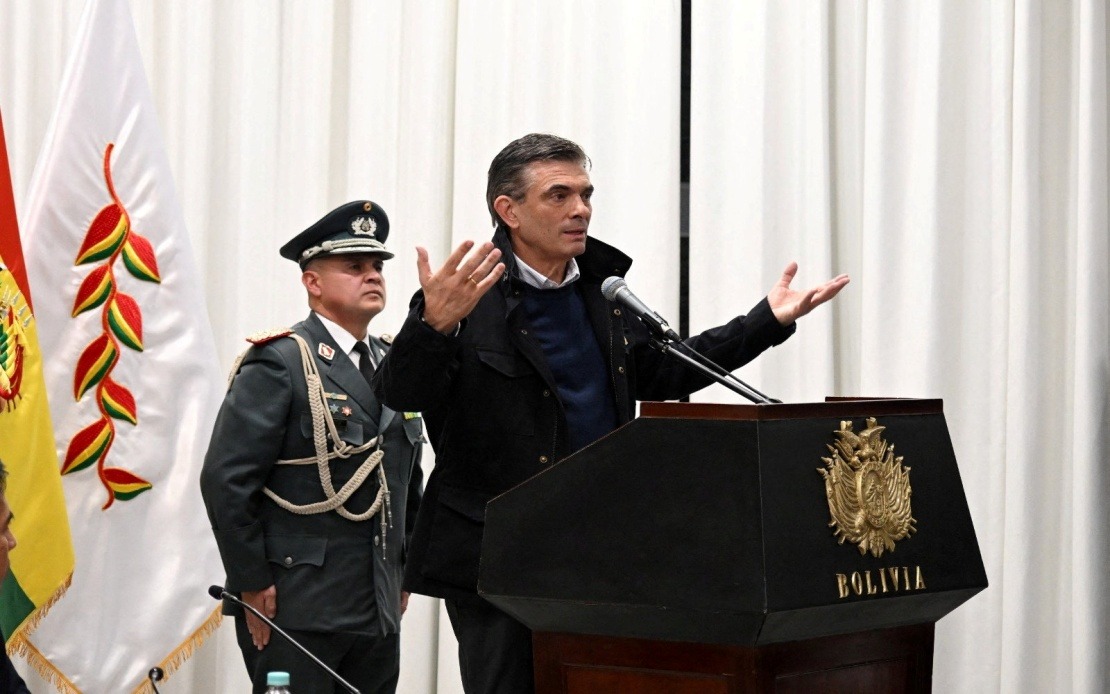
Bolivian President Rodrigo Paz has declared a state of emergency in response to an escalating political and economic crisis sparked by sustained anti-government protests and widespread road blockades that have paralysed the country for nearly two months. The declaration, announced through a televised address, represents a significant escalation in tensions between the government and opposition forces mobilised by workers' unions and agricultural sectors demanding the president's resignation.
The underlying grievances fuelling the blockades centre on deteriorating economic conditions and climbing living costs that have squeezed household budgets across Bolivia. Workers and farmers have organised to express their dissatisfaction with government policies they view as inadequate in addressing inflation and economic stagnation. Their campaign has evolved from isolated demonstrations into a coordinated protest movement leveraging strategic road closures to amplify pressure on the administration and force policy reconsideration.
Over the past 50 days, the blockades have inflicted substantial damage on Bolivia's economy and public welfare. Supply chains for essential goods have fractured, leaving communities facing acute shortages of food staples, fuel for heating and transportation, and critical medical supplies. The disruptions extend beyond mere inconvenience; they have prevented citizens from accessing employment, educational institutions, and healthcare facilities. This collective deprivation has deepened public frustration and underscored the blockades' effectiveness as a pressure tactic, though at considerable cost to ordinary Bolivians caught in the middle.
In his televised address, President Paz articulated the government's position with notable emotional appeal, framing the blockades as unjust impediments to basic rights. He stated that Bolivians could not remain hostages to road closures preventing people from working, attending school, obtaining medical care, purchasing food, or maintaining their livelihoods. This rhetorical framing attempts to reposition the government as a defender of ordinary citizens against what it characterises as coercive protest tactics that harm the vulnerable.
The state of emergency declaration carries significant constitutional and operational implications for Bolivia. The formal proclamation of a state of exception, as articulated in the president's announcement, provides legal justification for military deployment across the country to break blockades and restore transportation routes. This militarisation of the response marks a turning point, moving from civilian police responses to armed forces involvement in managing civil unrest. Such measures, while aimed at restoring order and economic function, typically involve restricted civil liberties and expanded government authority.
For Malaysia and Southeast Asia, Bolivia's crisis offers instructive parallels regarding the vulnerability of developing economies to supply chain disruptions and the political risks when economic hardship intersects with organised labour movements. The Bolivian situation illustrates how blockades, though non-violent forms of protest, can rapidly escalate economic damage and force governments toward military intervention. Southeast Asian nations with similar economic vulnerabilities and active civil society organisations should monitor how Bolivia manages the coming weeks to understand potential escalation pathways.
The military deployment authorised by the emergency declaration faces a delicate challenge in balancing order restoration with public safety. Security forces will need to clear blockades without triggering violent clashes that could transform economic protest into armed conflict. The political stakes are equally high; heavy-handed military responses risk radicalising protest movements and generating international scrutiny regarding human rights practices, while lenient enforcement could undermine the emergency declaration's credibility.
Underlying the surface crisis lie structural economic questions that the state of emergency does not address. The root causes of rising living costs and economic pressure remain unresolved by military deployment alone. Workers and farmers have articulated grievances rooted in material conditions; restoring road access does not eliminate the inflation and economic policies that generated their mobilisation. Without concurrent policy adjustments addressing these underlying concerns, the blockades may resume once military pressure eases, creating a cycle of disruption and repression.
The international dimension of Bolivia's crisis also warrants attention. The country's economy depends on commodity exports and imports of essential goods; prolonged instability affects trading partners and investors throughout the region. Nations with commercial interests in Bolivia, including several with significant mining operations, will scrutinise whether the emergency declaration genuinely restores stability or merely postpones deeper political reckoning. The government's capacity to address economic grievances through dialogue rather than military control will determine whether this emergency represents a temporary intervention or the opening phase of prolonged civil-military tension.
President Paz's declaration reflects the difficult position of many developing-world leaders confronting the collision between democratic protest rights and economic stability imperatives. The emergency measures provide short-term tools for reopening roads and resuming economic activity, yet they cannot substitute for addressing the legitimate grievances motivating the blockades. Bolivia's trajectory over coming weeks will reveal whether military-backed order restoration can transition to political dialogue addressing the economic conditions that generated organised protest.