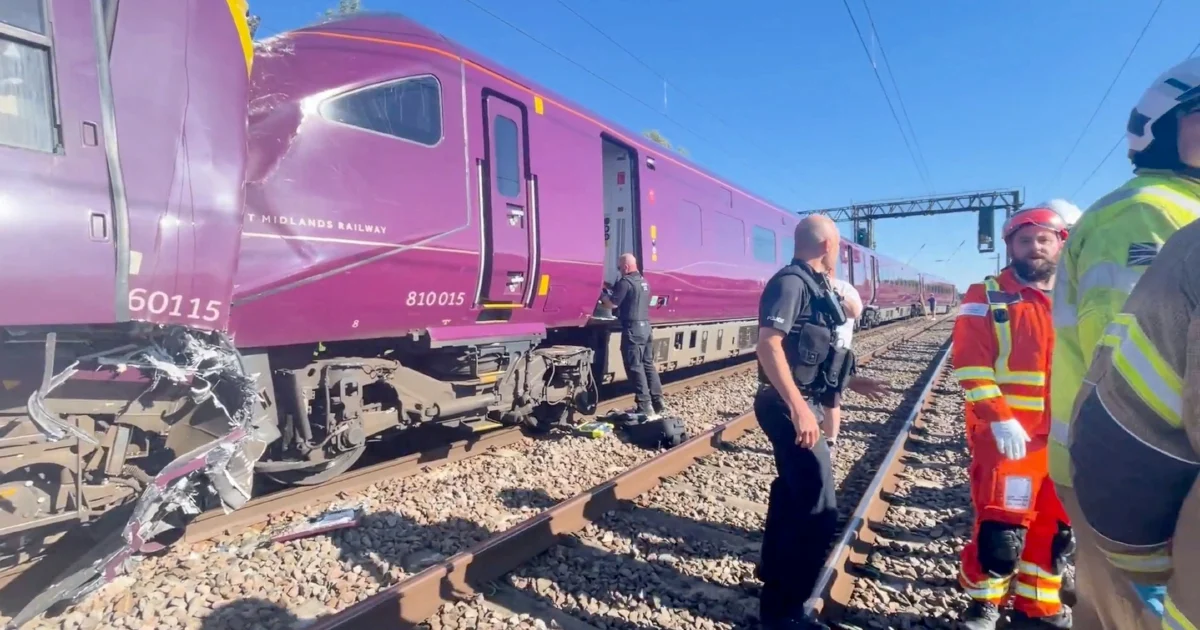
One person has died and approximately 50 others suffered injuries following a significant railway accident that unfolded north of London on Friday, when two passenger trains collided in what emergency responders described as a serious transport incident. Among those injured, 11 sustained critical injuries requiring immediate medical intervention, according to statements released by UK emergency services coordinating the response.
The collision represents a rare but serious occurrence within the British rail network, which operates one of Europe's busiest transportation systems. Such incidents typically prompt immediate investigations from rail safety authorities and can lead to widespread disruption across regional and national rail services. The location of the accident, north of London in what authorities have designated a major population corridor, meant that emergency response teams could mobilise quickly to the scene.
Emergency services deployed personnel from fire, ambulance, and police departments to manage the immediate aftermath of the crash. Initial reports indicated that rescue operations focused on extracting passengers from damaged carriages and providing emergency medical care to the injured. The "very seriously" injured category typically indicates injuries requiring urgent hospitalisation and ongoing critical care, suggesting some victims faced life-threatening conditions.
For Malaysian readers and others familiar with Southeast Asian transport infrastructure, such incidents highlight the critical importance of robust railway safety standards and investment in modern signalling systems. The UK's rail sector, despite occasional accidents, maintains a strong safety record compared to many developing nations. However, the fact that collisions can still occur underscores how rail safety requires constant vigilance and infrastructure maintenance, even in countries with advanced transport networks.
The timing of the collision during daylight hours on a Friday raised questions about visibility and operational procedures at the time of impact. Initial investigations would typically examine whether signalling systems functioned correctly, whether drivers received appropriate warnings, and whether weather or other environmental factors contributed to the accident. Such detailed forensic analysis can take weeks or months to complete.
This incident comes amid broader discussions about rail safety across the UK, where the network has undergone considerable modernisation in recent decades yet continues to manage congestion challenges during peak travel periods. The frequency of passenger trains on routes north of London means that collision scenarios, while rare, carry inherent risks when safety mechanisms fail or procedures are not followed.
The psychological impact on survivors and witnesses of such traumatic events often extends beyond physical injuries, frequently resulting in transport anxiety among former passengers. In Malaysia and across Southeast Asia, where rail networks continue expanding to meet growing urban populations, understanding the human and systemic factors that lead to such accidents proves valuable for railway authorities planning safety upgrades.
UK rail operators and the government will face increasing scrutiny regarding whether current safety standards, investment levels, and training protocols remain adequate to prevent such incidents. The collision inevitably raises broader questions about whether the rail network has received sufficient funding for infrastructure maintenance and whether modern technology adoption has kept pace with growing passenger volumes.
International railway safety bodies will likely examine this accident as part of ongoing efforts to identify patterns and prevent similar collisions across different national networks. The lessons derived from investigating such serious incidents often inform safety protocols not only in the UK but across other nations operating comparable rail systems, making the findings potentially relevant to railway authorities throughout Southeast Asia.
The immediate priorities for authorities involved restoring normal service on affected rail lines while ensuring that all rescue and recovery operations were completed thoroughly. The collision would generate substantial disruption for commuters and freight services relying on routes north of London, with ripple effects potentially affecting rail connectivity across a broader geographical area for days following the incident.
As investigations progress, the focus will shift toward establishing whether systemic failures, human error, or equipment malfunction contributed to the collision. These findings will ultimately determine what corrective measures become necessary and whether regulatory changes are required to prevent recurrence. For transport authorities worldwide, including those managing growing rail networks in Malaysia and the region, the ongoing investigation offers valuable insights into vulnerability points within transport infrastructure and appropriate response measures.