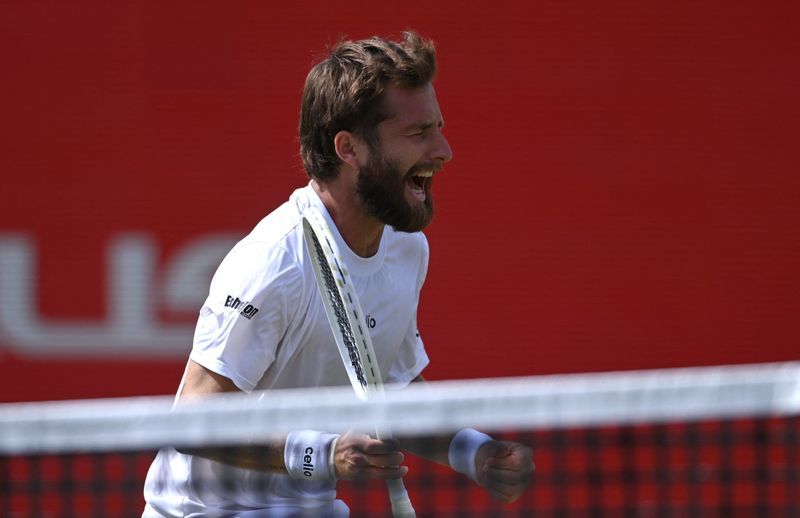
French tennis player Corentin Moutet has been stripped of nearly all his earnings from the Queen's Club tournament after incurring a substantial fine for his unguarded language during a post-match broadcast interview. The 27-year-old was penalised $40,000 by the ATP following the incident, which occurred immediately after his opening-round victory over fellow Frenchman Giovanni Mpetshi Perricard, leaving him with minimal financial reward from his early-round exit. The punishment represents a significant financial consequence for the world number 36 and underscores the professional standards expected of athletes competing at elite sporting venues.
The controversy unfolded during an on-court interview conducted by the BBC following Moutet's first-round success. When discussing his frustration at being aced on match point by an impressive 142 mph second serve, Moutet resorted to profanity in his response. The interviewer promptly requested that the player refrain from repeating the offensive language, a directive Moutet ignored. He proceeded to use the same expletive three additional times before the interview was terminated prematurely, necessitating apologies to both the stadium crowd and television audiences at home.
Despite the incident's seriousness, Moutet attempted to downplay the situation by posting on Instagram afterwards that he had simply been joking. This explanation, however, did little to mitigate the disciplinary response from tennis authorities. The ATP classified the conduct as unsportsmanlike and proceeded with the substantial fine, though Moutet has since filed an appeal challenging the decision. The outcome of his appeal remains pending, leaving the financial matter unresolved for now.
The financial impact has been particularly acute for Moutet given the prize structure at Queen's Club. His progression to the second round netted him only $43,000 in prize money, meaning the $40,000 fine effectively eliminates almost all his monetary compensation from the tournament. His subsequent loss to Spain's Alejandro Davidovich Fokina in the second round meant he failed to accumulate additional prize earnings from further rounds. This outcome demonstrates how modern tennis fines can potentially exceed or nearly match prize allocations in early tournament stages, creating severe financial consequences for players.
This incident is not Moutet's first brush with disciplinary issues on the professional circuit. His history of behavioural concerns reveals a pattern that has drawn repeated scrutiny from tennis governing bodies and his home federation. In 2022, he reached such an extreme point of frustration during a match against Serbia's Laslo Djere at the Adelaide International that he was defaulted from the tournament entirely for directing expletives at the umpire. That extreme sanction—removing a player from competition—represents a higher level of punishment than fines and illustrates how seriously officials take professional conduct standards.
Beyond individual tournament suspensions, Moutet's behaviour has prompted intervention from France's own governing structure. The French Tennis Federation took the significant step of distancing itself from him in 2022 due to persistent concerns about his deportment. Such actions by national federations are relatively rare and indicate serious reservations about how an athlete represents their country on the international stage. These earlier incidents provide important context for understanding why the ATP responded firmly to the Queen's Club situation.
For Malaysian and broader Southeast Asian tennis enthusiasts, Moutet's situation illuminates the increasingly stringent standards enforced at professional tournaments. As the sport continues to cultivate younger audiences and maintain corporate sponsorships, broadcasters and tournament organisers have little tolerance for language or behaviour deemed offensive to viewers. The Queen's Club, one of tennis's most prestigious grass-court venues, maintains particularly high expectations given its traditional English heritage and predominantly British television audience.
Moutet's case also raises questions about the proportionality of financial penalties in professional tennis. A $40,000 fine—which might represent a career-altering sum for less established players—can serve as an effective deterrent, though only if it prompts genuine behavioural reflection. The fact that Moutet has faced multiple disciplinary interventions suggests that financial penalties alone may not address underlying issues with emotional regulation during competition. Sports psychologists and commentators have increasingly highlighted the mental health dimensions of player outbursts, suggesting that fines might be most effective when coupled with support services.
The appeal process now underway provides Moutet with an opportunity to contest the ATP's decision, though successful appeals of fines for unsportsmanlike conduct are relatively uncommon. The appeal body will likely consider factors including the severity of the language, the persistence despite the interviewer's remonstration, and Moutet's disciplinary history when determining whether to uphold, reduce, or overturn the sanction. The outcome will send signals to other players regarding the standard of accountability expected in broadcast settings.