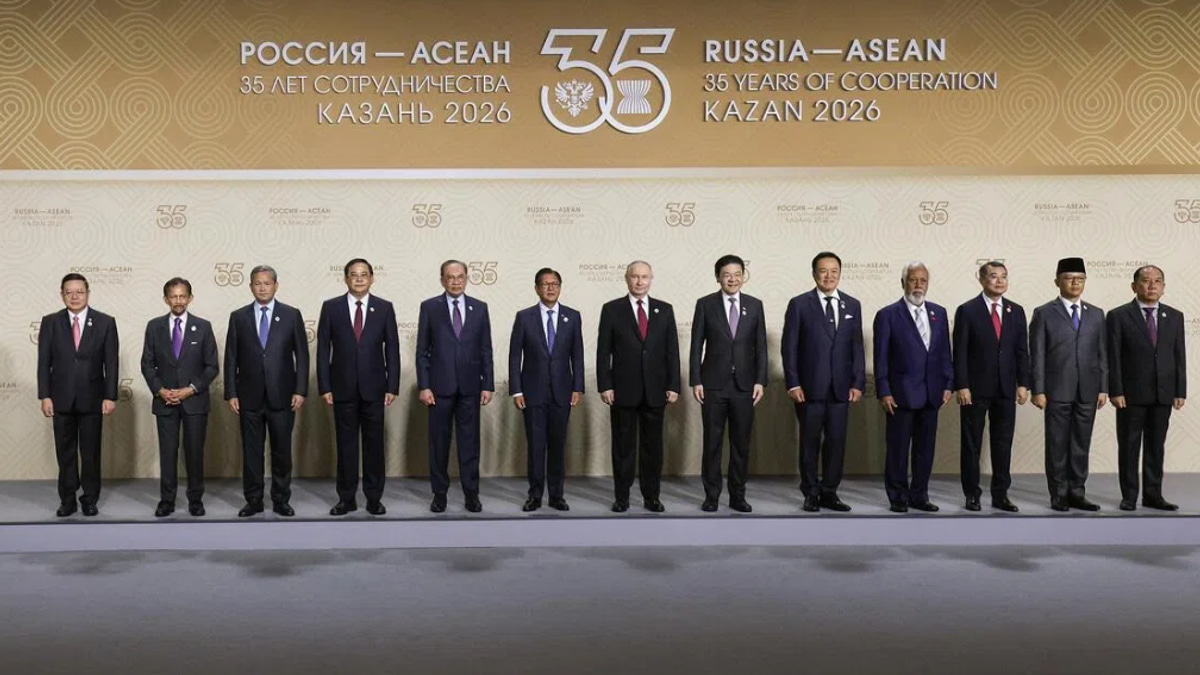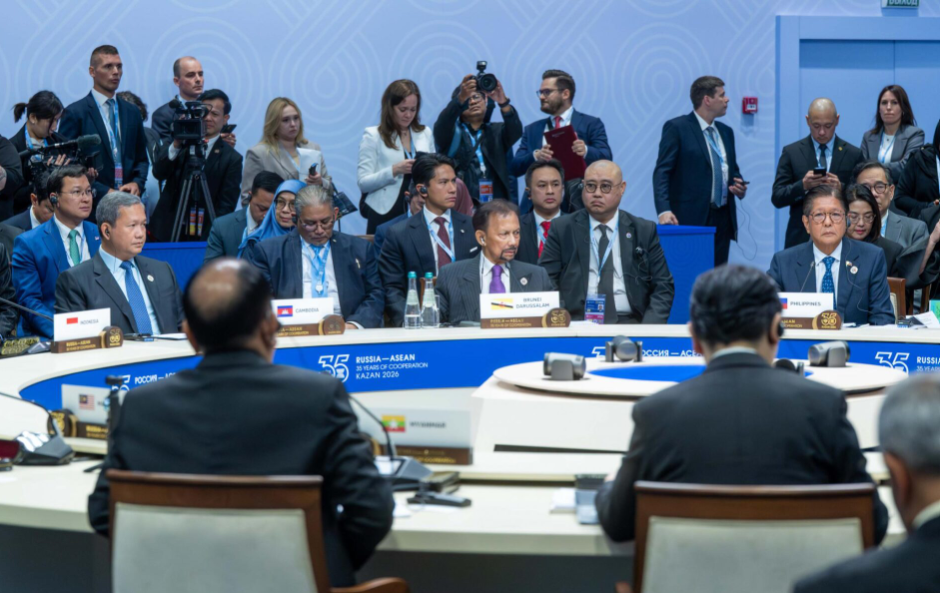
Brunei's Sultan Hassanal Bolkiah has used a major diplomatic gathering in Russia to reaffirm the strategic importance of Asean's relationship with Moscow, signalling the region's commitment to maintaining engagement with major powers despite global geopolitical tensions. Speaking at the Asean-Russia Commemorative Summit held on June 18 at the Kazan Expo International Exhibition Centre, the Sultan thanked Russian President Vladimir Putin and local officials for hosting the regional bloc, while expressing condolences to Thailand's Prime Minister Anutin Charnvirakul following the death of Princess Bajrakitiyabha. The event brought together Asean's leadership at a time when the region seeks to preserve its balancing act between competing global powers.
The Sultan's remarks centred on celebrating three and a half decades of dialogue partnership between Asean and the Russian Federation, a relationship he characterised as resilient and increasingly significant despite the transformation of the international landscape. His emphasis on the partnership's durability carries particular weight given the current state of global affairs, where many nations are reassessing their international alignments. The framing of this long-standing engagement as one that has "demonstrated resilience" suggests confidence in institutional structures and shared interests that transcend temporary political discord.
Cooperation between Asean and Russia has expanded substantially across the three pillars of the Asean Community framework—political-security, economic, and socio-cultural dimensions. The Sultan highlighted how this multifaceted engagement has produced tangible benefits while strengthening people-to-people connections. This comprehensive approach reflects Asean's preference for broad-based partnerships rather than narrow strategic alignments, allowing member states to pursue cooperation across diverse sectors without exclusive commitments. For Malaysia and other Southeast Asian nations, such diversified engagement provides flexibility in navigating great power competition.
Looking forward to Asean Vision 2045, the Brunei monarch stressed that continued Russian partnership is essential for addressing contemporary global challenges. Political tensions, economic fragmentation, climate change and technological disruption represent shared concerns that transcend geographical boundaries and ideological divides. The framing of these issues as requiring collective resilience suggests that Asean sees value in Russia's perspective and capabilities, particularly given Moscow's role as a major energy supplier and its technical expertise in certain sectors. For regional economies heavily dependent on energy imports and vulnerable to climate impacts, Russian cooperation on these fronts carries practical significance.
Energy security emerged as a particular focus, reflecting the reality that many Asean members struggle with diversifying their energy sources and managing supply chain risks. The Joint Statement on Energy Cooperation adopted during the summit addresses this tangible concern, likely encompassing discussions on hydrocarbon trade, nuclear technology and renewable energy partnerships. Similarly, food security—another area highlighted by the Sultan—remains a critical issue for a region prone to agricultural disruption from climate variability and dependent on imports for certain staple commodities. Russian agricultural exports could help mitigate regional vulnerabilities in this domain.
The Sultan's emphasis on human capital development and educational exchanges reveals an understanding that sustained partnership requires investment in future generations. Training programmes and knowledge transfers serve both immediate practical purposes and longer-term relationship building. For Malaysian professionals and students, expanded educational opportunities with Russian institutions could provide alternative pathways for skill development, particularly in technical and scientific fields where Russian expertise remains competitive despite international isolation in other areas.
The adoption of four outcome documents formalised the commitments made during the summit. The Kazan Declaration 2026 and the Comprehensive Plan of Action for 2026–2030 establish a framework for future engagement, while separate joint statements on energy and cultural cooperation demonstrate the breadth of the partnership. The symbolism of naming the declaration after the host city and extending the planning horizon to 2030 underscores both the significance of the summit and the intention for sustained, long-term collaboration.
The second plenary session on Eurasian integration processes brought perspectives from Asean's own institutional leadership alongside representatives from Russia-aligned structures like the Shanghai Cooperation Organisation and the Eurasian Economic Commission. This gathering of voices reflected the broader geopolitical context in which Asean operates—a region where Russia, China and other Eurasian powers maintain institutional frameworks and economic networks that Asean seeks to engage with constructively. For Southeast Asia, understanding and participating in these broader integration processes helps ensure that regional interests are represented in discussions that could affect trade flows and security arrangements.
The inclusion of a Asean-Russia Business Forum as a side event acknowledged the commercial dimensions of the partnership. Business engagement drives tangible economic benefits that supplement official diplomatic channels, creating constituencies within member states invested in maintaining healthy bilateral relations. Malaysian companies exploring opportunities in Russian markets or seeking Russian investment in manufacturing and resources find official encouragement through such forums, potentially opening doors otherwise complicated by international sanctions regimes.
The timing and scale of this commemorative summit carry significance beyond ceremonial gestures. By investing senior leadership attention in this relationship during a period of global instability, Asean signals that it will not abandon dialogue with Russia despite pressure from Western powers. This reflects the region's consistent commitment to inclusive engagement and non-alignment, principles embedded in Asean's founding documents. For Malaysia, which has long championed Asean centrality in regional affairs, the summit reinforces the bloc's capacity to maintain independent foreign policy positions based on regional interests.
The Sultan's diplomatic approach—acknowledging both Russian partnership and Asean's Vision 2045 agenda—demonstrates careful balance. Rather than positioning the Asean-Russia relationship as opposition to other partnerships, the emphasis on shared challenges and mutual benefit allows room for simultaneous engagement with Western powers, China and other partners. This flexibility serves Asean member states well in an increasingly multipolar world where exclusive alignments carry significant costs.
Looking ahead, the framework established at Kazan provides structure for deepening engagement across sectors critical to Southeast Asia's development. As member states grapple with energy transitions, climate adaptation and technological change, Russian expertise and resources remain relevant despite geopolitical complications. The relationship, as the Sultan framed it, continues to offer genuine value beyond symbolic diplomatic gestures, particularly for developing economies seeking to diversify partnerships and maximise access to global resources and knowledge.