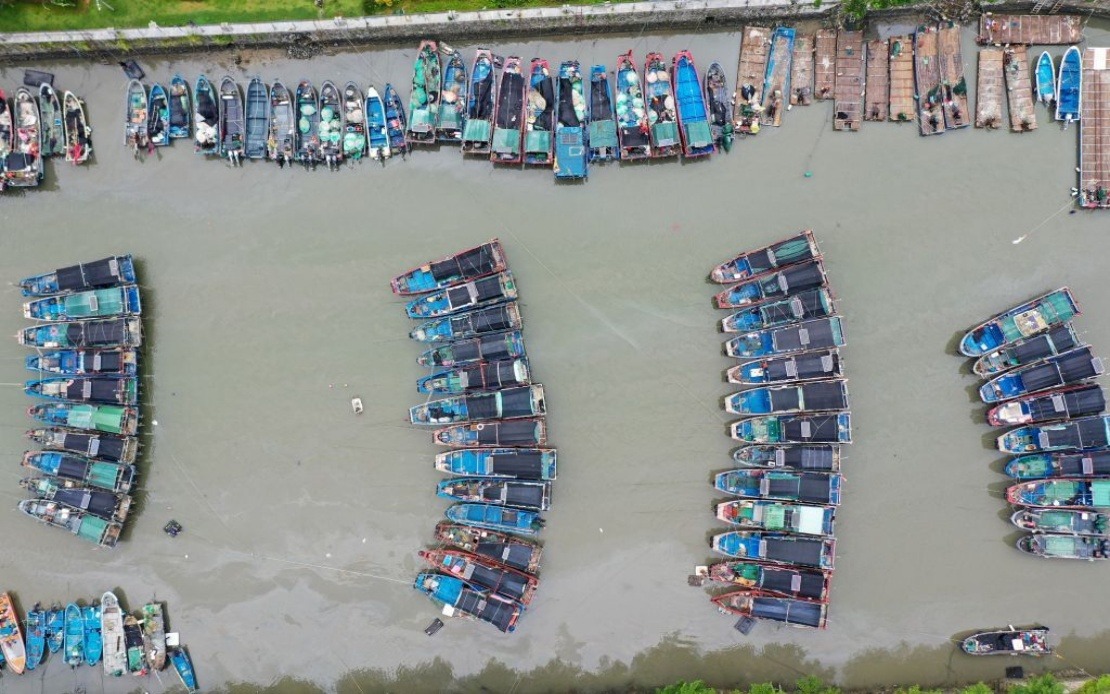
China activated its most severe typhoon warning on Saturday as Typhoon Noul approached the southern coast, marking a critical moment in the country's annual monsoon season and raising concerns across the broader region. The National Meteorological Centre's decision to declare a red alert—the pinnacle of China's four-tier warning system—underscored the exceptional intensity of the storm, which officials expect to make landfall in Guangdong Province within hours of the announcement.
Typhoon Noul represents the 12th typhoon of 2024, placing it well within the typical distribution of major storms for this period of the year. As of Saturday evening, the cyclone's centre hovered approximately 100 kilometres offshore from the Huidong County area in Huizhou City, a densely populated region that includes industrial zones and manufacturing hubs integral to southern China's economy. The positioning suggested a direct approach toward one of China's most developed coastal regions, amplifying the potential for significant disruption.
The meteorological data painted a picture of an exceptionally powerful system. Maximum sustained winds near the typhoon's centre reached Force 14, indicating destructive capabilities that could uproot trees, compromise structural integrity of buildings, and severely hamper transport and logistics operations. The NMC projected the storm would advance northwestward at approximately 20 kilometres per hour while simultaneously intensifying—a combination that reduced the window for protective measures in vulnerable areas.
China's flood control authorities responded swiftly to the escalating threat. The State Flood Control and Drought Relief Headquarters elevated Guangdong Province to Level III emergency response status, the second-highest tier, enabling rapid deployment of resources and personnel to at-risk zones. Simultaneously, neighbouring Jiangxi and Hunan provinces triggered Level IV responses, reflecting concerns that the typhoon's inland trajectory after landfall could generate devastating rainfall and flooding across a broader geographical swath. This coordinated response demonstrated the integration of China's disaster management frameworks across multiple provincial boundaries.
The progression of Typhoon Noul's predicted path held particular significance for the region's preparedness calculations. After crossing the coast, forecasters anticipated the system would veer toward a north-northwestward direction while gradually diminishing in intensity. This trajectory suggested the storm would penetrate deep inland, potentially affecting areas hundreds of kilometres from the initial impact zone. The gradual weakening would nonetheless require sustained vigilance, as secondary effects including mudslides, flash flooding, and wind damage could persist throughout the affected provinces for extended periods.
China's colour-coded warning system—distinguishing between red, orange, yellow, and blue alerts—provides a standardised communication framework that guides emergency response protocols and public behaviour. The red alert designation functioned as a signal to evacuate vulnerable populations, suspend outdoor operations, secure maritime vessels, and pre-position rescue equipment. This systematic approach has become increasingly important as typhoon seasons intensify under broader climatic shifts affecting the Western Pacific basin.
For Southeast Asian observers and regional governments, Chinese typhoon activity carries significant implications. Systems transiting through southern China frequently weaken as they advance northeastward, yet residual circulations occasionally affect Vietnam, Laos, and Thailand. Moreover, the economic consequences of major storms in southern China—where global supply chains originate—ripple throughout ASEAN nations dependent on cross-border trade and manufacturing partnerships. Disruptions to ports, transportation networks, and industrial facilities in Guangdong can trigger cascading effects on semiconductor supplies, textiles, and consumer goods distributed across Southeast Asia.
The timing of Typhoon Noul within the broader seasonal context merits attention. Monsoon patterns and sea surface temperatures throughout the Western Pacific create conditions favouring multiple typhoons during June through October. China's positioning as the region's largest economy and manufacturing powerhouse means that even temporary disruptions trigger assessments by observers globally monitoring supply chain stability and economic momentum. Insurance markets, commodity traders, and logistics companies typically react to major typhoon alerts by adjusting premiums, hedging positions, and rerouting shipments.
Public communication strategies became critical as the alert propagated. Authorities utilised multiple channels to ensure residents in coastal Guangdong understood evacuation procedures, emergency shelter locations, and contact information for assistance. Early warnings, typically issued 24 to 48 hours before landfall, provide sufficient time for orderly population movement and property protection measures, though implementation challenges often arise in densely populated urban cores where displacement logistics prove complex.
The scientific monitoring infrastructure underlying these alerts reflects decades of investment in meteorological technology and forecasting capability. Satellite systems, ground-based radar networks, and international data-sharing agreements enable increasingly precise prediction of typhoon intensification, track shifts, and landfall timing. Nevertheless, the inherent uncertainty in long-range forecasting means that preparedness planning must accommodate multiple scenarios, prompting authorities to maintain elevated readiness across broader geographical zones than the storm's most likely path.
Historical typhoon records indicate that Guangdong Province experiences direct hits or near-miss events at regular intervals, having developed accumulated experience in responsive management. Infrastructure improvements including upgraded drainage systems, reinforced coastal defences, and improved building codes have progressively reduced mortality and economic losses compared to equivalent storms decades earlier. However, continuous urbanisation and development in flood-prone areas partially offset these protective gains, requiring perpetual updates to emergency management strategies.
The international dimension of typhoon response increasingly involves cross-border coordination, particularly as storms affect multiple countries simultaneously. While Typhoon Noul appeared oriented toward China's coastal regions, meteorological centres throughout Southeast Asia maintained monitoring protocols to assess potential downstream effects. Regional hydrometeorological agencies participate in cooperative forecasting initiatives that enhance collective predictive capability and enable coordinated advance warnings across the ASEAN region.

