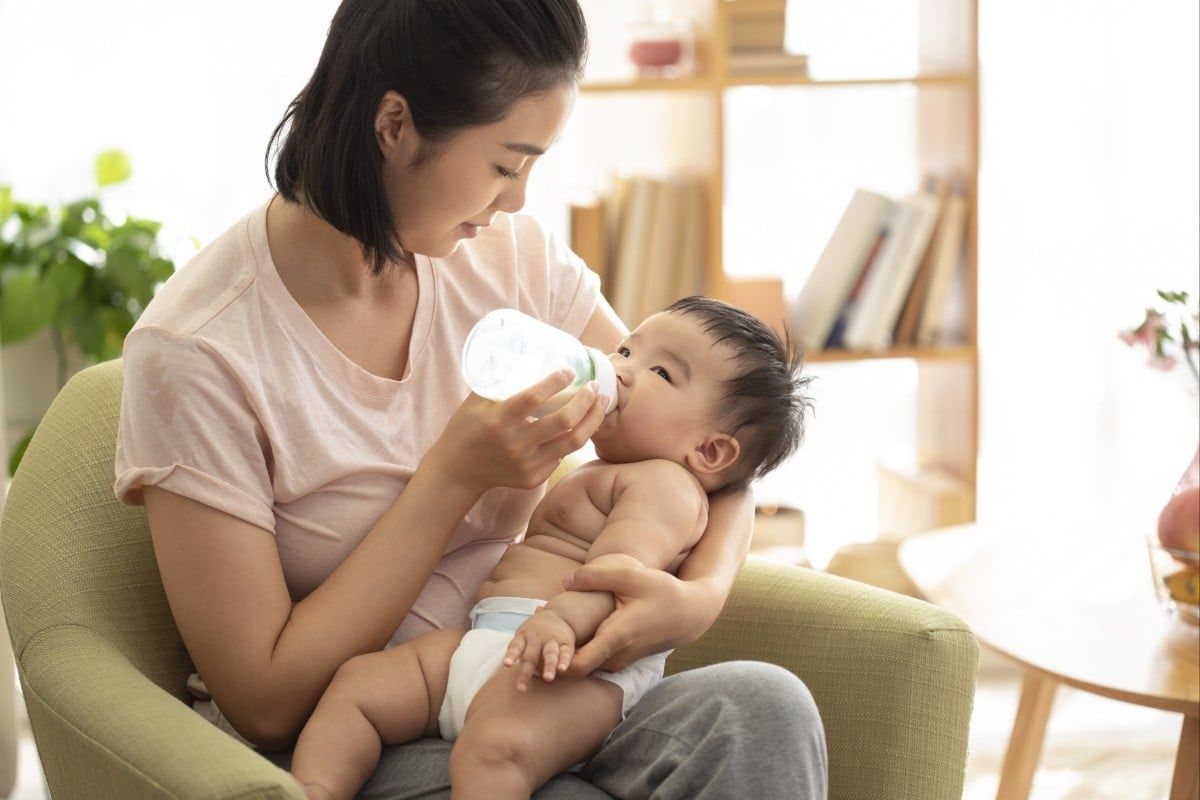
A three-month-old infant in Guangdong province required emergency intensive care treatment after being poisoned through a well-intentioned but dangerously misguided feeding practice. The baby was rushed to Zhongshan Women and Children's Hospital exhibiting severe symptoms including purple discoloration of his body, purplish-blue lips, and severe breathing difficulties. His condition developed rapidly after consuming formula milk that his parents had prepared using an unconventional method. The incident, reported by Zonglan News, underscores a critical gap in parental knowledge about infant nutrition and the biochemical hazards lurking in seemingly wholesome food preparations.
The parents' reasoning behind their decision reveals a common misconception among caregivers who may lack proper guidance. They believed that incorporating vegetable juice into the formula would provide superior nutritional value compared to using plain water, a logic that appears sound on the surface but fundamentally misunderstands infant physiology. This assumption—that natural or vegetable-derived substances are inherently more beneficial than pure water—represents a dangerous gap in health literacy that extends beyond this single family. The case illustrates how parental instincts, even when motivated by genuine concern for a child's wellbeing, can lead to severe harm without proper medical knowledge.
Medical diagnosis confirmed that the infant had suffered acute nitrite poisoning, a condition that occurs when nitrite compounds enter the bloodstream and compromise its oxygen-carrying capacity. The hospital's findings pointed to the preparation method as the culprit: when vegetables are boiled over extended periods, the cooking process causes a chemical transformation that generates substantial quantities of nitrites. These concentrated nitrite compounds, harmless or manageable in adults with fully developed systems, become profoundly dangerous for young infants whose biological defenses remain underdeveloped. The three-month-old's body lacked the enzymatic capacity and organ function necessary to metabolise or filter out such toxic compounds.
The vulnerability of infants at this developmental stage cannot be overstated. A three-month-old's digestive system remains immature and incomplete, and more critically, the kidneys—which play a crucial role in filtering toxins from the bloodstream—have not yet developed sufficient functional capacity. This physiological immaturity means that substances which an adult might process and eliminate with minimal consequence can accumulate to lethal levels within an infant's body. The purple discoloration of the baby's mouth, skin, and fingernails resulted directly from this oxygen deprivation at the cellular level, a visible manifestation of the nitrites' interference with haemoglobin's ability to transport oxygen throughout the body.
Following two days of intensive medical intervention, the baby was successfully discharged from hospital in mid-June, a fortunate outcome that underscores the importance of rapid medical response. However, the case came perilously close to becoming a fatality, and many similar situations might not resolve so positively. The medical team at Zhongshan Women and Children's Hospital provided clear guidance to the parents upon discharge, establishing straightforward protocols for formula preparation. The central recommendation—mixing formula powder exclusively with warm water—appears elementary, yet this incident demonstrates that such guidance is not universally understood or practised.
Doctors issued explicit warnings against substituting various household liquids for water when preparing infant formula. Vegetable juice, rice water, fruit juice, and various soups all pose similar risks and are fundamentally unsuitable for infant feeding. Each of these alternatives introduces compounds and microorganisms that infant digestive systems cannot safely process. The breadth of this warning suggests that such substitutions occur with concerning frequency among parents who believe they are enhancing their child's nutrition. This pattern points to a systemic issue in health education and parental guidance in infant care practices.
Paediatrician Cao Qi from Nanning No 1 People's Hospital in Guangxi Zhuang autonomous region has become an advocate for proper infant feeding education, using social media platforms to reach parents directly. Cao's warning about the immediate recognition of nitrite toxicity symptoms—and the life-or-death importance of prompt hospital admission—reflects medical urgency that cannot be overstated. The physician emphasised that delays of mere minutes in seeking emergency treatment can shift outcomes from recovery to tragedy. This intervention strategy, utilising social media channels to disseminate critical safety information, represents an important public health approach in contemporary China.
Cao's broader message addresses a cultural pattern observed in Chinese parenting communities, where unconventional feeding approaches periodically emerge and gain traction through social networks. Parents are frequently influenced by trends, anecdotal success stories from peers, or subjective judgments about what constitutes optimal nutrition. Cao cautioned explicitly against this tendency, emphasising that traditional wisdom and natural foods do not automatically translate into safety or suitability for infants. The medical community's concern appears to stem from repeated incidents suggesting that such dangerous practices persist despite previous public health campaigns.
The incident exemplifies a troubling pattern of unusual infant feeding practices that capture public attention and generate discussion across Chinese social media platforms. These cases often represent extreme manifestations of well-meaning but misguided parental decisions that, fortunately, reach medical attention and receive treatment. In the previous year, an even younger infant—merely 52 days old—was admitted to hospital in Henan province after developing botulism from Clostridium botulinum infection. That case revealed that the infant's grandmother had added honey to the baby's water, another popular traditional practice that carries severe risks for infants lacking the mature intestinal flora necessary to resist this bacterium's spore germination.
These cases collectively suggest that parental education about infant nutrition and food safety requires substantial strengthening throughout Southeast Asia and East Asia. The problem extends beyond individual families' knowledge gaps to reflect broader challenges in health communication and the persistence of traditional practices that predate modern understanding of infant physiology. Healthcare systems face the challenge of disseminating accurate information through channels that reach parents effectively, competing against cultural traditions, peer recommendations, and online misinformation. The combination of rapid hospital response when symptoms emerge, coupled with proactive education emphasising exclusive water use and proper formula preparation, represents the most effective strategy for preventing such poisonings. For Malaysian parents and caregivers, these cautionary cases from neighbouring countries underscore the importance of adhering strictly to medical guidelines for infant feeding and seeking immediate professional guidance rather than relying on home remedies or unconventional preparations, regardless of perceived nutritional benefits.