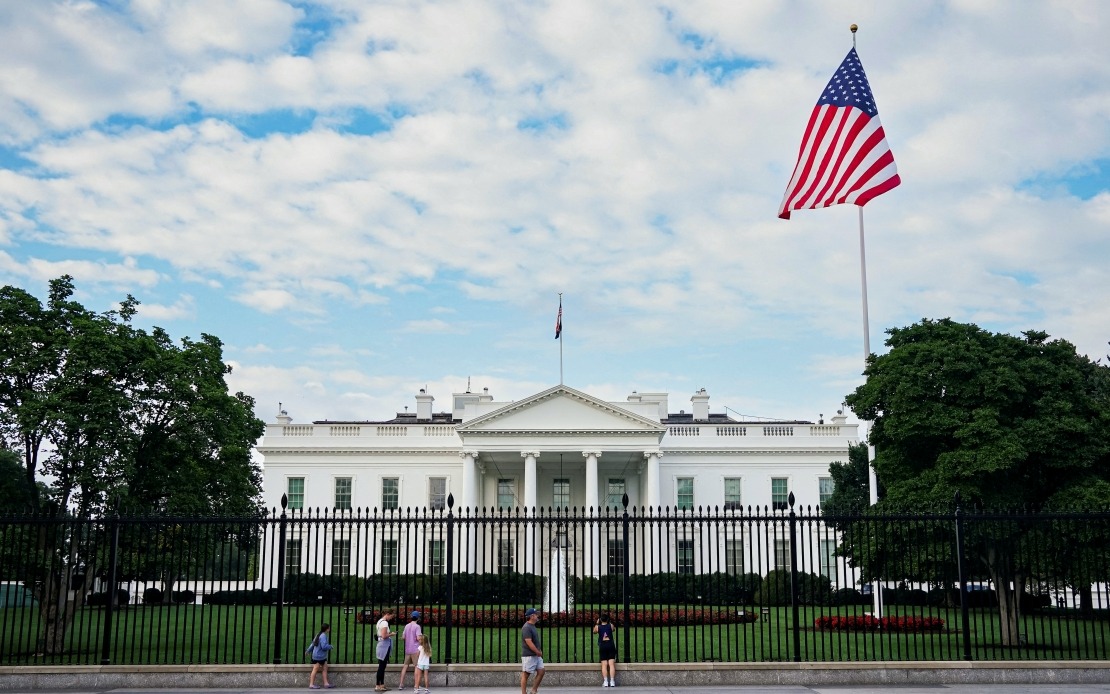
The Federal Bureau of Investigation announced on Tuesday that it had successfully prevented what officials describe as a sophisticated multi-stage attack planned against a White House Ultimate Fighting Championship event held on Sunday. The high-security occasion, which drew roughly 4,000 spectators to the South Lawn, was organised to commemorate President Donald Trump's 80th birthday and the 250th anniversary of the United States. FBI Director Kash Patel disclosed the thwarted threat through social media, stating that agents and partner law enforcement agencies became aware of potential dangers to UFC America 250 on June 10, just days before the event was scheduled to take place.
According to officials speaking with Fox News, the alleged attack scheme displayed considerable operational complexity. The plan reportedly centred on deploying explosive-laden drones to strike buildings situated near the venue, an action designed to force a mass evacuation of spectators and create confusion. The coordination extended beyond the initial drone strikes—organisers of the plot had positioned a sniper team in advance, strategically located to target crowds during the resulting chaos and evacuation. Law enforcement also indicated that participants in the network had planned a secondary assault, intending to breach the White House gates during the confusion generated by the first wave of violence. This layered approach suggested a level of tactical planning that raised significant concerns among security officials.
The scope of the alleged conspiracy extended well beyond the five individuals taken into custody by Monday. Investigators identified a broader network comprising 23 people suspected of involvement in the planning and coordination of the attack. The fact that the initial threat came from individuals operating outside the National Capital Region suggests the conspiracy may have involved coordination across multiple states and regions. FBI Director Patel's statement that "multiple individuals are now in custody, and alleged attacks were stopped in their tracks" indicated that law enforcement's early awareness of the threat had enabled them to move swiftly in dismantling the network before any operations could commence.
The White House's decision to host a UFC event on its grounds proved controversial even before the security threat came to light. Two Virginia residents had filed legal challenges against the unprecedented cage-fighting show, arguing that holding such an event at the presidential residence was unlawful. The legal objections reflected broader concerns about the propriety and security implications of staging a major sporting spectacle at one of America's most sensitive government locations. However, a federal judge in the U.S. District Court for the District of Columbia declined to block the event on Friday, allowing preparations to proceed. The judicial decision effectively cleared the way for the event to occur despite the legal objections, though the subsequent revelation of the foiled attack plan vindicated concerns about hosting such a high-profile gathering.
The incident sits within a troubling context of escalating political violence across the United States. In April, a separate case highlighted the vulnerability of high-profile governmental events when a man armed with guns and knives penetrated a security checkpoint at the White House Correspondents' Dinner. That individual was subsequently charged with attempting to assassinate the president, demonstrating that previous security breaches had exposed significant gaps in protective measures. The pattern of such incidents—ranging from breached checkpoints to allegedly coordinated multi-stage attack plots—underscores the constant pressure on law enforcement and security agencies to anticipate and prevent threats against senior government officials and major public events.
For Malaysia and the broader Asia-Pacific region, the incident offers instructive lessons about the security challenges surrounding high-profile diplomatic and ceremonial events. As Southeast Asian nations increasingly host international sporting events, political summits, and diplomatic gatherings, the sophistication displayed in the alleged White House attack plan demonstrates the evolving threat landscape. The use of drone technology coupled with traditional weapons systems suggests that organised groups may be exploring novel tactics that require security forces to adapt their protective protocols. Malaysian authorities, particularly those responsible for event security and counterterrorism, would likely be monitoring developments in this case closely to understand how such threats are detected and neutralised.
The timing of the alleged plot—coinciding with a celebration of American independence and the president's milestone birthday—may have held symbolic significance for those behind the conspiracy. Political violence in the United States has increasingly taken on coordinated, ideologically motivated characteristics, suggesting that perpetrators may select targets based on their symbolic value rather than purely operational considerations. This dimension adds complexity to threat assessment, as security agencies must evaluate not only the capability of potential attackers but also their likely target selection based on political or ideological motivations. The multi-person network allegedly involved in the White House plot suggests a degree of organisational capacity that distinguishes this case from isolated incidents of lone-actor violence.
The successful interdiction of this alleged attack reflects credit on the intelligence and law enforcement apparatus that identified the threat early enough to prevent implementation. The June 10 awareness date—six days before the event—provided a crucial window for investigators to locate and apprehend suspects. Modern intelligence-gathering capabilities, likely including signals intelligence and informant networks, evidently enabled authorities to detect the conspiracy before operational security could be fully established. The subsequent identification of 23 individuals suggests that investigation extended beyond initial arrests to map the broader network, potentially uncovering additional planned activities or future plots.
As the investigation continues and details emerge through legal proceedings, the case will likely influence how governments approach security for major public events. The White House event represents a deliberate choice by the Trump administration to demonstrate confidence in security arrangements and to showcase an unconventional celebration at the presidential residence. The successful prevention of the alleged attack vindicated this approach, though it remains to be seen whether such high-profile outdoor events at sensitive government locations will become more or less common going forward. For international observers, the incident demonstrates both the real threats facing democratic governments and the capacity of well-resourced security services to detect and prevent attacks when intelligence gathering is effective.