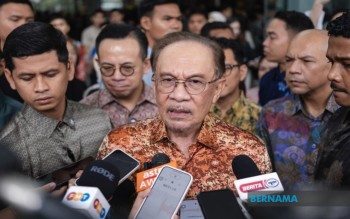
Prime Minister Datuk Seri Anwar Ibrahim has drawn a clear line in the sand on Malaysia's tax policy, declaring that the government will not resurrect the broad-based Goods and Services Tax despite mounting pressures to reform the country's consumption tax regime. Speaking at the TikTok Shop Summit 2026 in Kuala Lumpur, Anwar, who doubles as Finance Minister, emphasised that the core principle underpinning the MADANI administration's fiscal philosophy remains non-negotiable: protecting the poorest segments of society from additional tax burdens.
The statement comes as policymakers worldwide grapple with balancing fiscal deficits against social welfare obligations, a challenge particularly acute in Malaysia where economic growth has slowed and government revenues face constraints. The government's recent policy review has sparked intense debate about consumption taxation, with various quarters proposing alternatives ranging from electronic payment transaction levies to the full reinstatement of GST. Such discussions reflect the difficult arithmetic facing Finance Ministry planners as they seek to generate adequate revenue while maintaining the purchasing power of lower-income households.
Anwar's categorical rejection of GST reintroduction represents a reversal of political fortunes for the tax mechanism. Malaysia previously operated a GST system until 2018, when the government replaced it with the Sales and Service Tax following widespread public dissatisfaction with the cost-of-living implications of the broad-based levy. That transition proved politically consequential, with the consumption tax becoming a rallying point for voters concerned about affordability. The MADANI government's positioning suggests lessons from that period remain fresh in the minds of contemporary policymakers who witnessed the electoral consequences of tax decisions perceived as regressive.
However, Anwar's remarks signal that the government's fiscal thinking extends beyond simple rejection of unpopular policies. He explicitly acknowledged openness to selective components of GST architecture and refinements to the existing SST framework, indicating a pragmatic search for revenue enhancement that does not fundamentally alter the taxation burden on lower earners. This distinction matters considerably, as it suggests the administration is exploring intermediate options rather than accepting the status quo wholesale. The Finance Minister's nuanced position reflects recognition that Malaysia's fiscal trajectory requires improvements to tax collection efficiency and broadening of the tax base.
The SST system, which came into effect in 2018, applies six percent tax on goods and a six percent service tax on certain services. Unlike GST's broader application, SST operates as a multi-stage tax with specific exemptions, making it theoretically less burdensome for necessities. Yet critics argue SST generates insufficient revenue relative to government expenditure requirements, particularly as Malaysia confronts infrastructure investment demands, healthcare spending increases, and pension obligations. The sustainability of current spending patterns without revenue improvements presents an ongoing policy tension that no administration can entirely sidestep.
The discussion of electronic payment transaction taxes, which has circulated in policy circles, represents an alternative approach to broadening the tax base without imposing traditional consumption levies on essential goods and services. Such mechanisms would target financial transactions rather than physical goods, potentially capturing economic activity that currently escapes formal taxation. However, implementation complexities and potential impacts on digital payment adoption rates present technical and economic challenges that require careful calibration. Malaysia's push toward digital financial services makes this consideration particularly relevant for the nation's development trajectory.
Anwar's emphasis on the MADANI government's commitment to protecting lower-income populations reflects both ideological positioning and pragmatic political calculation. The administration, which came to power with a mandate emphasising fairness and reduced corruption, has built its economic messaging around inclusive growth. Any reversal toward broad-based taxation perceived as regressive would undermine that narrative and risk mobilising opposition ahead of future electoral contests. The political economy of consumption taxation in Malaysia remains shaped by the memory of previous reforms and their consequences at the ballot box.
Regional context adds another dimension to Malaysia's tax policy deliberations. Neighbouring countries have experimented with various consumption tax models, from Singapore's GST structure to Thailand's VAT system. Comparative analysis of these approaches provides policymakers with empirical evidence regarding revenue outcomes and distributional impacts. ASEAN's broader economic integration also means that tax policy decisions carry implications for competitiveness and cross-border trade flows. However, the domestic political reality in Malaysia appears to constrain policymakers' willingness to embrace internationally prevalent broad-based consumption taxes regardless of their efficiency credentials.
The government's openness to SST refinements suggests specific areas of focus for revenue enhancement. These could encompass widening the range of services subject to SST, adjusting exemption thresholds, improving compliance and collection mechanisms, or targeting particular high-value activities currently under-taxed. Such incremental improvements might collectively generate meaningful revenue gains without the political costs of tax restructuring. The Finance Ministry's exploration of such measures reflects acceptance that efficiency gains within existing frameworks offer lower-risk alternatives to systemic overhaul.
Moving forward, the Malaysian government faces the challenge of sustaining public services and fiscal stability without major tax increases on lower-income households. Anwar's statements suggest this balance will be pursued through targeted adjustments rather than wholesale taxation system transformation. The government's fiscal strategy will likely emphasise spending efficiency, enhanced tax compliance through improved administration, and selective broadening of tax bases in less politically sensitive areas. This approach acknowledges that in Malaysia's contemporary political environment, the architecture of consumption taxation remains a sensitive policy domain where popular acceptance constrains otherwise economically rational choices.

