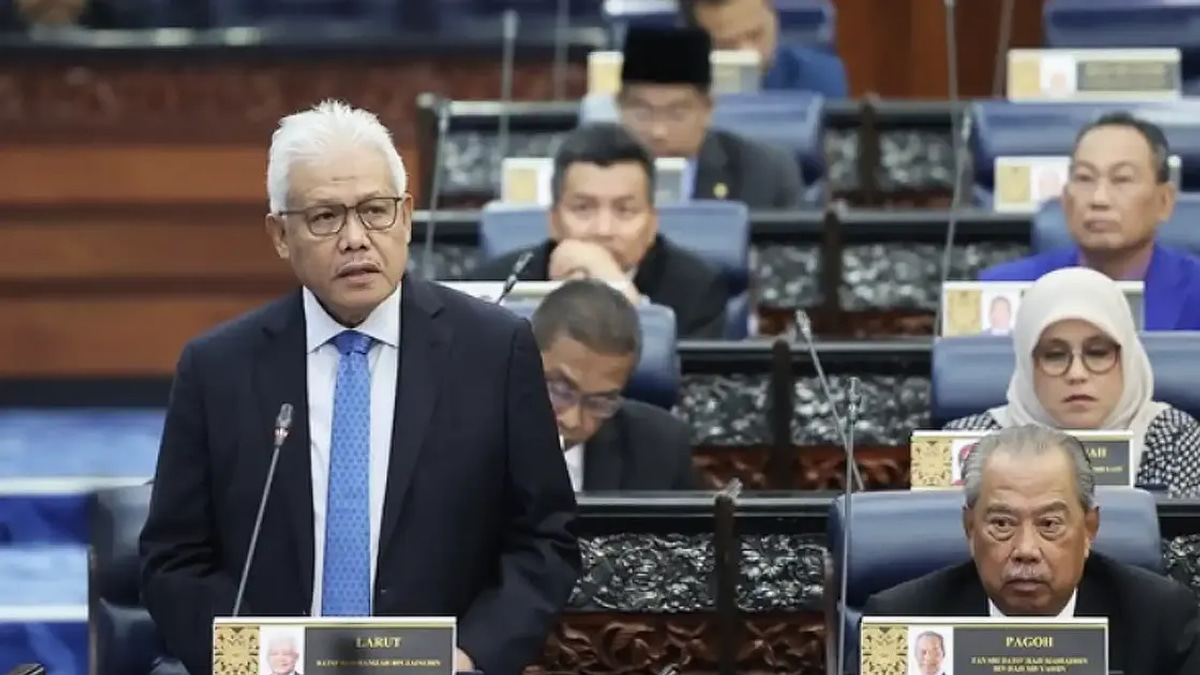
Hamzah Zainudin has been appointed president of Wawasan 2050, the government-affiliated strategic think tank tasked with driving Malaysia's long-term development agenda. The appointment represents a significant leadership restructuring at the influential policy institution, bringing together seasoned administrators from across Malaysia's political landscape to shape the nation's trajectory toward mid-century goals.
The think tank's board has simultaneously elevated veteran politician Rais Yatim to the position of chairman, leveraging his extensive experience spanning multiple ministerial portfolios and decades of involvement in governance and policy formulation. His appointment signals the organization's commitment to anchoring its vision-setting work within deep institutional knowledge of Malaysia's political and administrative machinery. Rais Yatim's background as a former minister positions him to navigate the complex relationships between Wawasan 2050's research agenda and the government machinery responsible for implementing its recommendations.
Complementing this leadership structure, Indera Mahkota MP Saifuddin Abdullah has been named secretary-general, a role requiring coordination between parliamentary oversight and the think tank's operational governance. Saifuddin Abdullah's dual capacity as a sitting Member of Parliament while serving in this administrative position creates a direct bridge between legislative interests and Wawasan 2050's policy development process, ensuring that parliamentary perspectives inform the think tank's strategic recommendations and that legislative channels remain aware of the organization's ongoing work.
Wawasan 2050 serves a critical function within Malaysia's governance architecture, functioning as the principal vehicle for articulating the nation's long-term strategic objectives and identifying policy pathways to achieve them. The think tank operates across multiple sectors including economic transformation, technological innovation, social cohesion, and institutional effectiveness. By consolidating leadership appointments at this juncture, the organization appears positioned to accelerate its research initiatives and amplify the influence of its policy recommendations across government agencies and private sector stakeholders.
The three-person leadership structure reflects a deliberate balancing of institutional experience with active political engagement. Hamzah Zainudin's presidency provides executive direction to research and strategic planning functions, while Rais Yatim's chairmanship offers advisory guidance and external institutional connectivity. Saifuddin Abdullah's secretariat role ensures operational efficiency and serves as the liaison point for stakeholder engagement, parliamentary communication, and daily administrative management of the think tank's expanding portfolio.
For Malaysian stakeholders tracking government strategic direction, these appointments carry implications for how national priorities may be articulated and pursued over coming years. Wawasan 2050's institutional positioning means that the think tank's analytical output often informs cabinet-level policy discussions, budget allocations, and long-term sectoral planning. The new leadership team's composition suggests continuity in institutional approach while potentially introducing fresh perspectives on emerging challenges such as digital transformation, climate adaptation, and regional economic positioning.
Regional observers should note that Wawasan 2050's strategic assessments frequently influence Malaysia's diplomatic posture and regional economic engagement strategies. The think tank's analysis of supply chain vulnerabilities, technology diffusion patterns, and competitive positioning in Southeast Asia shapes how Malaysian policymakers conceptualize the nation's role within ASEAN and the Indo-Pacific more broadly. Leadership changes at this institution therefore warrant attention from international analysts monitoring Malaysia's strategic evolution and policy direction.
The appointment of these three figures also reflects Malaysia's ongoing efforts to maintain institutional separation between partisan politics and strategic policy development, even while the three appointees maintain active political involvement. This tension—between the think tank's need for intellectual credibility and its integration within the political system—represents an ongoing structural challenge in Malaysian governance that the new leadership team will need to navigate carefully, particularly when policy recommendations challenge existing government priorities or approach politically sensitive issues.
Looking forward, the consolidated leadership team faces the substantial task of positioning Wawasan 2050's recommendations within Malaysia's complex federal structure, where multiple state governments, statutory bodies, and private sector actors must align for strategic initiatives to succeed. The think tank's effectiveness ultimately depends not merely on the quality of its research but on its capacity to persuade diverse stakeholders that its long-term vision serves their particular interests and the broader national good. This new leadership configuration will be tested against that measure in coming months and years.