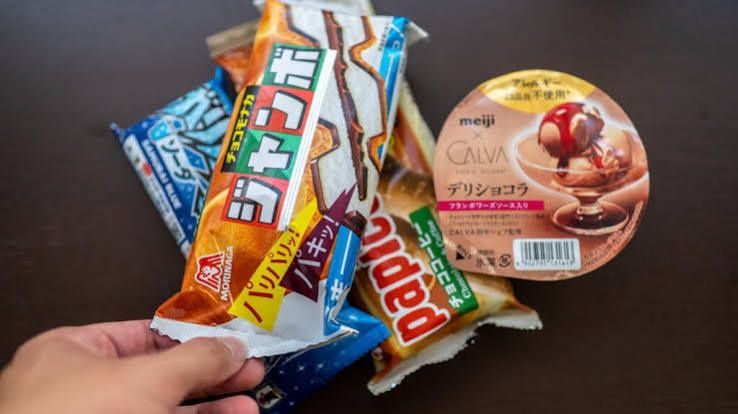
The Japan Fair Trade Commission (JFTC) has launched a high-profile investigation into alleged price-fixing practices by six of the nation's most prominent ice cream manufacturers, conducting simultaneous raids at their head offices as the summer season approaches—traditionally the busiest period for frozen dessert sales. The targeted companies, which include industry heavyweights Meiji Co., Morinaga Milk Industry Co., Lotte Co., Ezaki Glico Co., Morinaga & Co., and Akagi Nyugyo Co., are suspected of engaging in collusive behaviour to artificially inflate consumer prices across the market.
According to sources familiar with the investigation, company officials are believed to have orchestrated a coordinated strategy spanning several years, using electronic communications and in-person meetings to align the timing and magnitude of price increases. This synchronised approach to raising prices would represent a textbook violation of Japan's competition laws, as it eliminates the natural price competition that should occur between rival firms operating in the same sector. The pattern of suspicious activity is said to have intensified since approximately 2022, when the companies began implementing annual price hikes that occurred in remarkably similar timeframes, suggesting predetermined coordination rather than independent business decisions responding to market conditions.
The JFTC's scrutiny extends beyond merely documenting the coordinated timing of price increases. Investigators are examining whether the ice cream manufacturers exploited broader inflationary pressures gripping the Japanese economy to justify price hikes that substantially exceeded the actual rise in production costs. This represents a sophisticated dimension of the alleged cartel activity—leveraging macroeconomic conditions as a convenient cover story for anticompetitive conduct. By exploiting consumer awareness of inflation, the companies may have sought to deflect criticism that their price increases were disproportionate to underlying cost pressures, thereby obscuring the true nature of their coordinated behaviour from regulators and the public.
All six companies have issued formal statements acknowledging the JFTC's on-site inspections and pledging full cooperation with the investigation. Natsuyo Suzuki of Akagi Nyugyo specifically confirmed the company's commitment to assisting investigators, language that appears calculated to demonstrate compliance and potentially mitigate any eventual penalties. The uniform tone of these public responses suggests coordinated messaging, though cooperation statements are standard practice when firms face antitrust inquiries. These acknowledgements do not constitute admissions of wrongdoing but rather procedural confirmation that the raids have occurred and the firms will provide documentation and testimony as required.
The timing of the investigation carries particular significance for Japan's ice cream industry, which is entering its peak sales season just as authorities intensify scrutiny. The sector has experienced remarkable commercial success in recent years, driven by record consumer demand during periods of extreme summer heat. In the fiscal year ending March, ice cream sales in Japan reached an unprecedented 660 billion yen, buoyed by the country's hottest summer since comprehensive temperature records began in 1989. This extraordinary market performance and the concurrent pricing pattern have likely triggered heightened regulatory attention, as such anomalous sales figures combined with synchronised price increases naturally invite investigation from competition authorities.
The investigation reflects broader concerns among Japanese regulators about anticompetitive practices in consumer-facing sectors during periods of economic stress. Cartel activity in food and beverage industries has attracted particular regulatory focus in recent years across multiple Asian jurisdictions, as companies have increasingly been suspected of using supply chain disruptions and inflation as pretexts for coordinated price increases that exceed legitimate cost recoveries. Japan's approach mirrors enforcement actions undertaken by counterparts in South Korea, Taiwan, and other regional economies, suggesting a coordinated regional emphasis on policing anticompetitive behaviour in essential consumer goods categories.
If the JFTC establishes sufficient evidence of collusive conduct, the consequences for the implicated firms could be substantial. The regulatory agency possesses the authority to mandate that offending companies implement corrective measures to restore competitive business practices and to impose significant financial penalties. These sanctions function both as direct punishment and as deterrents intended to discourage similar conduct by the sanctioned firms and their competitors. Previous JFTC enforcement actions against cartels in various sectors have resulted in penalties reaching hundreds of millions of yen, though the final amount would depend on factors including the duration of the alleged conspiracy, the market impact, and the degree of cooperation demonstrated during investigation.
For Malaysian and Southeast Asian observers, this investigation underscores the increasing willingness of developed-market regulators to prosecute anticompetitive conduct even among respected, established corporations. The case demonstrates that Japan's competition authorities are prepared to allocate investigative resources to sectors that might appear peripheral to economic policy, provided there is credible evidence of market distortion. This enforcement posture reflects a fundamental principle that applies across ASEAN economies: anticompetitive practices that raise consumer prices warrant serious regulatory intervention regardless of industry prominence or corporate respectability. As regional competition enforcement has matured over the past decade, authorities across Southeast Asia have similarly intensified scrutiny of suspected cartels, particularly in food and beverage sectors serving mass markets.
The investigation also highlights the vulnerability of price-sensitive consumer goods to cartel formation, a concern directly relevant to market conditions throughout Southeast Asia where ice cream and frozen dessert consumption patterns are expanding rapidly. Companies operating across multiple Asian markets must recognise that coordination on pricing strategies—whether explicit or tacit—carries substantial legal risk in jurisdictions with increasingly sophisticated competition enforcement regimes. The JFTC's actions serve as a cautionary example for industry participants throughout the region that regulators are monitoring pricing patterns for anomalies and will pursue investigations when evidence of collusion emerges.