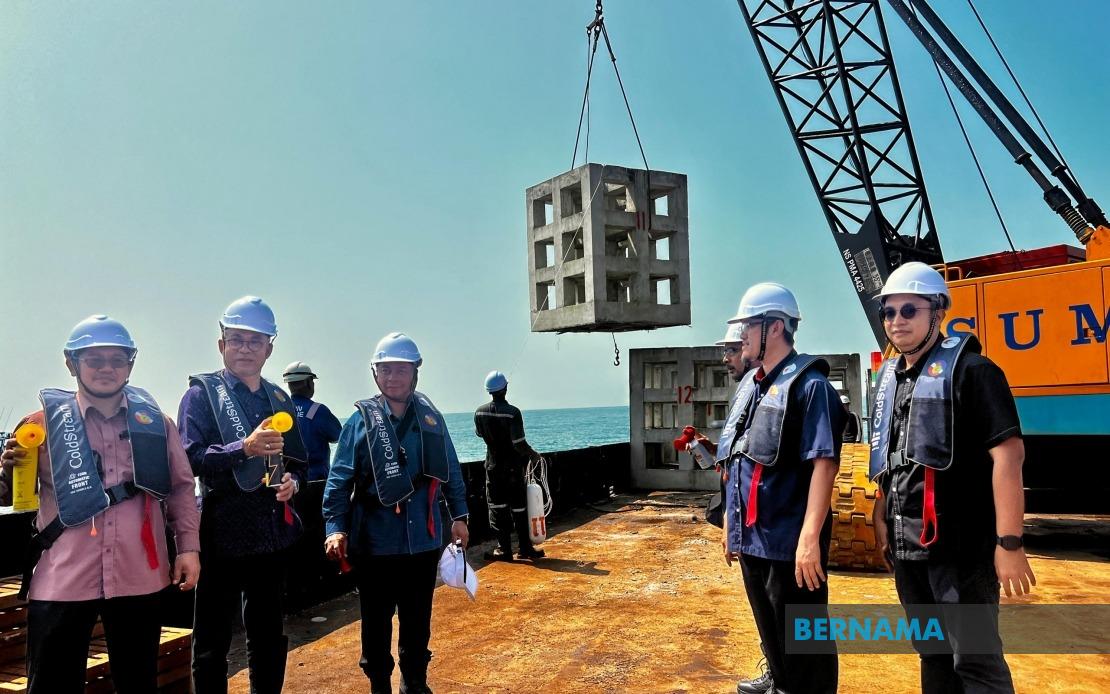
Kelantan's fisheries authority has launched an ambitious conservation initiative that tackles two persistent maritime challenges simultaneously: rebuilding fish populations in state waters while protecting artisanal fishermen from competition by industrial-scale vessels. The deployment of 30 artificial reef structures, positioned approximately 4.6 nautical miles off the Tok Bali Jetty, represents a dual-purpose strategy that reflects growing recognition among Southeast Asian fisheries managers that environmental protection and socioeconomic equity for coastal communities must advance together.
According to Kelantan Fisheries Department director Ismail Ibrahim, the submerged structures serve as both ecological sanctuaries and physical deterrents. By creating underwater obstacles that snag fishing equipment when trawled, the reefs effectively create no-go zones for the large commercial vessels that have historically displaced smaller boats in shared waters. This technological approach offers a less contentious alternative to enforcement-heavy regulations, which are notoriously difficult to monitor across vast maritime zones and often pit government agencies against powerful fishing industry interests.
The initiative carries particular significance for Malaysia's fishing sector, where the pressure on coastal communities has intensified over the past two decades. Small-scale fishermen operating from jetties like Tok Bali have watched their traditional fishing grounds progressively encroached upon by larger, mechanised vessels equipped with advanced sonar and netting capabilities. These industrial operations can deplete fish stocks rapidly and leave artisanal fishers with reduced catches, threatening food security in fishing-dependent communities and undermining livelihoods passed down through generations.
The artificial reefs function as underwater nurseries where juvenile fish can grow to maturity with reduced predation risk. Within approximately six months of deployment, depending on local environmental conditions and ecosystem development rates, these structures typically accumulate sediment and become colonised by smaller organisms that form the base of the marine food web. Fish species gravitate to such areas to spawn and shelter, gradually increasing the abundance of commercially valuable species in adjacent fishing grounds. For small-scale fishermen operating within five nautical miles of shore, this translates to improved catch volumes and more predictable daily harvests.
Sultan Muhammad V's direct financial contribution to this programme underscores the Kelantan royal family's commitment to supporting the state's fisheries sector, which remains economically vital despite modernisation pressures. The reefs represent the first phase of conservation funding specifically earmarked by the sultanate for fisheries protection, signalling potential for expanded deployment across state waters. Ismail indicated that Kelantan intends to increase the number of deployed reefs substantially, building on the department's experience since 2007 when it first began systematic reef deployment at multiple coastal locations.
To date, the Kelantan Fisheries Department has installed approximately 400 artificial reef units at four separate sites throughout state waters, with an additional 72 structures scheduled for staged deployment during the current year. This incremental approach allows department officials to monitor ecological outcomes and refine deployment strategies before scaling up operations. The geographical spread of reef sites across different water depths and coastal zones helps distribute fishing pressure more evenly and creates a network of protected breeding areas rather than relying on single conservation hotspots.
Maintenance represents a critical but often overlooked component of artificial reef programmes. The department conducts regular monitoring and cleaning operations to remove ropes, discarded fishing nets, and other debris that accumulate on reef structures. Without such intervention, reefs can become marine debris repositories where tangled equipment harms wildlife and reduces habitat functionality. The Kelantan department's commitment to ongoing stewardship suggests a sophisticated understanding that conservation requires sustained investment beyond the initial infrastructure deployment.
The initiative aligns with broader Southeast Asian efforts to balance fisheries sustainability with livelihood protection for vulnerable coastal populations. Countries across the region, from Thailand to Indonesia to the Philippines, have experimented with artificial reef programmes with varying degrees of success. Kelantan's approach emphasises the socioeconomic dimension by explicitly positioning reefs as tools for protecting small-scale fishers from industrial displacement, a concern that resonates across Malaysia's maritime states where coastal communities have faced progressive marginalisation.
From a food security perspective, the programme addresses a pressing regional challenge. Southeast Asia's growing population creates escalating demand for affordable protein, and fish remains the primary source for millions of people. Yet conventional fishing practices have depleted many traditional fishing grounds through overharvesting. By rebuilding fish stocks in coastal zones while simultaneously protecting the fishing methods practised by small-scale operators, Kelantan's strategy attempts to square a difficult circle: maintaining food supply while supporting community resilience and environmental sustainability.
The physical barrier function of artificial reefs introduces an innovative dimension to maritime resource management. Rather than relying exclusively on monitoring and enforcement—approaches that require significant government expenditure and often prove ineffective across expansive ocean zones—the underwater structures create natural consequences for industrial vessels that venture into protected areas. This passive deterrent effect reduces enforcement costs while respecting the legitimate rights of small-scale fishermen to access traditional fishing grounds designated for their use.
Looking forward, the success of Kelantan's programme will likely influence fisheries policy discussions across other Malaysian states facing similar pressures. If the reefs achieve projected outcomes in terms of fish population recovery and income stability for coastal communities, other state governments may adopt comparable strategies. Conversely, if implementation challenges or environmental factors limit effectiveness, policymakers will need to reassess the approach and consider complementary conservation methods. The coming year will provide crucial data as the newly deployed 72 reef units settle into their marine environment.

