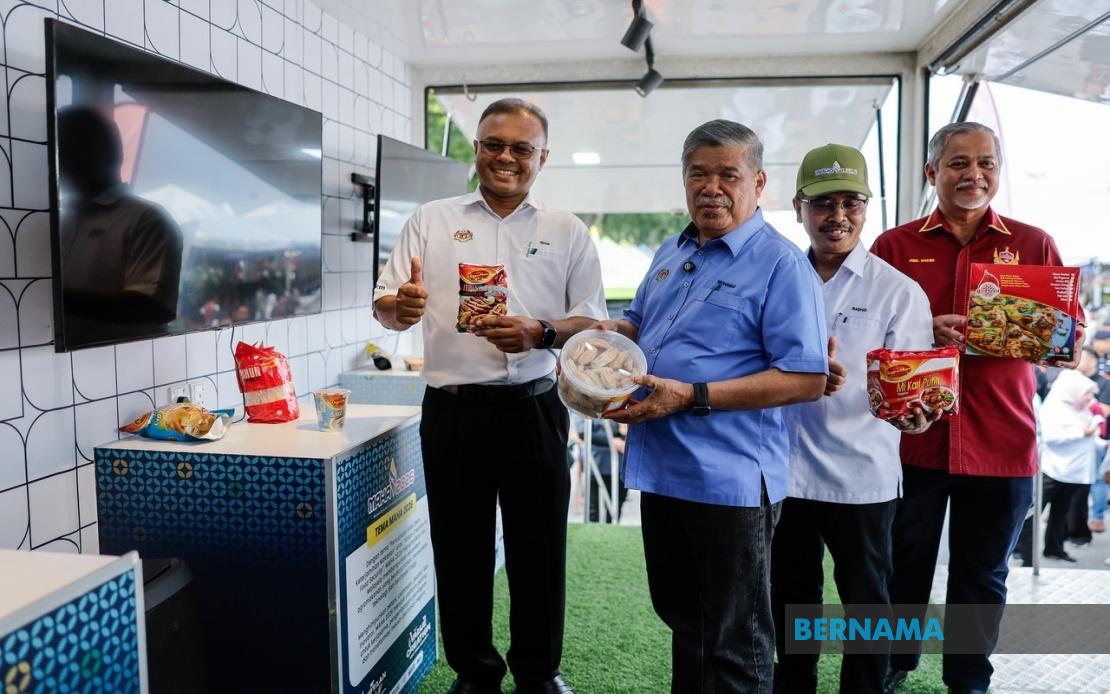
Malaysia's premier agricultural showcase, the Malaysia Agriculture, Horticulture and Agrotourism Show (MAHA) 2026, is set to become a distinctly international affair, signalling a strategic shift towards cross-border collaboration on food security. Agriculture and Food Security Minister Datuk Seri Mohamad Sabu announced that the biennial event will feature its first-ever participation of foreign exhibitors, representing a landmark development for an event that has historically focused on showcasing domestic agricultural capabilities. This expansion underscores Malaysia's commitment to positioning itself as a regional hub for agricultural innovation and trade, while acknowledging that food challenges are increasingly interconnected across Southeast Asia and beyond.
The participating nations comprise a geographically and economically diverse group. Brazil, China, the United States, Japan, South Korea, Hungary and China's Guangxi region have confirmed their attendance, each bringing distinct agricultural expertise and technologies to the Malaysian market. Additionally, Uzbekistan has signalled its intent to join, with several other countries still in discussions about participation. The breadth of this international cohort reflects the growing recognition among agricultural producers and governments that knowledge-sharing and trade partnerships are essential to addressing food security vulnerabilities that became increasingly apparent during recent global supply chain disruptions.
Minister Mohamad framed this international dimension within a broader philosophy of agricultural interdependence. He emphasised that no country can entirely insulate itself from food security challenges, and that disasters affecting one nation inevitably ripple across borders, prompting mutual assistance and cooperation. This perspective resonates particularly within Southeast Asia, where climate volatility, land-use pressures and population growth create persistent food security concerns. By bringing together exhibitors from multiple continents, MAHA 2026 positions Malaysia as a convening power for practical dialogue on these shared challenges, rather than merely a showcaser of local produce and farming methods.
The structural benefits for local participants and visitors are substantial. Ministry of Agriculture and Food Security secretary-general Datuk Isham Ishak outlined how the international presence would enable Malaysian farmers, agribusinesses and technology providers to access cutting-edge agricultural innovations and methodologies. Visitors will gain exposure to products, services and farming practices from established agricultural powerhouses, creating opportunities for knowledge transfer that could enhance competitiveness and productivity across Malaysia's agricultural sector. For an industry that frequently grapples with labour shortages, climate impacts and market volatility, exposure to international best practices represents a concrete pathway to modernisation.
Crucially, MAHA 2026 will incorporate structured business matchmaking sessions that transform the event from a passive exhibition into an active trading platform. Domestic exhibitors will have formal opportunities to negotiate purchases and sales with foreign counterparts, while international visitors can explore potential supply chains and distribution partnerships with Malaysian suppliers. This transactional dimension is particularly significant for Malaysian agribusinesses seeking to expand into regional markets or secure international supply arrangements that could buffer against domestic market fluctuations. For foreign exhibitors, the event provides access to Southeast Asian distribution channels and potential partners without the overhead of establishing permanent regional offices.
The timing of this expansion aligns with mounting pressure on governments across the region to ensure food affordability and supply stability. International participation at MAHA 2026 signals that Malaysia recognises food security as a multilateral challenge requiring collaborative solutions. The diversity of participating nations—spanning Latin America, East Asia, Central Asia and Europe—suggests that the event will facilitate exchanges not only on commodity production but also on regulatory frameworks, trade mechanisms and climate-adaptive agriculture. Such conversations are increasingly vital as extreme weather events and resource constraints reshape agricultural production possibilities across multiple continents.
Complementing the international expansion, the Malaysian government launched the Surveillance and Intervention Supply Demand Agrofood (SISDA) system, a technology platform designed to enhance domestic food system resilience. This system leverages sophisticated data analytics, machine learning capabilities and early warning mechanisms to enable government monitoring of agricultural supply conditions, demand patterns and pricing trends in real time. The development reflects a recognition that hosting international agricultural dialogues must be paired with robust domestic mechanisms for tracking and responding to market dynamics. SISDA will allow policymakers to intervene swiftly when supply disruptions or price shocks threaten consumer food security or farmer viability, creating a more stable environment for the entire agrifood value chain.
The system's emphasis on data-driven decision-making represents a modernisation of agricultural governance in Malaysia. By integrating supply monitoring, demand forecasting and price surveillance into a unified platform, SISDA enables interventions that are proportionate, evidence-based and responsive rather than reactive. This is particularly important in contexts where policy mistakes can rapidly destabilise markets or leave vulnerable populations struggling with food affordability. The ability to project agricultural trends and implement targeted measures before crises emerge demonstrates a proactive approach to food security that complements the more trade-focused agenda of international exhibition participation.
For Malaysia's broader agricultural strategy, the convergence of expanded international participation at MAHA 2026 and the launch of SISDA suggests a two-pronged approach: externally, deepening regional and global linkages to access technologies, markets and supply diversity; internally, strengthening monitoring and intervention capabilities to manage domestic food system stability. This combination is particularly relevant for Malaysian policymakers grappling with the reality that food security cannot be achieved through autarky or passive market mechanisms alone. Rather, it requires both openness to international trade and technology transfer, and sophisticated domestic capacity to anticipate and respond to supply and demand misalignments.
The implications for Southeast Asian agricultural trade are significant. If MAHA 2026 succeeds in establishing itself as a premier regional forum for agricultural exchange, it could enhance Malaysia's positioning as a trade and logistics hub within ASEAN. Malaysian agribusinesses that forge connections with international exhibitors at the event may develop capabilities and partnerships that elevate their regional competitiveness. Conversely, international exhibitors gain a concentrated opportunity to network with Southeast Asian buyers and distributors, potentially reducing transaction costs and information barriers that have historically segmented agricultural markets within the region.