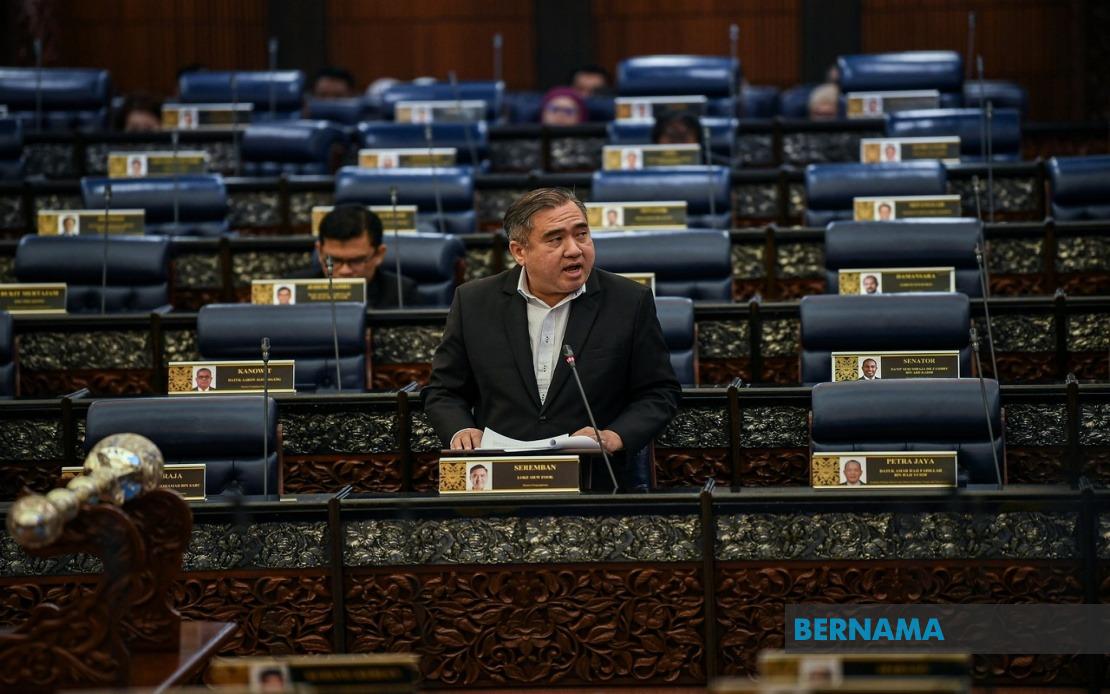
The Malaysian government has moved to tackle illegal street racing with targeted legislation that creates a distinct criminal offence for the first time, closing a significant enforcement loophole in the nation's traffic laws. Transport Minister Anthony Loke tabled the Road Transport (Amendment) Bill 2025 in the Dewan Rakyat today, introducing Section 42A to specifically criminalise racing and speed testing on public roads. The new provision represents a fundamental shift in how authorities can address what has become an increasingly visible problem in urban and suburban areas, where groups of motorcyclists and motorists frequently gather to test vehicle capabilities against one another.
Under the proposed framework, first-time offenders convicted of illegal racing face financial penalties ranging from RM2,000 to RM10,000, custodial sentences of up to two years, or a combination of both penalties. The escalation becomes sharper for repeat offenders, with second and subsequent convictions attracting fines between RM5,000 and RM20,000 alongside imprisonment stretching up to five years. This graduated punishment structure signals the government's determination to discourage habitual participation in dangerous racing activities whilst providing proportional consequences for initial violations.
The legislation addresses a critical enforcement gap that has hampered road safety efforts for years. Currently, authorities pursuing illegal racing cases must rely on existing provisions governing reckless or dangerous driving, which require demonstrable harm—an accident, injury, or fatality—before prosecution becomes viable. This dependency on accident-related evidence creates a reactive rather than preventive enforcement approach, allowing dangerous racing to persist as long as no collision occurs. The new Section 42A fundamentally restructures this dynamic by enabling police and traffic officers to intervene and prosecute based purely on the act of racing itself, regardless of whether the activity resulted in property damage or bodily harm.
Minister Loke illustrated the practical implications through concrete examples during his parliamentary statement. When two or more motorcyclists simultaneously accelerate to test speed against each other on a public thoroughfare, enforcement personnel can now initiate action even if their behaviour causes no accident. Similarly, motorists who commandeer portions of public roads as impromptu speed testing grounds become subject to prosecution without awaiting an inevitable collision. This preventive capability represents a significant expansion of police authority and a potential game-changer for traffic safety operations, particularly in controlling the street racing phenomenon that has drawn complaints from residents in communities across Peninsular Malaysia and East Malaysia.
Beyond the racing offence itself, the amendment introduces Section 110B to strengthen the enforcement environment more broadly. This provision criminalises obstruction, interference with, assault against, or threats directed toward enforcement officers undertaking compliance operations. Crucially, it also captures individuals who divulge details of enforcement operations to enable offenders to escape legal consequences. Penalties under this section range from RM10,000 to RM50,000 in fines plus imprisonment of one to five years, or both, with violations classified as arrestable offences. This protection for enforcement personnel addresses a documented problem whereby racing communities share real-time alerts about police operations, allowing drivers to disperse before authorities arrive.
The legislative package also contemplates harmonising financial penalties across selected road transport violations, though implementation timing suggests careful consideration of compliance capacity. The government proposes elevating base compound amounts from RM300 to RM500 for specific offences, with a staged implementation date of January 1, 2029. This delay provides stakeholders—enforcement agencies, vehicle owners, and commercial operators—with advance notice and preparation time. However, officials clarified that the RM500 figure represents a ceiling rather than a standardised charge; actual compound amounts will reflect the nature and gravity of specific violations, the timeframe for settlement, and established administrative procedures.
The amendment's targeting of compound rates also extends to compoundable offences more broadly, raising maximum permissible settlement amounts whilst maintaining discretionary determination of actual charges. This approach acknowledges that a one-size-fits-all approach to traffic violations produces inequitable outcomes and poor deterrent effects. A motorist exceeded the speed limit by five kilometres per hour arguably warrants different financial consequences than someone detected operating a grossly overloaded commercial vehicle endangering other road users. The revised framework allows enforcement officers greater flexibility in calibrating penalties proportionally.
For Malaysia's automotive industry and commercial transport sector, the amendment carries substantial implications. The emphasis on combating overloading, non-compliant vehicles, and breaches by commercial operators suggests heightened scrutiny of fleet operations and logistics practices. Companies operating heavy goods vehicles will face intensified enforcement activity aimed at ensuring mechanical compliance and load distribution adherence. This regulatory tightening, whilst improving public safety by reducing the risk of catastrophic failures on highways, imposes additional compliance costs that operators must factor into business planning.
The illegal racing provisions carry particular resonance for Southeast Asian policymakers watching Malaysia's approach. The region has grappled with similar street racing problems, with countries including Thailand, the Philippines, and Indonesia experiencing documented fatalities and public nuisance complaints arising from organised or semi-organised racing activities. Malaysia's decision to establish a standalone offence with meaningful custodial consequences sets a precedent that neighbouring jurisdictions may monitor and potentially emulate, establishing emerging best practice within the region for addressing this specific road safety challenge.
From a traffic safety perspective, the amendment reflects growing recognition that prevention outweighs remediation. Creating opportunities for prosecution before disasters occur aligns with contemporary traffic safety philosophy emphasising proactive intervention. By removing the requirement that accidents precede enforcement action, the legislation shifts police strategy from responding to consequences toward identifying and stopping dangerous conduct in its execution. This represents conceptual progress in framing road safety as a system-wide responsibility rather than a series of incident-based responses.
The Bill's successful passage through parliamentary readings suggests broad political consensus that existing legislation inadequately addressed illegal racing concerns. Transport ministry officials and police leadership have publicly advocated for stronger tools targeting this specific problem, citing community complaints and safety statistics. The amendment's specificity—addressing racing as a distinct category rather than folding it into broader dangerous driving provisions—indicates that policymakers recognised the limitations of generic categories in addressing what amounts to a specialised form of high-risk behaviour. This targeted approach, combined with enhanced protection for enforcement personnel, constitutes a comprehensive legislative response to a multifaceted enforcement challenge.