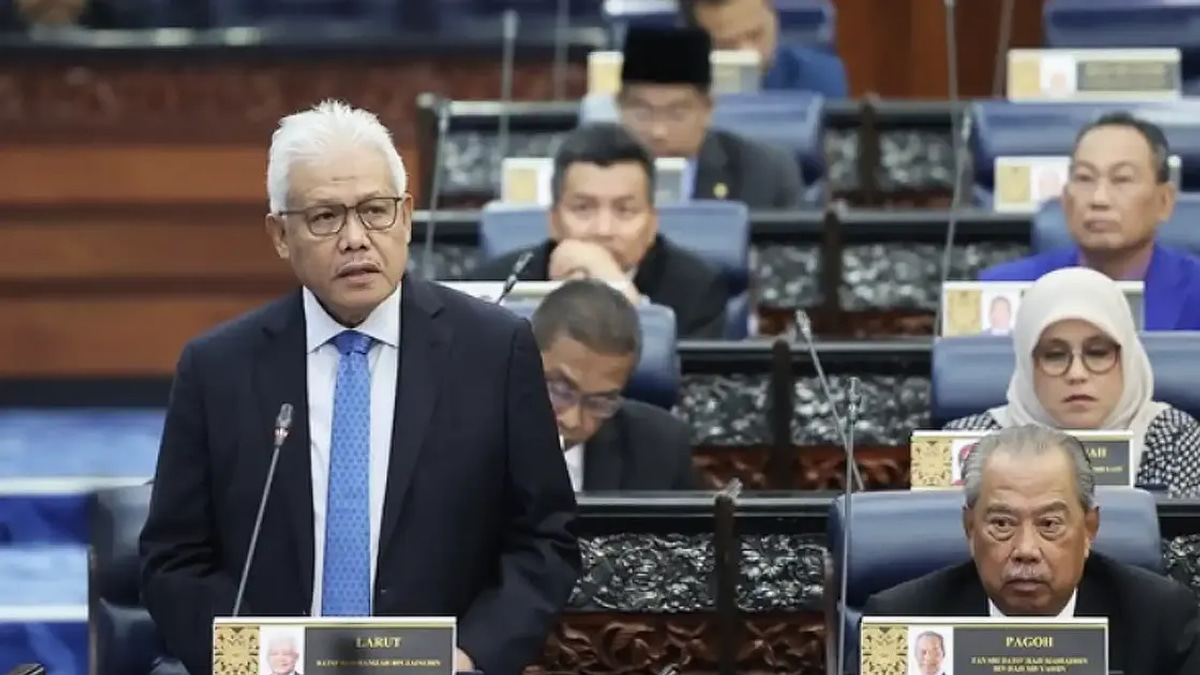
Datuk Seri Alexander Nanta Linggi, Malaysia's Works Minister, has signalled a significant shift in the country's transport strategy, indicating that the era of expansive highway construction is waning. Rather than continuing the pattern of large-scale road-building projects that have characterised Malaysian infrastructure development for decades, the government is now reconsidering its approach to moving people and goods efficiently across the country.
While highways will continue to play a role in Malaysia's transport ecosystem, the minister's remarks suggest that the sector cannot rely on building ever more roads as a solution to congestion and mobility challenges. This represents a philosophical change in how policymakers view the relationship between motorised transport, land use, and urban planning. Instead of treating highways as the primary driver of economic development and connectivity, officials are increasingly recognising that roads alone cannot solve fundamental transportation problems, particularly in densely populated metropolitan areas where demand consistently outpaces infrastructure expansion.
The shift towards smarter highways reflects international best practices and lessons learned from other rapidly developing economies. Modern highway systems employ real-time traffic management, electronic toll collection, dynamic pricing, and vehicle-to-infrastructure communication to optimise existing capacity. These technologies allow roads to function more efficiently without necessarily expanding their physical footprint, making better use of available infrastructure. For Malaysia, where significant capital investment remains limited and competing demands exist for government spending, extracting maximum value from existing roads represents a pragmatic approach to maintaining economic competitiveness.
Integration between highways and public transport represents the cornerstone of Nanta's vision for Malaysia's transport future. Currently, many Malaysian cities face a fragmented system where highways and public transit operate in parallel rather than complementary ways. Commuters often cannot easily transition from highway-based travel to trains or buses, creating inefficiencies and reinforcing vehicle dependency. Proper integration would involve coordinated planning of transit hubs, park-and-ride facilities, and seamless fare systems that encourage multimodal journeys. This approach requires long-term planning that extends beyond individual project considerations.
The implications for Malaysia's urban development are substantial. Cities like Kuala Lumpur, Selangor, and Penang face persistent congestion despite decades of highway construction. The reality of traffic conditions suggests that roads, however numerous, cannot accommodate unlimited vehicle growth in a constrained urban geography. Strategic investment in public transport alongside measured highway improvements offers an alternative pathway. Cities globally that have balanced road infrastructure with robust mass transit systems have achieved better outcomes in terms of congestion, air quality, and livability. This model could reshape Malaysian urban policy if implemented comprehensively.
Regional economic integration also factors into transport planning calculations. Malaysia's position as a logistics hub connecting Singapore, Thailand, and Brunei means that efficient freight movement remains critical to competitiveness. However, freight efficiency depends less on highway quantity than on corridor reliability, maintenance standards, and border crossing efficiency. Smarter highways with better management systems could deliver freight benefits without massive new road construction. Regional cooperation on transport standards and cross-border coordination would amplify benefits beyond what individual countries could achieve independently.
Public transport infrastructure requires sustained investment if it is to provide genuine alternatives to private vehicles. Expanding the Metro system in Kuala Lumpur, establishing rapid transit connections to secondary cities, and implementing bus rapid transit schemes in medium-sized towns all demand significant capital commitments. These projects often have longer gestation periods than highway construction and generate returns over decades rather than years. Government willingness to prioritise public transit investment will determine whether the shift away from highway-centric planning translates into meaningful transport outcomes.
Environmental considerations increasingly influence transport strategy globally, and Malaysia cannot ignore this trend. Road transport contributes substantially to carbon emissions, and unchecked vehicle growth threatens national climate commitments. Public transport systems, particularly rail-based alternatives, offer lower emissions per passenger kilometre than private vehicles. Electric vehicles and sustainable fuel technologies may eventually reduce transport emissions, but they cannot address congestion or land-use inefficiency created by car-dependent systems. Integrating environmental imperatives into transport planning represents both a policy imperative and an economic opportunity as clean technology sectors expand.
Financing the transition from highway-focused to integrated transport systems presents practical challenges. Highway tolls and fuel taxes have traditionally funded road infrastructure, creating a revenue stream that supports existing priorities. Shifting resources towards public transport investment means developing alternative funding mechanisms, potentially through congestion pricing, carbon charges, or public-private partnerships. Political economy dimensions matter considerably; vehicle owners represent powerful constituencies with vested interests in road investment. Successfully reorienting transport policy requires building public understanding of long-term benefits and demonstrating tangible improvements in mobility and quality of life.
For Malaysian commuters and businesses, the eventual impact of this strategic reorientation could be transformative. A well-integrated transport system offering genuine alternatives to private vehicles would reduce congestion for those who must drive, improve air quality in urban areas, and provide affordable mobility for lower-income populations. Businesses benefit from predictable, efficient movement of goods and employees. Property developers and investors gain from understanding that transport planning will increasingly value proximity to transit nodes rather than highway access alone, potentially reshaping metropolitan growth patterns.
Implementing this vision requires coordination across multiple government agencies, consistent political commitment across electoral cycles, and meaningful engagement with state governments and local authorities. Transport planning operates across jurisdictional boundaries, and siloed decision-making undermines comprehensive strategies. Singapore's integrated approach to land use, transport, and housing demonstrates what coordinated planning can achieve, though Malaysia's larger size and federal structure present different challenges. Whether Malaysian policymakers can sustain focus on this long-term strategic reorientation, particularly when immediate pressures favour short-term highway projects, remains the critical test of government commitment.