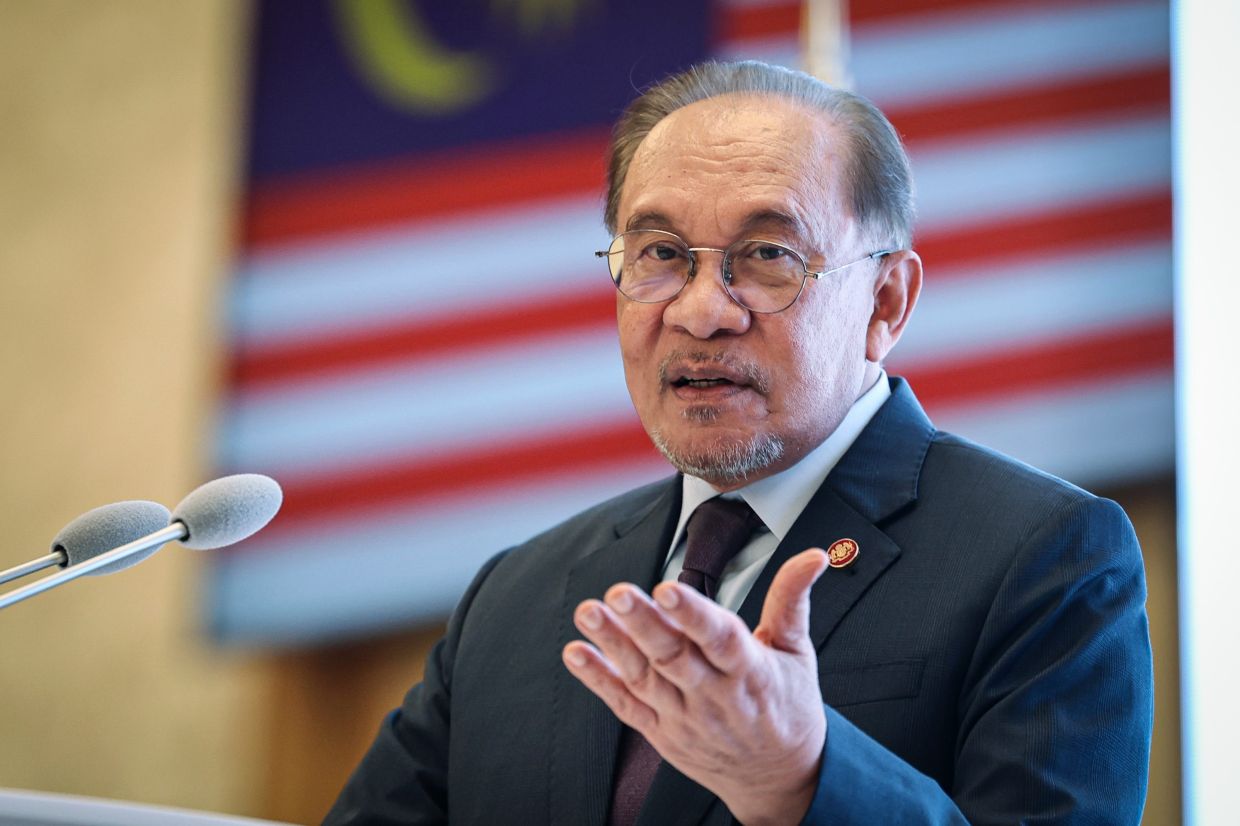
Malaysia's government is exploring the possibility of incorporating selected features from the Goods and Services Tax into its existing Sales and Service Tax framework to develop a more equitable taxation structure, Prime Minister Datuk Seri Anwar Ibrahim revealed during the closing ceremony of Budget 2027 consultations in Putrajaya. The proposal represents an attempt to balance fiscal efficiency with social equity, a tension that has long characterized Malaysia's tax policy debates following the controversial GST implementation and subsequent repeal in recent years.
Anwar, who holds the dual portfolio of Prime Minister and Finance Minister, clarified that despite this willingness to examine hybrid approaches, the government remains firmly committed to SST as Malaysia's foundational tax system. The distinction is significant: while policymakers may selectively adopt mechanisms that proved effective under GST—such as potentially refined compliance frameworks or sector-specific refinements—the underlying tax architecture will not shift to a consumption-based model affecting the broader population. This measured approach suggests the government seeks technical improvements without repeating the politically contentious experience of implementing a comprehensive new tax regime.
The crux of Anwar's position centres on a fundamental philosophical objection to GST's universal application across society. He repeatedly emphasized his unwillingness to adopt any taxation mechanism that imposes levies on citizens indiscriminately, regardless of income level or economic vulnerability. This stance reflects the political and social backlash that surrounded GST during its implementation—a period when households across all income brackets suddenly faced additional tax obligations on consumption, sparking widespread public discontent that became a defining electoral issue.
An essential component of Anwar's reasoning concerns the distributional impact of broad-based consumption taxes during periods of economic strain. Malaysia's ongoing cost-of-living pressures have made households increasingly sensitive to any policy that would raise their effective tax burden, particularly lower and middle-income groups who devote higher proportions of income to essential goods and services. By rejecting a GST-style universal application, the government aims to protect citizens already grappling with inflation and stagnant real wages from shouldering additional tax obligations.
The tension between tax efficiency and progressivity remains at the heart of this policy debate. GST advocates argue that consumption-based taxation creates stronger incentives for savings and investment, while capturing economic activity in informal sectors more effectively than traditional SST mechanisms. However, these theoretical advantages must be weighed against distributional concerns that appear to dominate the government's calculus. The proposed hybrid approach may attempt to capture certain efficiency gains—such as improved documentation systems or better treatment of intermediate goods—without embracing the universal application that made GST politically untenable.
For Malaysian taxpayers and businesses, this development carries significant implications. The exploration of hybrid mechanisms suggests the government recognizes genuine limitations in SST's current design while remaining unwilling to pursue comprehensive reform that would impose near-term costs on households. Companies operating across multiple sectors may face technical complexities if the government implements selective GST-like features for particular industries or product categories, though any such changes would likely involve extended consultation periods given the political sensitivity surrounding tax policy.
The Budget 2027 engagement process, of which this announcement formed part, reflects a broader commitment to stakeholder consultation before major fiscal decisions. The presence of industry representatives, civil society organizations, economic scholars, and senior government officials at these sessions indicates deliberate efforts to gather diverse perspectives before finalizing tax policy directions. This consultative approach represents a departure from more centralized decision-making processes and acknowledges that effective taxation requires broad-based legitimacy.
Regional context adds another dimension to Malaysia's tax policy deliberations. Other Southeast Asian economies have pursued varied approaches to consumption taxation, with some maintaining traditional sales taxes while others have adopted or adapted VAT/GST systems. Thailand's VAT framework and Singapore's GST implementation provide alternative models that Malaysian policymakers likely monitor. The government's caution regarding comprehensive GST adoption reflects lessons from the broader regional experience and the particular political economy of taxation in Malaysia's multiethnic, federalized system.
The scheduled tabling of Budget 2027 in Parliament on October 9 will provide the formal venue for presenting detailed tax policy proposals. The weeks preceding this presentation will likely involve intensive discussions between Finance Ministry officials, economic advisors, and political stakeholders regarding which specific GST elements warrant incorporation. The government faces the challenge of identifying technical improvements that enhance tax administration without triggering the political opposition that accompanied the original GST initiative.
An underlying question concerns whether targeted incorporation of GST mechanisms can achieve meaningful efficiency gains without comprehensive redesign. Partial adoption risks creating a complex, potentially contradictory tax framework that combines SST's sectoral variations with borrowed GST features, potentially confusing businesses and creating administrative burdens rather than streamlining the system. Conversely, wholesale rejection of any GST-derived improvements may perpetuate inefficiencies that constrain government revenue and economic productivity.
The government's willingness to study this proposal signals recognition that Malaysia's taxation system requires evolution to address contemporary economic challenges. Rising fiscal demands from aging populations, infrastructure investments, and social commitments necessitate revenue sources that function effectively in a modernizing economy. However, the emphasis on progressivity and protection for economically vulnerable groups indicates that revenue raising cannot come at the expense of social equity—a constraint that shapes the feasible policy space for meaningful tax reform in Malaysia's current political environment.

