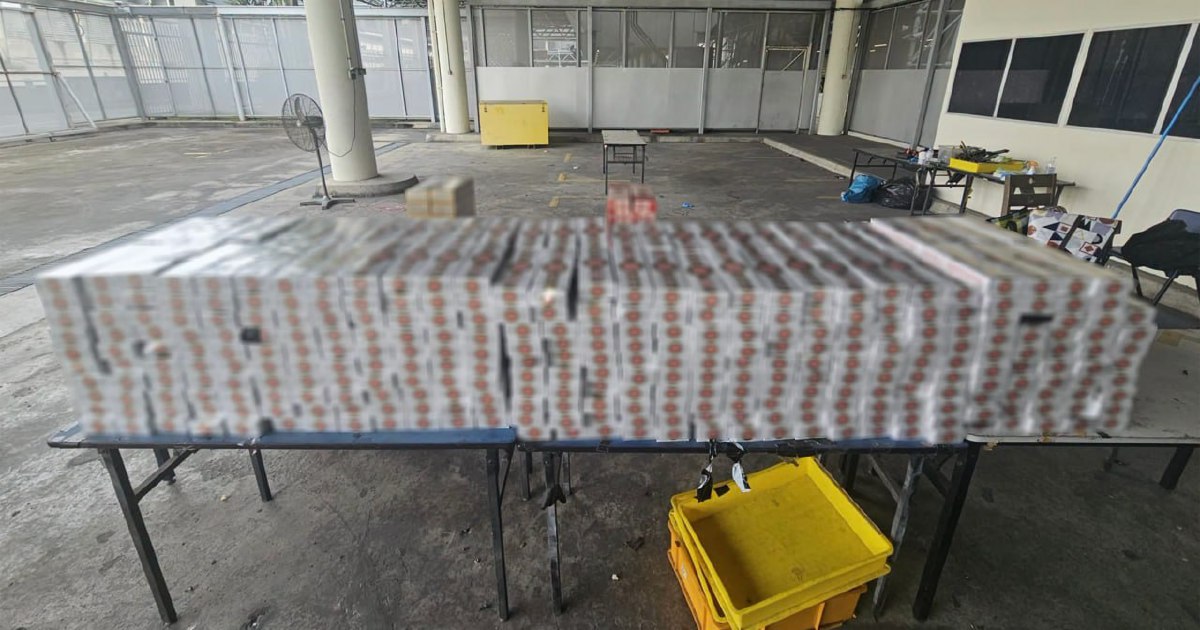
A 30-year-old Malaysian national has been taken into custody by Singapore authorities after a significant haul of contraband cigarettes was uncovered at the Woodlands Checkpoint. Officers conducting routine inspections at the border crossing identified over 700 cartons and 100 individual packets of cigarettes that had not paid the required duties, prompting an immediate arrest and seizure of the goods.
The discovery highlights the persistent challenge of illicit cigarette trafficking across the Malaysia-Singapore border, a corridor that remains a focal point for contraband operations despite increasing enforcement efforts. The Woodlands Checkpoint, located at one of the busiest land border crossings in Southeast Asia, processes hundreds of thousands of travellers and vehicles daily, making it both a gateway for legitimate commerce and a pressure point for smuggling networks seeking to exploit gaps in inspections.
Duty evasion on cigarettes has become a lucrative criminal enterprise across the region, driven by substantial price differentials between neighbouring jurisdictions. Singapore imposes some of Asia's highest taxes on tobacco products, making contraband cigarettes particularly attractive in illicit markets. The sheer volume seized—totalling more than 800 individual units when cartons and loose packets are combined—suggests this was a coordinated attempt to move a significant commercial quantity rather than personal consumption.
The arrest underscores Singapore's commitment to maintaining strict border controls and protecting government revenue streams. Customs and excise duties on cigarettes constitute a meaningful revenue source for the Singapore government, and systematic smuggling operations directly undermine public finances. Beyond financial considerations, authorities in Singapore maintain that unchecked tobacco smuggling can fuel underground economies and organised crime networks that often diversify into other illicit activities.
For Malaysian citizens, such incidents carry serious legal implications. Those caught attempting to import duty-unpaid goods into Singapore face substantial penalties under Singapore's Customs Act and Goods and Services Tax Act. Offenders typically encounter both financial fines and potential custodial sentences, depending on the scale of the operation and circumstances of the case. A quantity exceeding 700 cartons clearly transcends personal use thresholds, establishing commercial intent and exposing the accused to more severe charges.
The incident reflects broader regional dynamics affecting Malaysia-Singapore relations and cross-border commerce. While the two nations maintain extensive trade ties and millions of people cross the border regularly for work, shopping, and family reasons, law enforcement agencies must balance facilitating legitimate movement with intercepting criminal contraband. The checkpoint itself is a symbol of this tension, serving simultaneously as a portal for regional integration and a frontline in the war against smuggling.
Cigarette smuggling networks operating in this region typically exploit several vulnerabilities. Hidden compartments in vehicles, particularly in door panels, fuel tanks, and custom-built concealment spaces, are frequently used to evade detection. The sophistication of these smuggling operations has grown considerably over recent years, with organised groups investing in technology and logistics to streamline their supply chains. The volume in this case suggests professional involvement rather than opportunistic smuggling.
Singapore's enforcement agencies employ multiple detection methods at border crossings, including physical inspections, canine units trained to detect tobacco odours, and intelligence-gathering operations targeting known smuggling routes. The successful interception demonstrates that these measures continue to yield results, though the persistence of smuggling attempts indicates that criminal groups assess the risks as acceptable relative to potential profits. A single successful run moving 700 cartons could generate substantial illegal revenue, incentivising repeated attempts.
The case also carries implications for Malaysian authorities and cross-border law enforcement cooperation. Smuggling operations typically involve multiple parties operating on both sides of the border, from those acquiring goods through illicit channels to drivers and facilitators. Effective disruption requires coordinated intelligence sharing and joint operations between Malaysian and Singaporean agencies. Such cooperation has intensified in recent years, though resources and jurisdictional boundaries sometimes limit effectiveness.
For ordinary travellers and businesses engaged in legitimate cross-border commerce, incidents like this reinforce the importance of compliance and transparency. The overwhelming majority of cross-border movements are lawful, yet high-profile smuggling busts can contribute to increased scrutiny at checkpoints, potentially affecting throughput times and friction in legitimate trade flows. This represents an externality borne by law-abiding citizens and businesses as a consequence of criminal activities.
The broader context involves changing patterns in regional smuggling. As enforcement has improved in some areas, criminal networks have adapted their tactics, shifting routes, modifying concealment methods, and sometimes transitioning to other contraband categories. However, cigarettes remain a staple of smuggling operations due to their relatively low detection risk compared to drugs and the substantial profit margins available. The duty differential between Singapore and Malaysia alone can generate margins exceeding 30-40 per cent on cigarette sales.
Looking ahead, the incident signals that authorities remain vigilant despite the logistical challenges inherent in managing high-volume border crossings. Singapore's zero-tolerance approach to duty evasion and smuggling, combined with Malaysia's growing emphasis on border security, suggests that interdiction efforts will continue intensifying. For travellers and transporters, the message is unambiguous: attempting to circumvent customs regulations carries severe consequences that far outweigh any short-term financial incentives.

