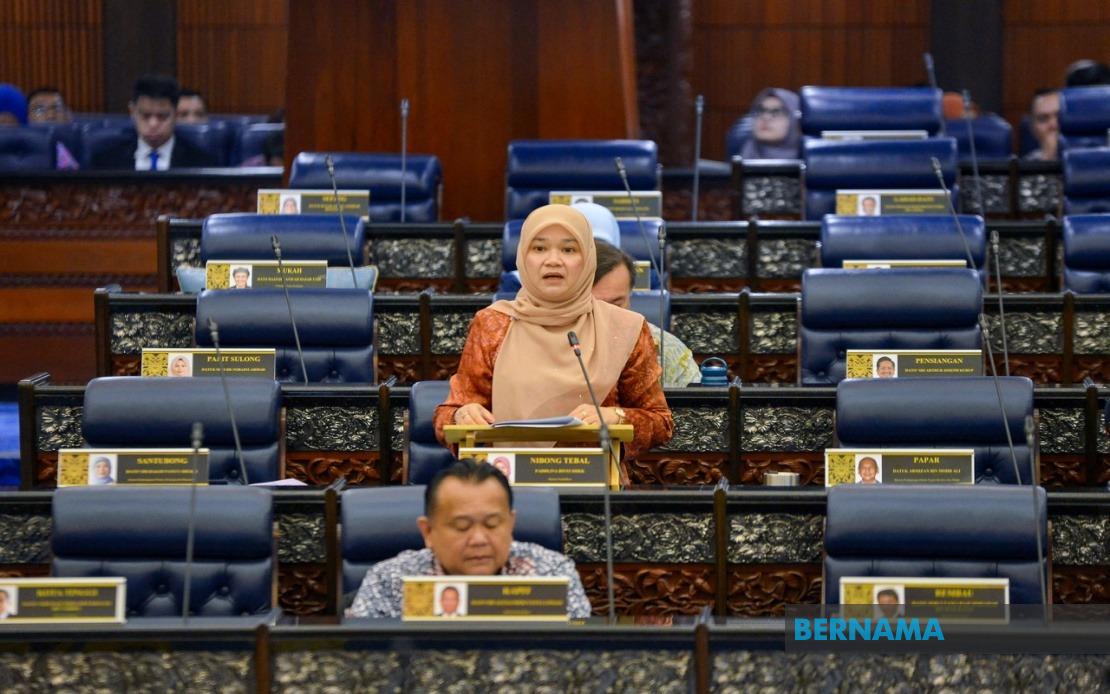
The Ministry of Education is taking a more rigorous approach to ensuring student safety across Malaysian schools, moving away from one-size-fits-all responses toward customised assessments that account for the unique circumstances surrounding each incident. Education Minister Fadhlina Sidek outlined this shift during parliamentary proceedings on July 2, emphasising that safety concerns cannot be addressed through standardised protocols alone, particularly when incidents intersect with broader questions of child welfare, emotional resilience, and psychological wellbeing.
At the heart of the ministry's revised strategy is the establishment of a dedicated inter-agency committee tasked with coordinating safety efforts across Malaysia's school system. This committee, which brings together representatives from various government departments and private organisations, reflects recognition that school safety extends beyond the classroom and playground—it encompasses building infrastructure, environmental hazards, emergency preparedness, and the human dimensions of student protection. By consolidating oversight under a single coordination mechanism, the ministry aims to eliminate gaps that previously allowed safety concerns to slip between different bureaucratic silos.
The National Institute of Occupational Safety and Health has been engaged to provide specialised guidance on structural and environmental safety matters, a development that signals the ministry's commitment to applying industry-standard occupational safety principles to educational facilities. This partnership ensures that issues ranging from drain systems to fire safety protocols receive attention from professionals with technical expertise rather than relying solely on in-house school management. Such collaboration reflects evolving global best practices in institutional safety management, where educational facilities increasingly adopt standards comparable to those in commercial and industrial sectors.
Two key policy documents now serve as the operational foundation for Malaysia's school safety framework. The Safe School Management Guidelines and School Student Protection Policy, both launched in June, provide educational institutions with clear reference standards for addressing physical safety, social cohesion, and emotional wellbeing. These guidelines represent a comprehensive approach that recognises schools as complex environments where safety involves not just preventing accidents but also fostering positive relationships and psychological security among students.
The ministry is substantially expanding its surveillance infrastructure this year, with plans to install closed-circuit television systems in 333 schools—a notable increase from 200 schools in 2025. While CCTV expansion carries ongoing debates about privacy and monitoring, the ministry frames this investment as essential for documenting incidents, deterring misconduct, and providing objective evidence when disputes arise. For Malaysian parents and educators, this represents a concrete commitment to observable accountability within school premises, though implementation quality and footage management will determine whether these systems deliver meaningful safety improvements.
Concurrently, the ministry has appointed 300 hostel wardens beginning April 1, specifically tasked with strengthening overnight supervision of boarding students. This measure addresses a genuine vulnerability in Malaysia's educational system—residential school facilities operate during hours when regular administrative oversight diminishes, creating environments where bullying and other harmful behaviour can occur with reduced detection. Dedicated hostel staff provide continuous human presence, capable of intervening in real-time and responding to student needs outside standard school hours.
The ministry's updated approach to bullying reflects the legislative momentum created by the Anti-Bullying Act 2026, which took effect on June 16. New guidelines for handling bullying cases align educational protocols with statutory requirements, establishing clear procedures for reporting, investigation, and intervention. This legislative framework gives school administrators stronger legal backing when addressing bullying incidents and provides students with statutory protections previously unavailable. For Malaysian families concerned about their children's peer relationships, this represents institutional recognition that bullying constitutes a serious harm deserving formal legal status rather than being treated as routine childhood conflict.
Education Minister Fadhlina has indicated that response to individual incidents will be comprehensive and contextualised, involving certified counsellors who assess not merely the physical or behavioural dimensions of an incident but also its psychological impact on affected students. This emphasis on trauma-informed responses acknowledges that bullying and safety breaches can have lasting emotional consequences extending far beyond the immediate incident. By integrating counselling support into the response framework, the ministry recognises that genuine student protection requires attention to recovery and healing, not solely to prevention and punishment.
Parental involvement mechanisms have been strengthened through the formalisation of partnerships with Parent-Teacher Associations and the Parent, Community and Private Sector Involvement initiative. These structures create channels through which families can engage in school safety discussions and contribute to solutions from their perspective as stakeholders with direct insight into student experiences. This layered approach—combining government agencies, school management, parents, and private sector expertise—distributes responsibility across multiple parties rather than concentrating accountability solely within the ministry.
The five-pillar framework guiding the ministry's safety strategy—prevention, monitoring, reporting, intervention, and enforcement—provides conceptual clarity about how different safety measures fit together. Prevention activities focus on eliminating hazards before incidents occur. Monitoring mechanisms detect emerging problems through observation and data collection. Reporting systems ensure incidents come to official attention. Intervention responses address immediate needs and prevent escalation. Enforcement mechanisms apply consequences when violations occur. This sequential approach offers Malaysian educators a structured methodology for building comprehensive safety systems rather than relying on reactive crisis management.
Implementation of these expanded safety measures will require substantial coordination and resource deployment across Malaysia's educational system. Schools will need training to operate new monitoring equipment, interpret updated guidelines, and coordinate with external agencies. Hostel wardens require professional development in child protection and crisis response. Parent groups need clear information about their expanded roles and how to participate effectively in safety discussions. The success of the ministry's enhanced framework will ultimately depend on whether these components function in coordinated fashion or whether they remain disconnected initiatives operating in parallel.
For Malaysian families and communities, the ministry's safety intensification represents official acknowledgment that student protection demands continuous improvement and institutional sophistication. Whether these measures achieve their intended outcomes will become evident through measurable changes in bullying incidents, accident rates, and student perceptions of safety—metrics that will ultimately determine whether the expanded investment in audits, monitoring, and inter-agency coordination translates into the tangible protection of Malaysia's school-aged population.

