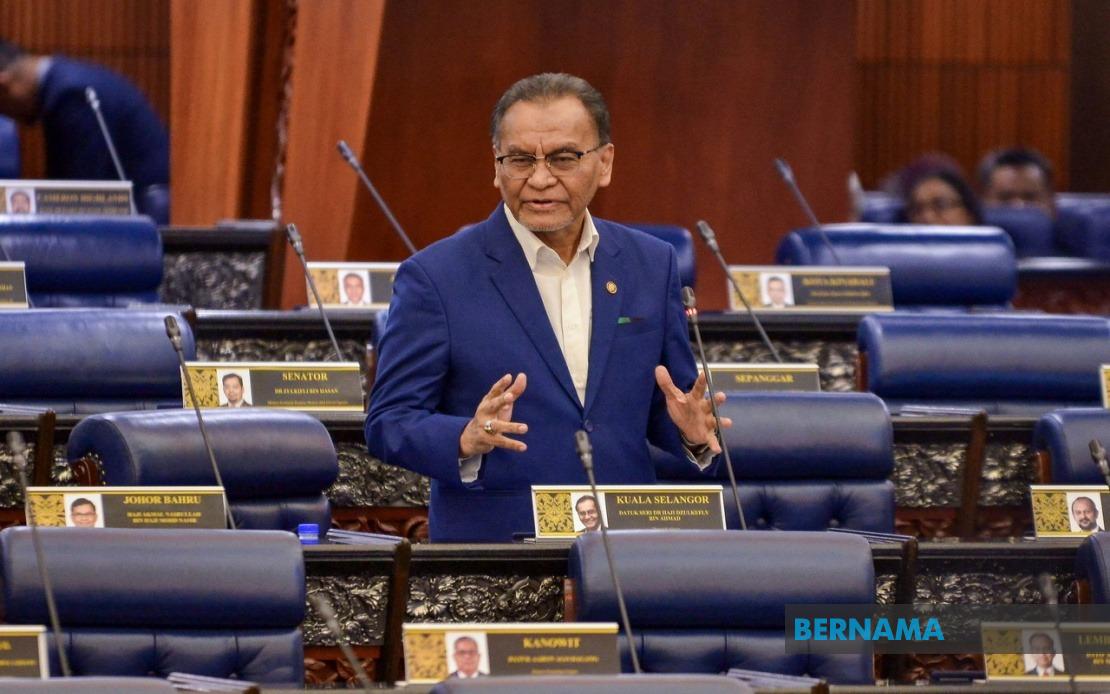
Malaysia's Health Minister Datuk Seri Dr Dzulkefly Ahmad has unveiled a comprehensive strategy to strengthen healthcare accessibility across income brackets, with the MediAsas Plan emerging as a centrepiece initiative addressing the M40 group's growing need for affordable private medical coverage. Speaking in Parliament on July 14, the minister outlined how government interventions are designed to counter escalating private healthcare costs while safeguarding universal health protection for all citizens through the public system.
The MediAsas Plan represents a deliberate policy response to a critical gap in Malaysia's healthcare landscape. While the bottom 40 per cent of earners benefit from dedicated programmes such as the Healthcare Scheme for the B40 Group (PeKa B40), the MADANI Healthcare Scheme, and MySalam, middle-income households face mounting difficulties accessing private healthcare without financial strain. MediAsas directly addresses this vulnerability by offering medical insurance and takaful products at premiums calibrated to be manageable for households earning between RM4,850 and RM10,970 monthly. The plan's architecture incorporates the Diagnosis Related Group (DRG) mechanism, a sophisticated payment methodology that gradually standardises how private hospitals charge for care, potentially moderating inflation in that sector.
Dr Dzulkefly emphasised that MediAsas operates as a complement to, rather than replacement for, Malaysia's foundational public healthcare system. This distinction carries significant weight given persistent debates about privatisation trends in healthcare policy across Southeast Asia. The public system continues delivering Universal Health Coverage financed through tax revenue, serving as a safety net accessible to all 33 million Malaysians. By positioning MediAsas as supplementary rather than substitutive, the government preserves this commitment while creating pathways for those with means and preference to access private facilities. This two-tier approach mirrors strategies employed in countries like Singapore and South Korea, though Malaysia's emphasis on protecting equity remains distinctive.
The rollout strategy reflects careful implementation planning. MediAsas will debut as a pilot programme in the Klang Valley region at the end of July 2024, involving six insurance and takaful operators. This phased approach allows authorities to evaluate uptake patterns, identify operational challenges, and refine product offerings before expanding nationally from January 2027. The Klang Valley's selection as the initial market makes strategic sense given its concentration of both working-age M40 households and private healthcare infrastructure. Lessons learned during this eight-month pilot will inform nationwide deployment and potentially influence how similar schemes operate in other Southeast Asian markets watching Malaysia's experience.
The MediAsas initiative sits within the broader RESET framework, a comprehensive restructuring agenda addressing persistent inefficiencies in healthcare delivery. Beyond insurance product innovation, RESET encompasses electronic medical record interoperability—a technical advancement with substantial practical implications. When healthcare providers can seamlessly share patient histories, redundant diagnostic testing diminishes, reducing costs while improving clinical outcomes. Private hospital bill restructuring also figures prominently, establishing transparency and cost predictability for consumers navigating what many perceive as opaque pricing structures in private healthcare.
For the B40 population, continued protection operates through an extensive infrastructure comprising 154 public hospitals and over 3,000 healthcare facilities nationwide. This expansive network underpins Malaysia's public health system's reach, though resource constraints and quality variations between urban and rural facilities remain persistent challenges. Supplementary schemes like PeKa B40, launched to provide additional financial protection for low-income groups, demonstrate government acknowledgement that public provision alone cannot address all vulnerable populations' needs. When combined with MADANI Healthcare and MySalam offerings, these programmes create layered protection acknowledging diverse needs within the lower-income bracket.
The M40 group presents distinct healthcare challenges that MediAsas specifically targets. Unlike the B40 population with dedicated government schemes, M40 households historically faced binary choices: accept public healthcare queues and potential quality concerns, or pay out-of-pocket for private care. Pre-existing conditions have historically complicated private insurance access, excluding or heavily penalising those with chronic diseases. MediAsas addresses this by explicitly incorporating coverage for pre-existing conditions and non-communicable diseases (NCDs)—conditions increasingly prevalent as populations age and lifestyle diseases proliferate. Mental health coverage inclusion signals recognition of growing psychological and psychiatric service demands, an area historically marginalised in insurance products across the region.
The integration of DRG-based payment mechanisms carries implications extending beyond immediate healthcare consumers. By standardising reimbursement approaches, private hospitals face incentives to optimise operational efficiency and cost structures. This mechanism, already embedded in public hospital systems and adopted by several neighbouring economies, could gradually moderate private sector inflation. However, success depends on robust implementation and physician buy-in, challenges that have complicated DRG adoption in other jurisdictions. Malaysia's approach to phasing implementation through MediAsas rather than mandating immediate system-wide conversion suggests learned pragmatism from international experiences.
Regional healthcare observers should note Malaysia's effort to simultaneously expand private healthcare options while reinforcing public system commitments. This balancing act becomes increasingly complex as middle-income nations experience rising healthcare costs without corresponding growth in government budgets. Thailand, Indonesia, and the Philippines grapple with similar tensions between universal health coverage aspirations and fiscal constraints. Malaysia's MediAsas experiment may provide valuable lessons about whether market-based private insurance mechanisms can genuinely expand coverage access without eroding public system sustainability—a question resonating across Southeast Asia.
The timing of MediAsas introduction also reflects demographic and epidemiological pressures reshaping Malaysian healthcare demand. An ageing population increasingly burdened by NCDs requires sustained healthcare engagement and management. Rising private sector costs have outpaced wage growth for many M40 households, creating affordability crises for those earning too much to access B40 schemes but insufficient for comfortable private healthcare access. Takaful inclusion—Islamic financing-compliant insurance—broadens appeal across Malaysia's diverse religious and cultural demographic, potentially improving uptake among traditionally underserved communities.
Dr Dzulkefly's Parliamentary response underscores government confidence that integrated policy frameworks rather than isolated interventions can address systemic healthcare challenges. The simultaneous strengthening of B40 protections, pilot expansion of M40 options, and structural reforms through RESET suggests comprehensive rather than piecemeal thinking. Success metrics will likely include uptake numbers, claims patterns, and ultimately whether MediAsas meaningfully reduces catastrophic out-of-pocket healthcare expenditure for target populations—outcomes that peer nations will scrutinise as they design their own healthcare protection strategies.

