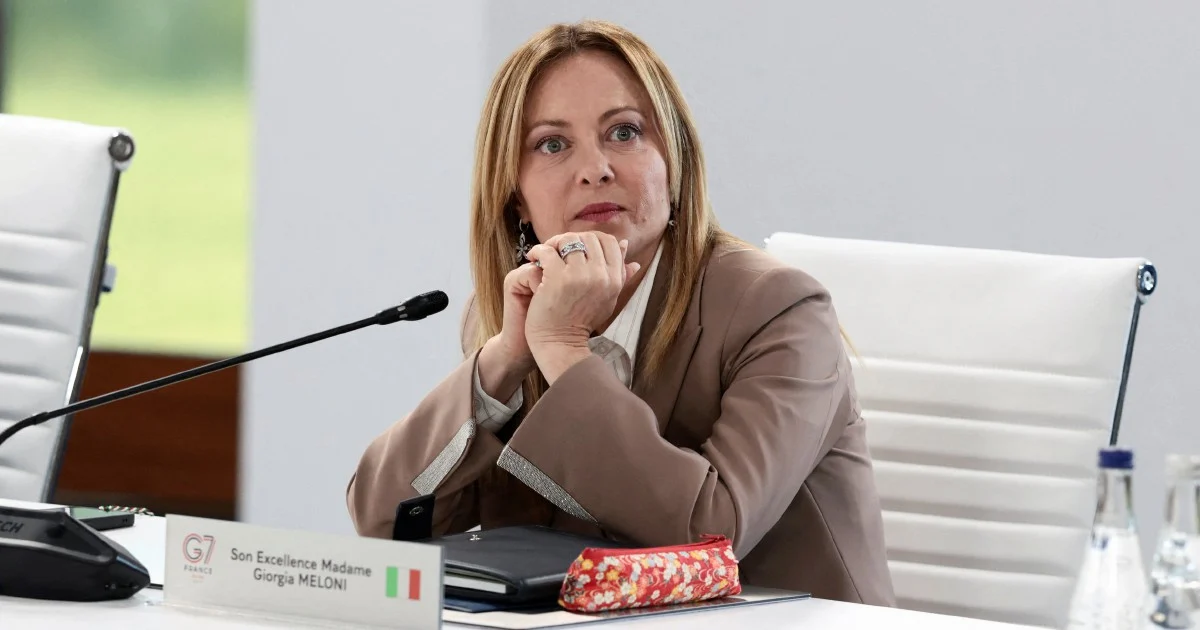
When Donald Trump assumed the presidency for his second term in 2025, Italian Prime Minister Giorgia Meloni stood apart from her European counterparts. She alone received an invitation to Washington for the inauguration ceremony—a distinction that seemed to underscore a special rapport between Rome and the Trump administration. The moment appeared symbolic, heralding what many observers anticipated would be a strengthened partnership between Italy and the United States during Trump's return to power.
Meloni's elevated status reflected her previous positioning as one of Europe's most Trump-receptive leaders. She had cultivated a relationship with the incoming president that set her apart from Brussels establishment figures often critical of Trump's policies and rhetoric. This early alignment suggested Italy might leverage unique access to influence American foreign policy decisions affecting European interests, positioning Rome as a potential intermediary between Washington and the European Union during a period of transatlantic uncertainty.
Yet developments since that January inauguration have painted a strikingly different picture. Rather than maintaining her role as Trump confidant, the Italian Prime Minister has increasingly adopted a confrontational stance toward the American president. The shift reflects not merely diplomatic disagreement but fundamental tensions over policy directions that directly threaten European stability and Italian interests. What began as a promising partnership has fractured into public criticism, raising questions about both Meloni's strategic calculations and the fragility of Trump administration relationships with European allies.
This reversal matters significantly for Southeast Asia and the broader Indo-Pacific region. The relationship between Washington and its European allies shapes global security architecture. When Europe's more pragmatic leaders, like Meloni, move away from accommodation with Trump administration positions, it signals broader realignment in Western coordination. This fragmentation inevitably weakens the collective Western position on issues affecting Asian security, trade policy, and technology governance that increasingly preoccupy Malaysian and regional policymakers.
The causes of Meloni's transformation appear rooted in specific policy conflicts that pit Italian national interests against Trump administration priorities. Tariffs imposed on European goods directly harm Italian manufacturing exports, a crucial component of the country's economy. Similarly, Trump's approach to NATO burden-sharing and European security arrangements challenges Italy's defence posture and budget planning. When American protectionism directly damages the Italian economy or security framework, the political calculus for any Italian leader shifts dramatically, regardless of ideological sympathies.
Meloni's initial enthusiasm likely reflected her conservative credentials and alignment with Trump's nationalist political positioning. Both leaders shared scepticism toward multilateral institutions and immigration policies. However, conservative ideology provides insufficient foundation for sustained partnership when concrete economic and strategic interests diverge. The Italian leader's evolution demonstrates that transatlantic relationships ultimately rest on practical benefit rather than philosophical kinship, a lesson relevant for all nations assessing engagement with Washington.
The timing of Meloni's pivot also reflects evolving European dynamics. Initially isolated from Trump enthusiasm, other European leaders gradually coalesced around a more critical posture. As consensus hardened against specific Trump policies, Meloni's outlier status became increasingly untenable domestically. Italian public opinion, labour unions, and business interests all voiced concerns about policies harming Italian prosperity. A Prime Minister perceived as facilitating damage to national economic interests faces political vulnerability, compelling recalibration regardless of personal relationships with foreign leaders.
For Malaysia and Southeast Asia, observing Italy's experience offers cautionary insights. Alignment with powerful nations based on leadership affinity or ideological sympathy can prove ephemeral when economic interests conflict. The region's nations must approach relationships with great powers—whether the United States or China—with hardheaded assessment of tangible benefits rather than assuming stable partnerships based on political personalities. Leaders change, interests shift, and diplomatic support evaporates quickly when fundamental conflicts emerge.
Meloni's transition also illustrates European agency in resisting American pressure when collective interests are at stake. Despite Trump's prominence and resources, European nations retain capacity to oppose his policies through coordinated action. This demonstrates that even amid American pressure, allies can maintain independent positions—a point relevant for Southeast Asian nations seeking to preserve strategic autonomy amid great power competition.
The broader implication involves the instability of Trump-era transatlantic relations. If Italy, positioned as the administration's most receptive European partner, could shift so dramatically within months, partnership stability appears fundamentally uncertain. This volatility complicates planning for other nations seeking to navigate great power relationships and coordinate regional responses to American initiatives.
Looking forward, Meloni's position reflects the likely trajectory of Trump administration European relations. Initial enthusiasm from sympathetic leaders will encounter resistance as actual policies impose costs that outweigh ideological alignment benefits. European leaders will increasingly coordinate defensive strategies, potentially driving deeper European integration as nations seek collective protection from American unpredictability. This European consolidation could reshape transatlantic dynamics in ways affecting global security and Malaysian strategic interests.
The Italian case ultimately reveals that presidential charisma and initial access, while politically valuable, cannot sustain alliances against fundamental economic and strategic damage. Whether other European leaders and global nations learn this lesson will determine whether transatlantic and broader international relationships stabilize around mutual interest or fragment into competing blocs unable to address shared challenges.