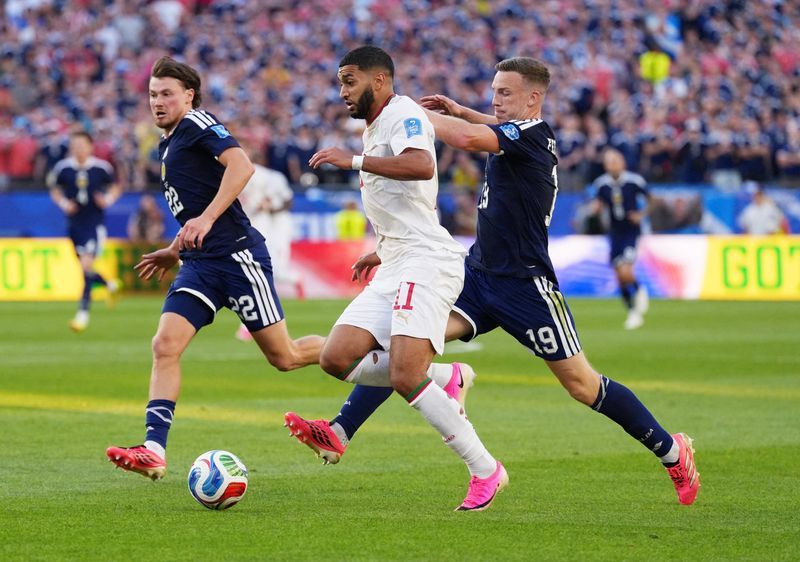
Morocco delivered a masterclass in controlled dominance at Foxborough on Friday, dismantling Scotland with ruthless efficiency to claim a 1-0 victory that positions the North African side atop Group C with one fixture to play. The decisive moment came with striking speed: just 71 seconds after kick-off, Ismael Saibari latched onto a Brahim Diaz cross to power home the tournament's quickest goal, catching the Scottish defence fatally exposed as central defender Grant Hanley stepped up too early. The margin of victory belies the comprehensive nature of Morocco's performance, as they systematically suffocated Scotland's attacking ambitions and controlled possession with the composure of a team that knows exactly what it wants to achieve.
Morocco now sits on four points from their opening two matches, while Scotland occupies third place with three points. The final group-stage encounters—with Morocco facing Haiti on Wednesday and Scotland taking on five-time champions Brazil in their last game—will determine qualification pathways. Brazil and Haiti meet later on Friday, completing the round-robin schedule. Under the tournament format, the top two sides from each group advance automatically to the round of 32, alongside the eight best third-placed finishers, creating genuine pressure on the Scots to avoid an early exit.
The Scottish squad arrived in Massachusetts carrying genuine optimism following their emotional 1-0 triumph over Haiti last week, which marked their first World Cup victory in 36 years and represented a significant breakthrough for a nation starved of tournament success. However, any confidence evaporated within the opening minutes as Morocco's attacking intent became immediately apparent. The early goal reset the psychological balance decisively in Morocco's favour, forcing Scotland into a reactive posture from which they never successfully recovered. Throughout the first half, the Scots struggled to fashion any meaningful attacking movement, managing no shots on target and barely threatening Moroccan goalkeeper until the dying moments of the opening period.
Morocco's dominance stemmed from intelligent pressing and fluid passing that repeatedly carved open Scotland's defensive shape. Bilal El Khannouss epitomised the visitors' quality when he fired over the bar in the 36th minute following yet another incisive move orchestrated through the midfield. Azzedine Ounahi came tantalisingly close to doubling the advantage when he surged down the left wing and pulled the ball back across the penalty area, only for two Moroccan players to narrowly fail to apply the crucial finishing touch. The pattern continued into the second period, where Saibari struck the post with a deflected effort while El Khannouss forced an alert save from Scottish goalkeeper Angus Gunn with a glancing header.
Saibari's early strike adds another remarkable dimension to an already impressive individual tournament. The midfielder previously registered on the scoresheet in Morocco's opening draw against Brazil, establishing himself as a key creative force in Herve Renard's squad. His rapid introduction to World Cup goalscoring—becoming only the second African player after Egypt's Mohamed Salah to find the net in his first two tournament appearances—underscores his tactical importance. The 26-year-old's performances have allegedly attracted the attention of Bayern Munich, with reports indicating he has successfully completed a medical ahead of a prospective move to the German champions, potentially elevating his profile considerably.
Off the pitch, Morocco's captain Achraf Hakimi endured an uncomfortable atmosphere, facing sustained booing from Scottish supporters throughout proceedings. The full-back's presence at the tournament occurs against the backdrop of serious legal complications in his home country, where he faces a rape trial, creating an ongoing source of controversy surrounding his participation. Such external pressures can affect squad dynamics and morale, yet Morocco's performance suggested no internal distraction from their collective focus on tournament advancement.
Azzedine Ounahi had raised eyebrows the previous day when discussing Morocco's explicit ambitions of reaching the final, comments that some interpreted as overconfident. However, the commanding performance against Scotland provided immediate substantiation of such aspirations, demonstrating that Renard's side possesses the technical quality and tactical discipline to compete with elite opposition. Scotland, conversely, finds itself fighting for survival with Brazil—a formidable obstacle—representing their final opportunity to secure progression. The magnitude of their task became apparent against Morocco, whose pressing intensity and possession control suffocated their opponents throughout ninety minutes.
The contrasting trajectories of these two nations highlight the unpredictable nature of international football tournaments. Scotland's emotional high of ending their 36-year wait for a World Cup victory converted rapidly into the devastating reality of facing potential early elimination. Morocco, building on their unexpected semi-final appearance in Qatar four years ago, appears to have evolved into a genuinely competitive force capable of troubling established powerhouses. Their control over Group C now places them in the advantageous position of managing their fixture against Haiti with the knowledge that progression is fundamentally within their grasp.
For Malaysian and Southeast Asian observers, Morocco's evolution represents an instructive case study in sustained international football development. The North African team has invested considerably in youth development and tactical sophistication over recent years, translating investment and institutional planning into competitive performance. Their dominance against Scotland demonstrates that emergence from football's traditional periphery requires not merely isolated talented individuals but coherent tactical systems, professional preparation, and sustained commitment to long-term development strategies. As regional associations across Southeast Asia contemplate pathways toward greater international competitiveness, Morocco's trajectory offers both inspiration and practical lessons in building sustainable football infrastructure that generates consistent tournament success.