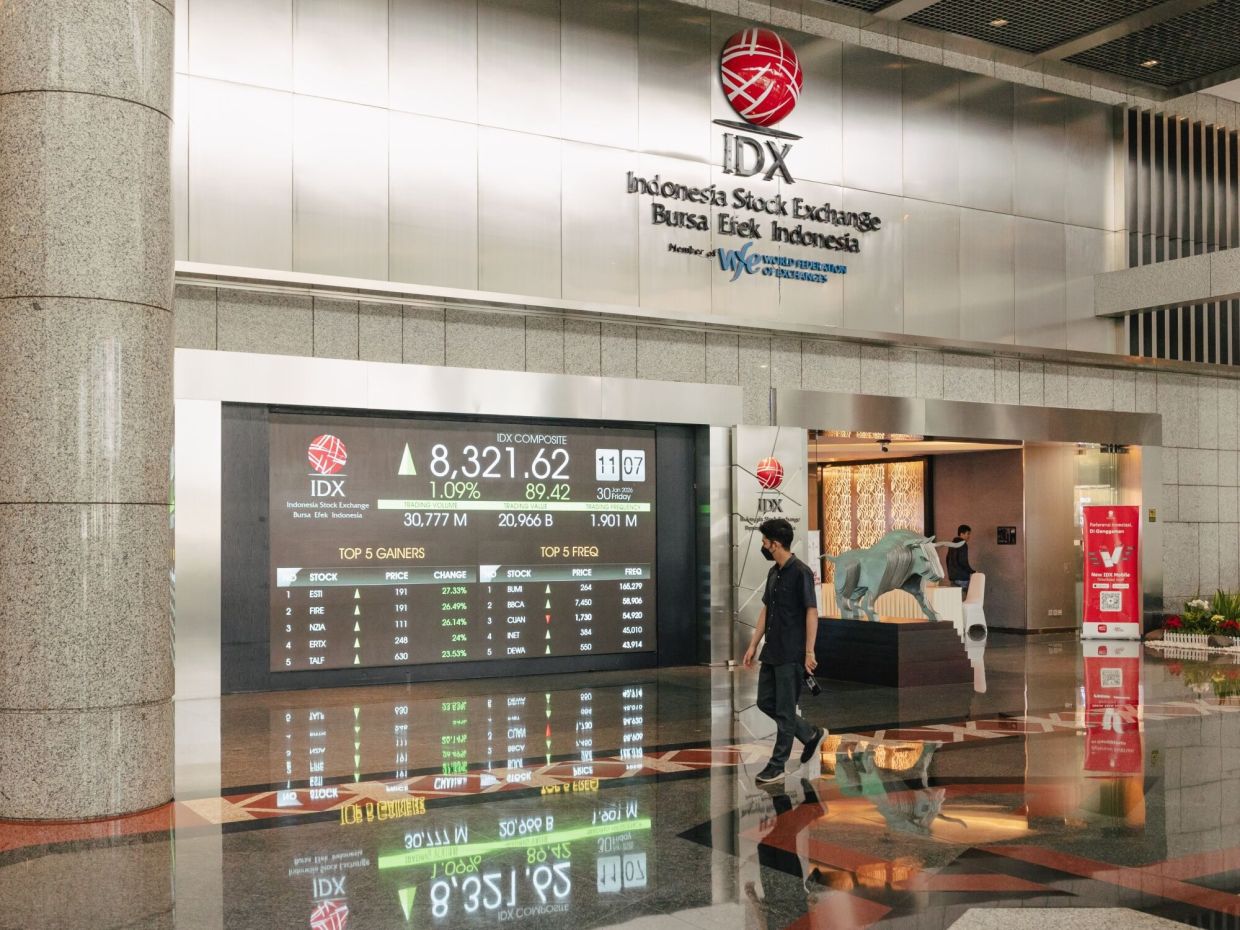
Global index provider MSCI has escalated its warnings about Indonesia's market integrity, identifying significant gaps in ownership transparency and coordinated trading behaviour that pose risks to international investors. The timing of this fresh assessment arrives just days before MSCI's pivotal determination on whether to strip Indonesia of its emerging market classification—a reclassification that could unleash up to $13 billion in forced selling by funds that mechanically track these benchmarks.
Indonesia's equity market has already suffered considerable damage from MSCI's January flag about investability concerns. Since that initial alert signalled a potential frontier market demotion, the Jakarta stock exchange has endured repeated selling pressure, making it among the world's weakest-performing major bourses in 2025. Investors have grown increasingly nervous about the regulatory environment and the reliability of market data, creating a vicious cycle where deteriorating sentiment feeds into worsening market conditions.
MSCI's latest market accessibility review downgraded Indonesia's information flow classification to negative, citing inadequate clarity surrounding actual ownership structures and market participant behaviour. The assessment suggests that opacity in these critical areas prevents proper price discovery—the mechanism by which securities find their true economic value through transparent supply and demand. For sophisticated global investors, this obscurity makes it substantially harder to calculate the genuinely tradeable share float of Indonesian companies, thereby inflating execution risks and reducing conviction in pricing accuracy.
However, some market observers have pushed back against catastrophising the MSCI findings. Mohit Mirpuri, managing money at SGMC Capital in Singapore, characterised the review as more nuanced than headline coverage implied, noting that only a single accessibility metric deteriorated while Indonesia maintained competitive positions relative to South Korea, China and India across multiple important dimensions. His assessment suggests that market participants inclined toward a bullish interpretation may find grounds to argue that the broader regulatory framework remains functionally intact, even if individual weaknesses require correction.
Indonesia's stock exchange and financial regulator declined to comment immediately on the MSCI report, though authorities have demonstrably responded to earlier warnings. The January assessment prompted a flurry of corrective actions, including raising the mandatory free float requirement for listed companies from 7.5% to 15%—a significant tightening meant to prevent concentrated ownership that limits trading liquidity. The seriousness of that response was underscored when both the exchange chief executive and the financial services regulator's head resigned on the same day in January, signalling acknowledgement of governance deficiencies.
Subsequent MSCI actions have compounded market anxiety. In May, the index provider removed six companies from its indexes, primarily entities controlled by major tycoons, generating another round of investor alarm and selling. This stepped approach—warning, then delisting—reflects MSCI's methodology of intensifying pressure before making definitive classification calls, allowing governments time to implement reforms while maintaining credibility through follow-through actions.
A downgrade to frontier status would carry severe consequences for Indonesia's capital markets. MSCI indexes track hundreds of billions of dollars in passive fund assets globally, and many institutions mechanically rebalance portfolios to match these classifications. Mechanical selling from tracking funds would combine with pressure on active managers benchmarked to MSCI measures, creating a toxic combination of forced and discretionary outflows that could depress valuations irrespective of underlying business fundamentals.
Beyond technical market structure issues, Indonesia confronts a broader confidence crisis under President Prabowo Subianto. Populist policy initiatives and mounting fiscal concerns have weakened the rupiah to historic lows, forcing Bank Indonesia to raise borrowing costs repeatedly in recent weeks as it attempts to stabilise the currency and anchor inflation expectations. This macroeconomic backdrop amplifies the impact of governance concerns, as investors already pessimistic about economic management grow more fearful about equity returns.
MSCI's documentation specifically flagged Indonesia's underdeveloped offshore currency markets and constraints on onshore foreign exchange trading, issues that directly impact how multinational funds manage currency exposure when investing in Indonesian assets. Limited hedging options increase the effective risk of Indonesian stock positions when converted back to foreign currencies, reducing appeal to globally diversified portfolios.
International credit rating agencies have already reacted to the deteriorating environment. Both Moody's and Fitch downgraded their outlooks for Indonesia's sovereign debt to negative in 2025, citing eroding policymaking credibility as the nation struggles to restore investor confidence. For an economy valued at $1.4 trillion that previously occupied a far more prominent position in emerging market portfolios, this represents a stinging reversal of its standing as a growth story.
The Jakarta Composite Index has collapsed 29 percent during 2025 as foreign investors have liquidated roughly $3.65 billion in stock holdings, reflecting capital flight from the market. This selling intensity suggests that many international investors have already made preliminary decisions about reducing exposure, with the MSCI determination potentially functioning as either confirmation of those bearish convictions or as a moment to recalibrate if authorities implement sufficient reforms to restore confidence.