A Kathmandu district court has handed down prison sentences against two senior figures from Nepal's previous government after finding them guilty of a sophisticated document fraud involving refugee resettlement to the United States. The convictions represent a significant moment in Nepal's ongoing efforts to address corruption within its state apparatus, particularly following the youth-led anti-corruption movement that toppled the previous administration last year.
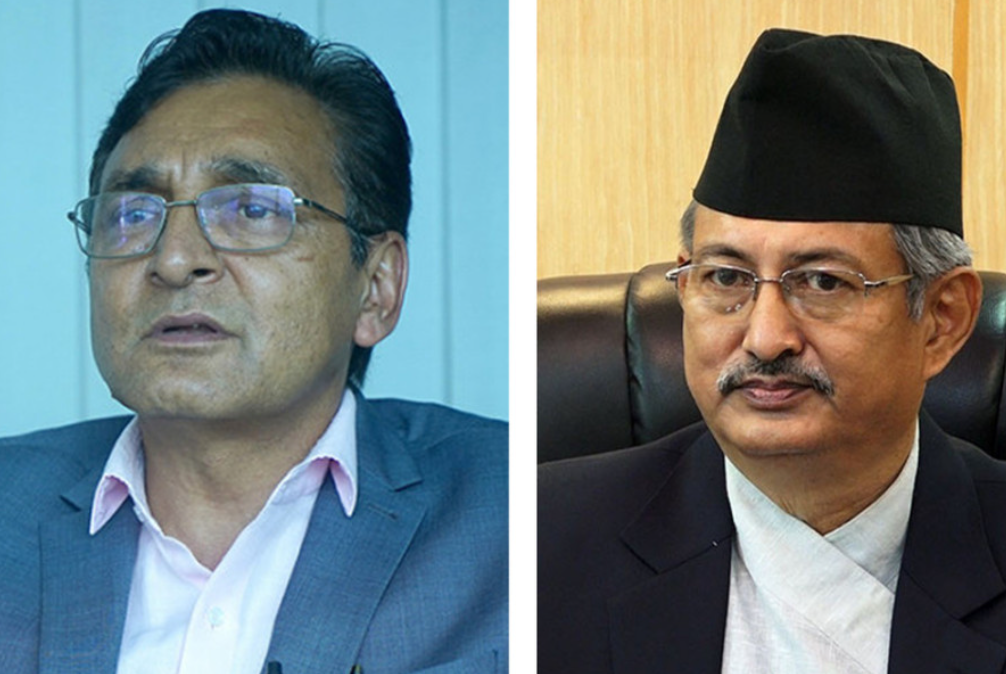
Former Deputy Prime Minister and Energy Minister Top Bahadur Rayamajhi received a four-year sentence on charges including offences against the state, fraud, and involvement in organised crime. His co-defendant, former Home Minister Bal Krishna Khand, drew a shorter two-year sentence on the basis of being an accomplice in the scheme. The verdicts, delivered late Tuesday, mark the culmination of investigations that only became public in 2023, years after both men had already departed from their ministerial positions.
The sophisticated nature of this fraud scheme shines a light on vulnerabilities within Nepal's refugee processing systems and bilateral arrangements with Western nations. By forging documents to misrepresent Nepali nationals as members of Bhutan's persecuted Nepali-origin population, the conspirators exploited an established humanitarian resettlement pathway that has operated for decades. The extent to which any individuals were actually successfully resettled under false pretences remains unclear, though the investigation's scope suggests systematic, rather than isolated, infractions.
Beyond the two former ministers, fourteen other individuals face imprisonment of up to four years for their roles in the conspiracy. This broader network of accused persons includes a former senior bureaucrat within the Home Ministry and a leader from the Bhutanese refugee community itself, underscoring how the scheme penetrated both state institutions and the very populations it purported to assist. The involvement of a refugee community figure particularly undercuts the humanitarian narrative surrounding resettlement programmes and reveals how trust within vulnerable groups can be exploited.
The historical context deepens the gravity of these convictions. Since the early 1990s, approximately 120,000 Bhutanese nationals of Nepali ethnicity have fled Bhutan and sought refuge in Nepal, driven by political repression in their homeland. Bhutan, a Buddhist-majority nation of fewer than 800,000 people, has long pursued policies seen as discriminatory toward its Nepali-speaking minority. After Nepal and Bhutan failed to negotiate repatriation agreements, the international community stepped in with third-country resettlement initiatives involving Western nations including the United States, Canada, and Australia.
The United States has admitted approximately 100,000 refugees from Nepal through this arrangement, making it by far the largest resettlement destination for the Bhutanese diaspora. These figures underscore why the fraud scheme merits such serious scrutiny—it potentially compromised the integrity of a humanitarian programme that has provided genuine refuge to tens of thousands. For Malaysia and other Southeast Asian nations, the case offers cautionary lessons about ensuring robust oversight mechanisms in refugee and humanitarian resettlement frameworks, particularly given the region's growing engagement with international protection programmes.
Several thousand Bhutanese refugees still inhabit camps scattered across eastern Nepal, many expressing a preference to return to Bhutan itself rather than resettle overseas. Their continued presence reflects the incomplete resolution of the original conflict that displaced them, even as thousands of their compatriots have begun new lives abroad. The refugee camps have become semi-permanent fixtures in Nepal's political and humanitarian landscape, representing both a regional burden and a persistent symbol of unresolved geopolitical tensions between the two Himalayan neighbours.
Rayamajhi's legal team has already signalled intent to appeal the verdict, contesting the assertion that their client held any role in refugee policy decisions. Similarly, Khand's defence counsel has pledged to mount a challenge against the sentence. These appeals will likely extend the legal proceedings for months or years, keeping the case in public view and potentially delaying any meaningful resolution of accountability questions. The outcomes of appellate proceedings will prove instructive for future corruption cases in Nepal's evolving judicial system.
The timing of these convictions aligns with broader anti-corruption efforts by Nepal's current government, led by Balendra Shah, a 36-year-old former rapper who assumed office in March following elections. Shah's administration has made combating alleged graft under previous regimes a cornerstone of its political platform. The convictions therefore serve as early evidence that his government intends to move beyond rhetoric toward concrete prosecutions, though critics may question whether targeting predecessors represents genuine systemic reform or politically motivated selectivity.
These sentencing decisions also carry implications for Southeast Asian governance more broadly. As the region grapples with recurring corruption scandals spanning multiple nations, the Nepali case demonstrates that courts can deliver convictions against high-ranking officials despite their access to legal resources and social standing. For Malaysian observers, the proceedings illustrate how international humanitarian mechanisms can become vehicles for corrupt officials seeking illicit advantage, underscoring the necessity for transparent, accountable management of resettlement programmes and cross-border administrative processes that affect vulnerable populations.
The refugee fraud case ultimately represents a convergence of multiple governance failures: inadequate oversight of document processing, insufficient vetting of officials overseeing humanitarian programmes, and exploitation of genuinely vulnerable populations. For Nepal itself, the convictions offer an opportunity to strengthen institutional safeguards and restore public confidence in systems responsible for managing humanitarian obligations. For the broader region, the episode serves as a reminder that corruption flourishes in spaces where institutional accountability remains weak and international oversight lacks sufficient rigour.

