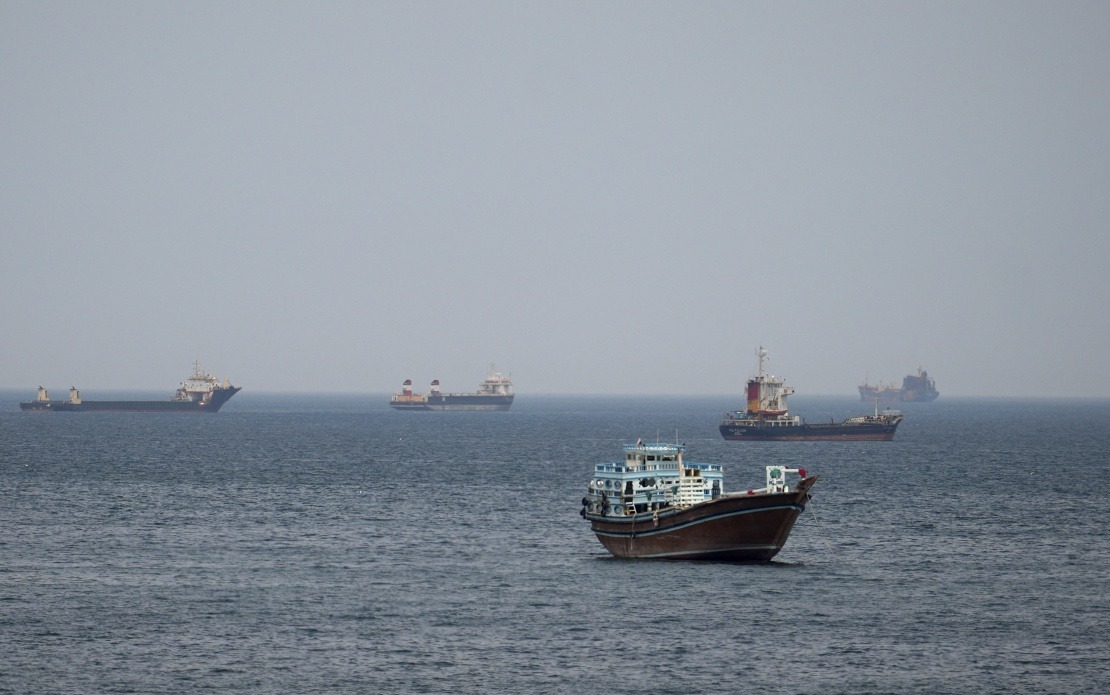
The war between the United States and Iran has entered a new phase with the activation of an interim agreement on Thursday, immediately altering the strategic landscape across the Middle East and reshaping global energy markets. Crude oil tankers commenced moving through the Strait of Hormuz, one of the world's most vital maritime chokepoints, after weeks of disruption that had raised international concerns about fuel availability and prices. Simultaneously, Washington confirmed it had withdrawn its blockade on Iranian vessel movements, a reversal that signals the intensity of the earlier confrontation has substantially diminished, at least for the moment.
The energy sector responded swiftly to this development. Crude prices reached their lowest point since the conflict ignited on February 28, as market participants recognised that the critical waterway—responsible for approximately one-fifth of all globally traded oil—could return to normal operating capacity in coming months. This prospect has relieved pressure on fuel costs across Asia-Pacific economies, where energy imports carry substantial weight in inflation calculations and manufacturing competitiveness. For Malaysia and regional peers dependent on stable energy supplies, the resumption of Hormuz traffic represents welcome breathing room after an anxious period of supply uncertainty.
Yet beneath the surface calm lies considerable fragility. The deal itself is structured as a temporary arrangement with a 60-day window for negotiators to resolve deeper structural issues, principally Iran's nuclear capabilities. Trump administration officials, led by Vice President JD Vance who will head the American negotiating team, have signalled that Washington intends to pursue aggressive restrictions on Iranian long-range missile development alongside nuclear constraints. This demanding posture contrasts sharply with Trump's earlier insistence on Iran's "unconditional surrender," raising questions about whether his initial war objectives have actually been abandoned or merely postponed pending diplomacy.
Iran's Supreme Leader Ayatollah Moitaba Khamenei characterised Trump's decision to sign the agreement as born from "desperation," language that suggests Tehran views the ceasefire as a tactical pause rather than a fundamental shift in its strategic position. Khamenei explicitly warned that forthcoming nuclear discussions will not proceed on American terms, stating that Tehran will reject any demands perceived as excessive. This intransigence reflects Iran's calculation that it has emerged from the conflict with enhanced leverage: the nation withstood American military pressure, maintained control over critical maritime routes, and secured valuable financial sanctions waivers worth up to US$300 billion in reconstruction funds and other economic incentives.
The interim agreement grants Iran administrative authority over the Strait of Hormuz during the 60-day negotiating period, permitting Tehran to issue permits and regulate vessel traffic, though notably without collecting transit fees during this interval. This arrangement preserves Iran's strategic position as the gatekeeper of one of humanity's essential energy corridors while offering Washington a temporary satisfaction of demonstrating openness to negotiations. For Southeast Asian shipping interests and energy traders, this arrangement provides clarity about maritime operations, though the underlying question of Iran's long-term intentions remains unresolved.
A more immediate concern clouding the agreement's prospects emerges from Lebanon, where Israeli military operations have intensified rather than diminished following the ceasefire announcement. Fresh airstrikes struck Lebanese territory early Thursday morning, directly contradicting Trump's stated expectation that all regional hostilities would cease immediately. The Israeli government, conspicuously absent from the original negotiations, has explicitly rejected any intention to withdraw from Lebanese territory and has released maps depicting expanded occupation zones within the country. This defiance presents Trump with an early test of his ability to enforce the agreement's terms, particularly its provision calling for the "permanent termination" of Lebanese hostilities and restoration of territorial sovereignty.
The disconnect between Trump's peace commitments and Israeli military actions has triggered the sharpest public criticism of Israel's strategy in decades from an American president. Trump stated bluntly at the White House that Israeli leaders risk alienating their primary international patron, remarking that attacking "the only powerful ally that I have anywhere left in the entire world" represents strategically catastrophic judgment. This rhetorical assault on an ally, while notable for its candour, has not yet translated into concrete American pressure to halt Israeli operations. The ambiguity surrounding Washington's willingness to enforce its own ceasefire terms creates uncertainty for regional stability and complicates Malaysian assessments of Middle Eastern trajectories.
For Malaysia and Southeast Asia more broadly, the immediate implications centre on energy security and supply chain stability. The restoration of normal Hormuz transit capacity should stabilise fuel costs that had spiked during the conflict, providing relief to manufacturing sectors and transportation industries heavily reliant on petroleum products. However, the provisional nature of the agreement and the evident tensions between its signatories counsel caution about assuming durable calm. Any renewed confrontation in the region would immediately threaten Hormuz traffic again, recreating the supply disruptions and price volatility that characterised the preceding months.
The 60-day negotiating window now commencing will prove decisive for determining whether this ceasefire represents a genuine recalibration of US-Iran relations or merely a temporary respite before renewed conflict. Trump's administration must navigate the contradictory demands of constraining Iran's nuclear and missile programmes while simultaneously restraining Israeli military ambitions in Lebanon—an extraordinarily delicate balance given the competing interests at stake. Iran, conversely, must decide whether to exploit its current negotiating position by making meaningful concessions on nuclear restrictions or whether to adopt maximalist postures that guarantee negotiation failure and a return to confrontation.
The international ramifications extend across maritime security, petroleum markets, and regional diplomatic arrangements throughout the Middle East and beyond. Malaysia's position as a major Asian trading nation with substantial shipping and energy interests demands close attention to these developments. While the initial ceasefire announcement offers modest encouragement, the persistence of Israeli operations in Lebanon, coupled with the hardline rhetoric from Iranian leadership, suggests that the underlying tensions driving the conflict remain very much alive. The next two months will reveal whether Trump's agreement represents a genuine diplomatic breakthrough or merely a negotiated pause in a deeper confrontation still seeking resolution.