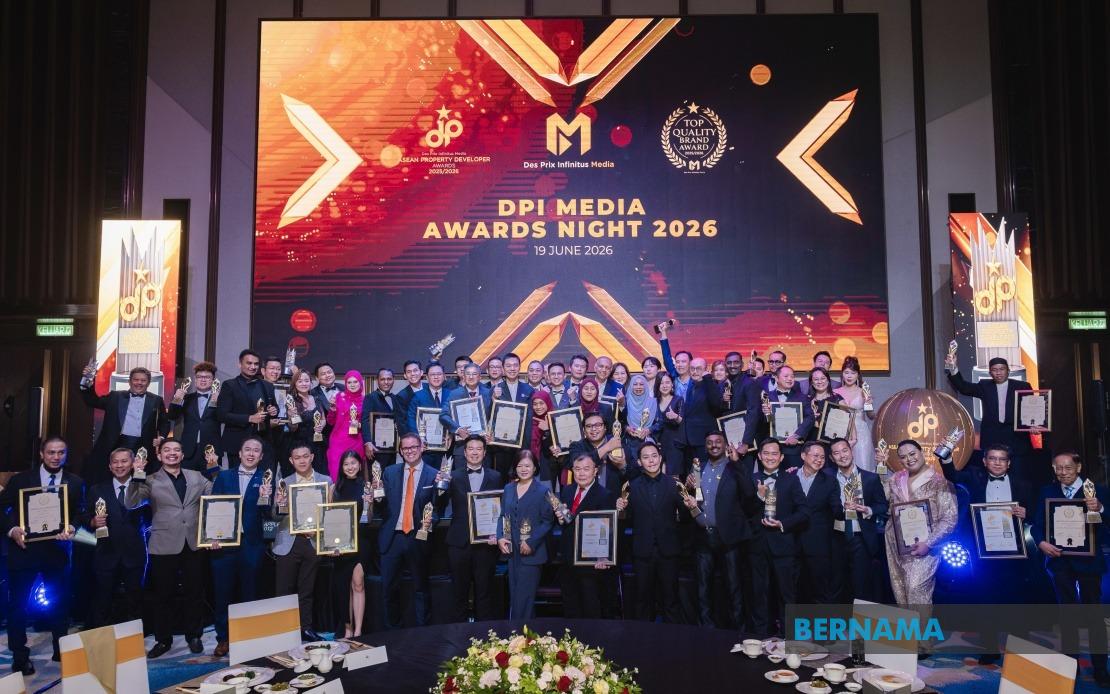
The ASEAN region's property and business sectors received significant recognition when more than 70 accolades were distributed at a major awards ceremony in Kuala Lumpur on June 19. The ASEAN Property Developers Awards 2025/2026 and Top Quality Brand Awards 2025/2026 brought together industry leaders to celebrate exceptional achievement and forward-thinking innovation. Presiding over the event were Datuk Lo Su Fui, Deputy Minister in the Prime Minister's Department (Federal Territories), and Hagenz Choo, Managing Director of Des Prix Infinitus Media, the organising body behind the initiative.
The ceremony reflected a deliberate effort to acknowledge the transformative impact that major property developments are having across Southeast Asia's urban landscape. According to Lo's remarks, the award recipients represent a cohort of developers whose projects are fundamentally reshaping cities while simultaneously strengthening the social fabric of their communities. This recognition carries particular weight given the region's accelerating urbanisation and the mounting pressure on cities to accommodate rapid population growth whilst maintaining livability and environmental integrity.
Sustainable development emerged as a central theme throughout the proceedings. Lo emphasised that award winners have demonstrated their commitment to creating inclusive, safe, and resilient urban environments that prioritise environmental responsibility alongside economic development. This alignment with global sustainability goals positions ASEAN's leading developers as contributors to the United Nations Sustainable Development Goals, particularly in advancing Sustainable Cities and Communities. The focus underscores a regional shift toward responsible urban planning that balances commercial viability with social and environmental considerations.
Malaysia's own development trajectory featured prominently in the official messaging. Lo highlighted Kuala Lumpur's emergence as an increasingly vibrant and progressive metropolitan centre, attributing this evolution to judicious urban planning practices and the nation's broader commitment to achieving carbon neutrality. The recognition ceremony thus served as an implicit endorsement of Malaysia's positioning within ASEAN's development hierarchy and its aspiration to lead by example in environmentally conscious expansion.
Beyond property development, the Top Quality Brand Awards extended recognition into the broader business ecosystem. These honours were conferred upon organisations that have cultivated strong reputations grounded in quality assurance, technological innovation, and an unwavering commitment to consumer satisfaction. Increasingly, these winning brands have integrated Environmental, Social, and Governance principles into their foundational business models, signalling a region-wide movement toward values-driven enterprise that extends beyond profit maximisation.
Des Prix Infinitus Media framed its role not merely as an awards administrator but as a curator of success narratives within the business community. Choo articulated this positioning by describing the organisation as storytellers of achievement and creators of credibility, suggesting that the awards platform serves a broader function in establishing and validating industry standards. This meta-level role reflects the growing importance of recognition mechanisms in shaping business culture and aspirational benchmarks across ASEAN.
The conceptualisation of property development articulated during the ceremony moves beyond conventional real estate metrics. Speakers emphasised that successful developers recognise property as fundamentally about generating tangible value for populations rather than merely assembling land and constructed structures. This philosophical reorientation, if widely adopted, could reshape how the industry measures success and evaluates project outcomes, shifting emphasis toward community benefit metrics alongside financial returns.
For the Top Quality Brand Award recipients, winning recognition reflects their capacity to build and sustain consumer trust through consistency, technological advancement, customer-focused strategies, and demonstrated willingness to adapt to evolving market conditions. These criteria suggest that awards programmes increasingly function as third-party validators of corporate performance in an environment where consumers possess expanding information access and choice.
The ceremony's geographic scope and cross-sectoral participation highlight ASEAN's consolidation as a significant business hub with increasingly sophisticated industrial ecosystems. Multiple sectors were represented among participants, indicating that excellence standards and recognition frameworks span far beyond property and real estate into diversified commercial domains. This breadth suggests the region has developed sufficiently mature institutional infrastructure to support competitive benchmarking and peer recognition mechanisms.
For Malaysian readers and regional observers, the awards carry implications extending beyond simple accolade distribution. They reflect emerging norms around corporate responsibility, environmental stewardship, and innovation-driven competitiveness that are becoming baseline expectations across ASEAN's major economies. Organisations seeking to compete regionally increasingly recognise that sustainability credentials and ESG alignment are not peripheral marketing considerations but central to long-term viability and stakeholder confidence.
The Des Prix Infinitus Media recognition initiative thus represents an institutional mechanism through which evolving business values become codified, celebrated, and projected back into the commercial ecosystem. By elevating property developers and brands that demonstrate commitment to sustainability, social value, and consumer welfare, the awards programme influences broader industry standards and aspirations across the region.
Looking forward, the prominence accorded to sustainable development and quality-focused innovation at such a high-profile regional event suggests these themes will continue shaping competitive advantages and investment decisions throughout ASEAN. For Malaysian enterprises and developers, participation in such recognition programmes offers opportunities both to validate existing commitments to responsible business practices and to position themselves within regional networks of industry leaders.