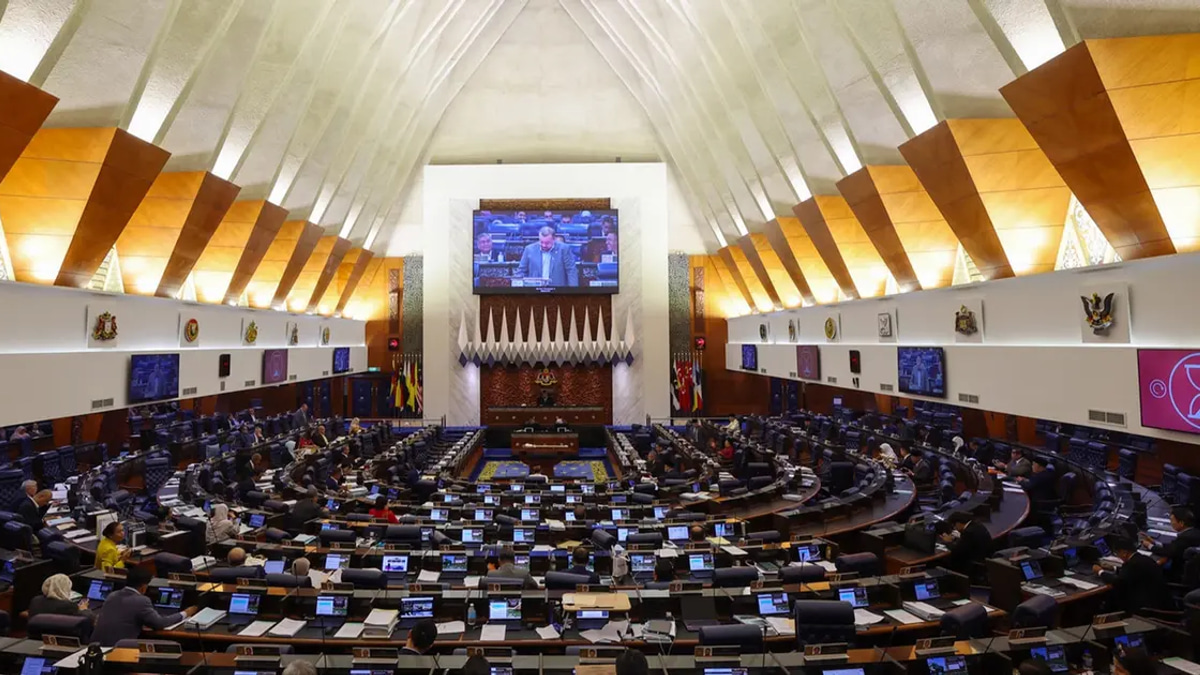
The Dewan Rakyat will resume sitting on Monday for a 16-day session running until July 16, bringing renewed attention to several constitutional reform proposals that failed to advance during the previous parliamentary meeting. Chief among these is the Constitution (Amendment) Bill 2026, designed to impose a decade-long ceiling on prime ministerial tenure, a measure that previously fell short of the necessary two-thirds majority required for constitutional change in Malaysia's legislature.
Alongside the tenure limitation proposal, Parliament will revisit the Constitution (Amendment) Bill (No. 2) 2026, which aims to cleave the historical dual role of Attorney General and Public Prosecutor into separate, independent offices. This structural reform has been forwarded to the Parliamentary Special Select Committee for deeper examination, reflecting the complexity of restructuring Malaysia's prosecutorial and legal apparatus. The reintroduction of both measures signals the government's determination to pursue institutional reforms despite their previous parliamentary setbacks.
The session's legislative agenda extends beyond constitutional matters to encompass contemporary governance challenges. The Cybercrime Bill 2026 figures prominently among priorities, reflecting growing parliamentary concern over digital security threats in an increasingly connected Malaysia. Transport Minister Anthony Loke will table amendments to the Road Transport Act 1987 on the opening day, with substantive debate scheduled for Tuesday. These modifications span 11 distinct areas and 42 separate clauses, targeting a persistent menace that continues to exact a heavy toll on road safety: the organised racing syndicates that plague Malaysian highways.
The proposed transport amendments represent a comprehensive enforcement overhaul. Beyond addressing illegal racing directly, the revisions specifically target the operations of organised 'tonto' syndicates—networks that coordinate illicit street racing activities—through strengthened legal mechanisms. The government views these changes as essential to elevating compliance with traffic regulations and protecting road users from the escalating dangers posed by uncontrolled racing communities. For Malaysian motorists and families, these reforms address a visible breakdown in road discipline that has generated considerable public frustration.
Economic and energy security will occupy substantial parliamentary attention throughout the sitting. Legislators anticipate extensive discussion regarding the reverberations of the global energy supply crisis on Malaysia's economy, particularly consequences stemming from the ongoing geopolitical conflict in West Asia. The disruption to international energy markets has created tangible implications for Malaysia's import costs, industrial competitiveness, and household utility expenses—factors directly affecting living standards across the nation. This regional dimension underscores how parliamentary deliberations increasingly reflect interconnected global challenges rather than purely domestic concerns.
Dewan Rakyat Speaker Tan Sri Johari Abdul has issued a pointed reminder to all members regarding their foundational obligations to constituents and the institution itself. His remarks implicitly acknowledge underlying tensions within Parliament, reflecting the fractious political environment that has characterised recent Malaysian politics. The Speaker's emphasis on factual, data-driven discourse and rejection of sentimentalism suggests concern that parliamentary proceedings may become vehicles for political point-scoring rather than genuine problem-solving.
Johari's admonition carries particular weight given the concurrent Johor State Election, which creates competing demands on MPs' time and political attention. The Speaker explicitly cautioned legislators against leveraging parliamentary platforms for state-level campaigning, highlighting a recurrent problem in Malaysia's federal system where state elections can subordinate national legislative business to provincial political interests. His message reflects institutional anxiety that parliamentary effectiveness may suffer when members' energies become divided between Westminster-style legislative duties and regional electoral contests.
The Speaker articulated a vision of Parliament transcending partisan fragmentation to focus on substantive policy formulation. He highlighted several persistent public concerns—cost-of-living pressures, educational quality, healthcare access, employment creation, and community welfare—that demand serious legislative attention. These issues directly resonate with Malaysian households grappling with inflationary pressures and service delivery challenges. Johari's framing positions parliamentary work as fundamentally about delivering tangible improvements in citizens' material circumstances, not merely scoring political victories.
Johari's remarks also underscored the legitimacy deficit that afflicts contemporary parliaments globally: public expectations that elected representatives work earnestly on behalf of constituents rather than engaging in theatrical displays of partisan dominance. For Malaysia's Parliament, this message carries urgency given periodic public criticism of legislative ineffectiveness and perceptions of member absenteeism. The Speaker's call for disciplined, responsible debate within established procedural frameworks suggests an attempt to restore institutional credibility through emphasis on decorum and purposeful deliberation.
The 16-day sitting will unfold against Malaysia's complex political landscape, where coalition arrangements remain fluid and legislative majorities cannot be presumed stable. The failure of the PM tenure bill to secure two-thirds support during the previous session demonstrates that even government-backed constitutional proposals face uncertain parliamentary prospects. This fragility lends heightened significance to how different political actors approach debates on major bills, with opposition MPs potentially wielding disproportionate influence on specific votes.
Beyond the Dewan Rakyat's activities, the Dewan Negara will commence its own 10-day sitting from July 20 through August 4, allowing the upper house to scrutinise measures approved by the lower chamber. This bicameral review process means that legislation passed during the present Dewan Rakyat session will face additional parliamentary examination, potentially extending the timeframe for major bills to achieve final enactment. For businesses and stakeholders awaiting legislative outcomes—particularly regarding the transport amendments affecting road safety enforcement—the two-chamber process means implementation timelines remain extended.
The parliamentary session ultimately represents a critical juncture for Malaysia's institutional development. The reintroduction of constitutional amendments suggests sustained commitment to institutional reform, even when previous attempts have foundered. The prominence of transport, cybercrime, and energy security issues reflects evolving parliamentary preoccupations responding to contemporary Malaysian challenges. Speaker Johari's exhortations toward responsible, fact-based deliberation signal recognition that Parliament's legitimacy depends on transcending narrow partisanship and delivering solutions to problems affecting ordinary Malaysians—a reminder of democratic governance's fundamental purpose.