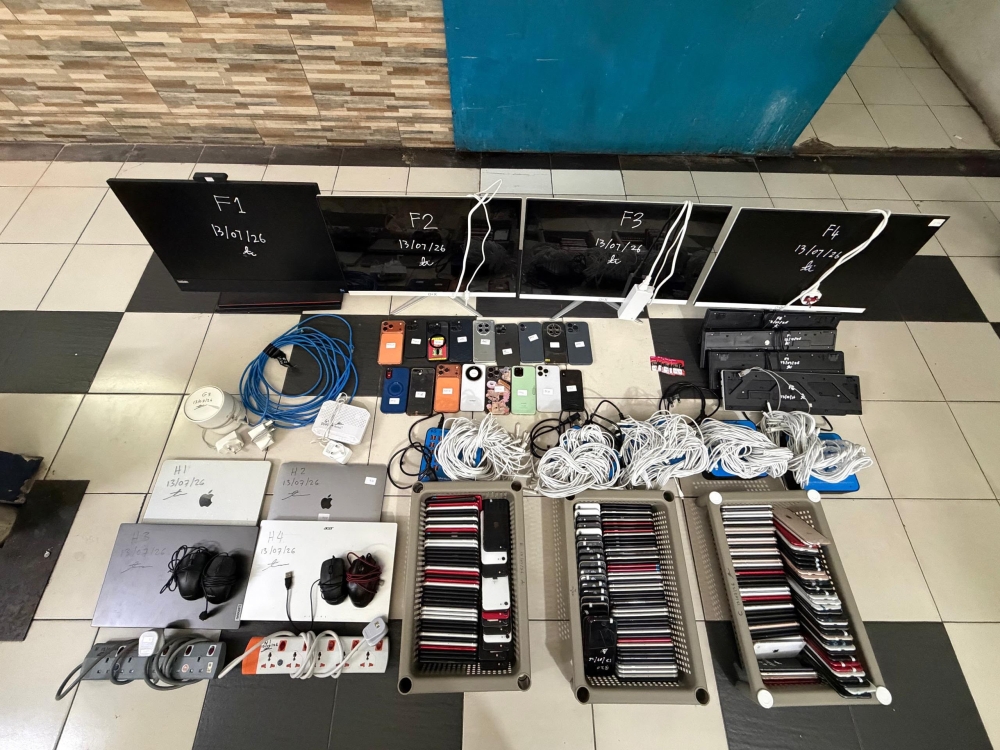
Perak police have dismantled what authorities believe to be a significant organised scam operation after conducting simultaneous raids across the Ipoh area, resulting in the arrest of 18 Chinese nationals on suspicion of involvement in large-scale online fraud. The coordinated enforcement action represents an escalating effort by Malaysian law enforcement to tackle the proliferation of digital fraud schemes that increasingly target vulnerable individuals across Southeast Asia, demonstrating the cross-border nature of modern cybercriminal networks.
The twin operations underscore a troubling pattern that has emerged across Malaysia over recent months: the establishment of physical bases within the country from which foreign criminal syndicates orchestrate fraud activities targeting multiple jurisdictions. These networks typically operate through a combination of fake investment platforms, romantic scams, and impersonation schemes that exploit victims' trust and financial aspirations. The concentration of suspects from a single nationality indicates the hierarchical and coordinated structure typical of professional criminal enterprises, rather than isolated bad actors.
Online fraud has become increasingly sophisticated in its execution, employing psychological manipulation techniques refined over years of operation. Perpetrators often spend weeks building credibility with their targets, gradually earning confidence before requesting larger financial commitments or access to banking credentials. The scale of suspected losses resulting from such operations frequently runs into millions of ringgit, with many victims reluctant to report incidents due to shame or fear of legal consequences, making accurate assessment of the true damage challenging for authorities.
From a regional perspective, the establishment of scam operations within Malaysia highlights vulnerabilities in immigration oversight and the challenge of monitoring organised criminal networks that leverage Asia's geographic connectivity. These syndicates operate across borders with relative ease, exploiting differences in regulatory frameworks and enforcement capacity between countries. The mobility of such operations means that a successful crackdown in one location often simply displaces the activity elsewhere within the region, a pattern authorities across Southeast Asia have begun to recognise and address through improved intelligence sharing.
For Malaysian citizens and residents, the persistence of online fraud underscores the importance of heightened digital literacy and financial caution. Many victims of such schemes come from educated backgrounds with reasonable digital familiarity, suggesting that sophistication of perpetrators increasingly outpaces public awareness. The schemes often exploit legitimate-appearing platforms and professional-standard marketing materials that effectively mimic established financial institutions, making detection difficult for ordinary individuals lacking specialist training.
The police operation likely involved substantial investigative groundwork, including digital forensics, financial tracking, and coordination with telecommunications companies to map communication patterns and fund flows. Such investigations require technical expertise and resources that place significant demands on law enforcement agencies, particularly in jurisdictions managing multiple concurrent criminal investigations. The successful execution of the raids suggests either breakthrough intelligence or the culmination of a lengthy intelligence-gathering phase.
The arrest of such a large cohort simultaneously raises questions about the operational structure of the syndicate and the roles individual suspects played within the broader organisation. Typically, such networks employ specialists in different functions: money mules who facilitate cash transfers, technical operatives managing digital infrastructure, fraud specialists crafting convincing narratives, and coordinators overseeing daily operations. Understanding these hierarchies proves crucial for prosecutors seeking to demonstrate the organised nature of the conspiracy and for prevention efforts aimed at disrupting similar networks.
Malaysian authorities have gradually increased resources dedicated to combating online fraud, reflecting recognition that traditional street-level crime now represents only a fraction of criminal activity affecting citizens. The Financial Intelligence Unit, police cybercrime units, and banking regulators have established formal mechanisms for sharing information and coordinating responses. However, resource constraints and the rapid evolution of criminal tactics mean enforcement frequently remains reactive rather than preventive, addressing established operations rather than disrupting them before victims suffer significant losses.
The implications for Malaysia's international reputation merit consideration, as the discovery of organised foreign criminal operations within the country reflects broader concerns about governance and security. However, the successful identification and apprehension of suspects demonstrates competent law enforcement capability and commitment to addressing the problem. Potential victims in other countries may derive some confidence from evidence that Malaysian authorities take organised fraud seriously and will pursue cases with determination.
Looking forward, addressing organised online fraud comprehensively will require sustained effort across multiple fronts. Banking sector cooperation in identifying suspicious transaction patterns, enhanced immigration vetting procedures, strengthened international law enforcement coordination, and public education campaigns all form essential components of an effective response. The challenge remains formidable given the low-risk, high-reward nature of online fraud and its accessibility to criminal networks with relatively modest technical requirements and startup capital compared to traditional organised crime enterprises.

