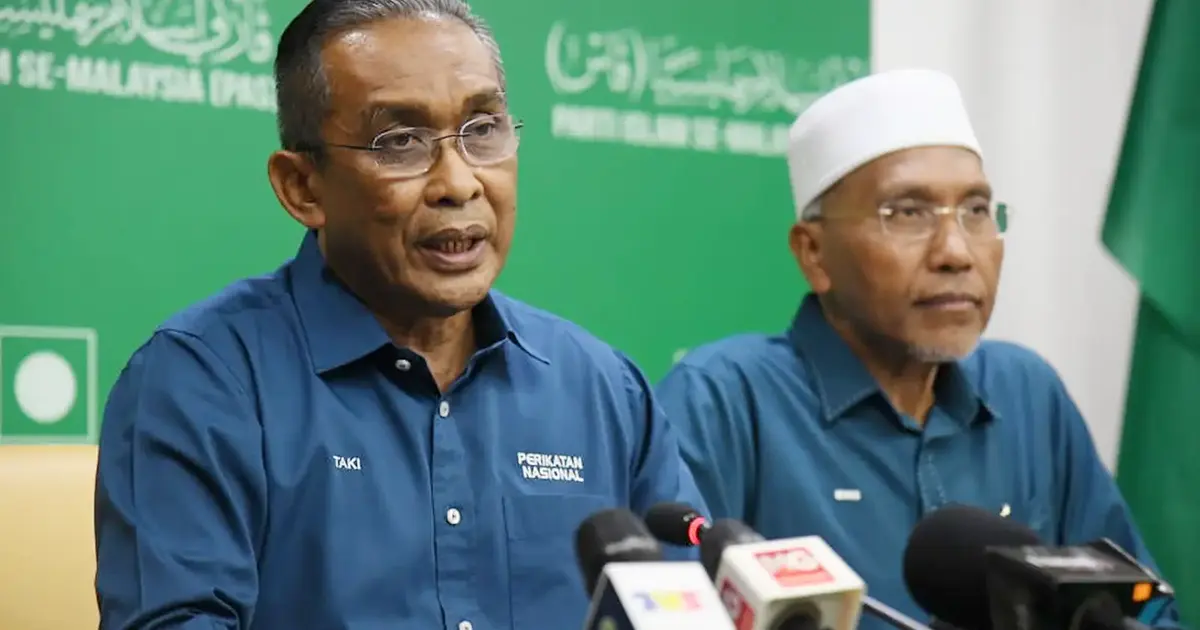
Perikatan Nasional has moved to centralise control over its internal proceedings, with the coalition's secretary-general declaring that all meetings and events must receive explicit authorisation from the chairman before they can proceed. The statement came in response to reports that Bersatu president Muhyiddin Yassin had attempted to convene a PN Supreme Council meeting, underscoring ongoing tensions within the three-party coalition that has become a significant force in Malaysian politics.
Takiyuddin Hassan, serving as the coalition's secretary-general, issued the clarification to prevent what appears to be an unauthorised gathering. His intervention highlights the delicate balance of power within Perikatan Nasional, where multiple party leaders hold substantial influence and competing visions for the coalition's direction. The move suggests that procedural safeguards have become necessary to manage internal disputes and prevent rival factions from leveraging their positions to convene meetings that might not reflect the broader coalition's consensus.
The incident reflects deeper structural challenges facing PN, which comprises Bersatu, PAS, and Perikatan Malaysia. Since its formation and subsequent evolution through Malaysian politics, the coalition has grappled with reconciling the interests of its constituent parties, each of which brings its own organisational strength and political objectives to the partnership. Muhyiddin Yassin, as Bersatu's president, commands significant support within his party and has previously demonstrated his willingness to pursue strategic initiatives. However, his attempt to unilaterally call a Supreme Council meeting suggests a breakdown in consultation protocols between senior coalition figures.
The requirement for chairman approval before convening meetings represents an attempt to restore orderly governance within PN's structures. Such measures are common in large political coalitions where multiple power centres exist, but their necessity in this instance indicates that informal coordination mechanisms have proven insufficient. By establishing a clear procedural requirement, the secretary-general is essentially creating a veto mechanism that prevents any single party leader from dominating the coalition's agenda-setting process.
For Malaysian observers, the episode underscores the ongoing instability within coalition politics following the 2022 elections. While PN has consolidated itself as a parliamentary force, particularly through PAS's significant parliamentary representation, internal cohesion remains a work in progress. The coalition's ability to maintain unified positions on key parliamentary votes and policy matters depends partly on managing these kinds of disputes before they escalate into public confrontations.
The broader context reveals that Perikatan Nasional occupies a unique position in Malaysia's current political landscape. Neither fully aligned with the federal government nor in outright opposition, the coalition has carved out a role that requires careful navigation of multiple interests. PAS's Islamist orientation, Bersatu's centrist positioning, and Perikatan Malaysia's regional focus create natural tensions that coalition leadership must constantly manage. When procedural disputes emerge, they often signal underlying disagreements about strategic direction.
Takiyuddin's assertion of the chairman's authority also reflects concerns about legitimacy and representation. The Supreme Council represents the coalition's highest decision-making body, and meetings of this body carry significant weight in determining coalition positions. Allowing any single party president to unilaterally convene such a meeting could undermine the representative nature of these proceedings and create questions about whether decisions reflect genuine coalition consensus or merely the interests of one constituent party.
From a Southeast Asian perspective, PN's internal dynamics matter beyond Malaysia's borders. The coalition's composition and stability influence regional political calculations, particularly regarding Malaysia's relationships with neighbouring countries and ASEAN dynamics. Any significant fracturing of PN could reshape Malaysia's foreign policy positioning and parliamentary dynamics affecting regional initiatives. Consequently, the coalition's internal management carries implications extending beyond domestic Malaysian politics.
The incident also raises questions about documentation and procedure within PN's formal structures. Apparently, there exists ambiguity about who possesses authority to convene Supreme Council meetings, suggesting that the coalition's constitutional arrangements may require clarification. Formalising these procedures through written protocols could prevent future misunderstandings and demonstrate that PN is maturing as a political institution capable of governing itself transparently and predictably.
Looking forward, how PN resolves this governance question will influence perceptions of the coalition's stability and competence. Political coalitions that manage internal disputes through transparent procedures and respect for established authority structures tend to present stronger unified images to voters and parliament. Conversely, coalitions marked by procedural chaos and competing power grabs risk appearing fractious and unreliable. For PN's long-term viability as a political force, establishing clear, respected governance protocols is essential.
The secretary-general's statement, while framed as a simple procedural clarification, thus carries substantial implications for PN's future trajectory. It signals an attempt to prevent power struggles from destabilising the coalition while establishing hierarchical clarity about decision-making authority. Whether this assertion of centralised approval mechanisms will be accepted by all constituent parties, particularly Bersatu under Muhyiddin's leadership, remains to be seen. The coming weeks will reveal whether PN can institutionalise these governance changes or whether internal tensions will continue surfacing through different channels.