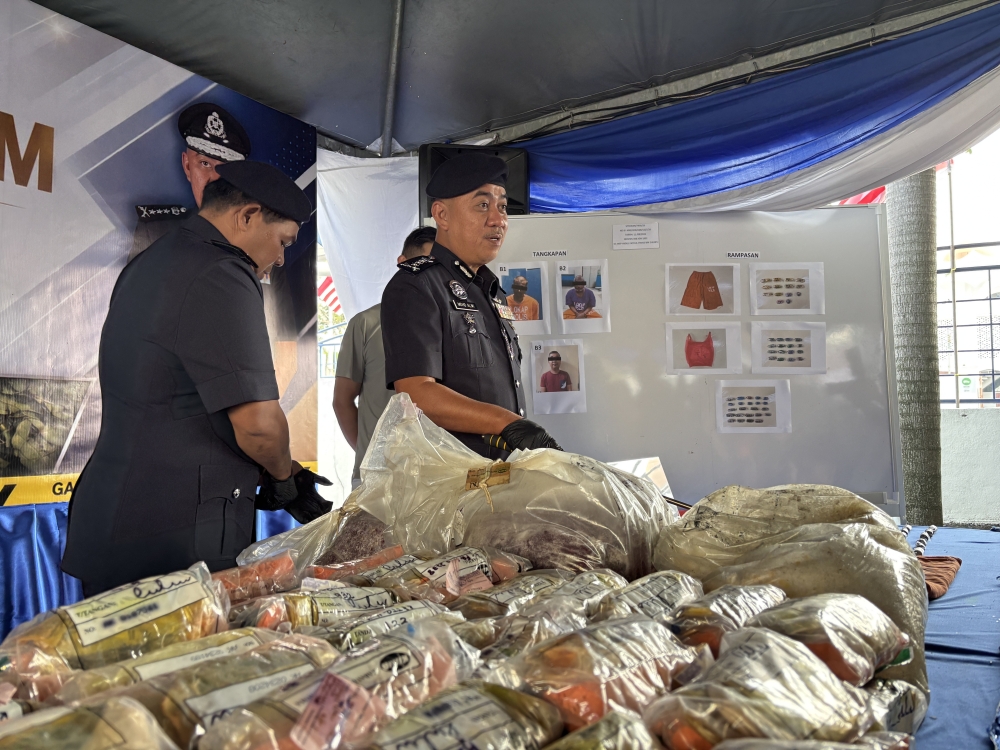
A police constable has become the focus of an internal investigation after drugs worth RM18,534 were found inside a cell at Lumut police station, prompting the immediate arrest of three men including the officer himself. The seizure, which took place in Perak, underscores growing concerns about contraband smuggling within custodial facilities and the integrity of law enforcement personnel tasked with maintaining order.
The recovered substances included methamphetamine, heroin, and cannabis discovered during what authorities describe as a routine inspection of the detention facility. Such discoveries are particularly troubling because police cells are theoretically secure environments where inmates are under constant supervision. The presence of multiple controlled substances suggests either a significant lapse in security procedures or deliberate facilitation by someone with access to the holding area.
The involvement of an active-duty police constable in the incident represents a notable breach of public trust. Officers are entrusted with safeguarding detained persons and preventing the introduction of prohibited items into custodial settings. Any suggestion of complicity or negligence tarnishes the reputation of the entire force and raises questions about vetting procedures and ongoing oversight of personnel with access to sensitive areas.
From a broader law enforcement perspective, this case illustrates vulnerabilities that criminal networks exploit. Organised drug trafficking operations have long recognised that police facilities can serve as distribution points or safe houses if staff members can be corrupted or manipulated. The sophistication required to introduce such quantities of narcotics into a police station suggests organised involvement rather than isolated opportunism.
The total value of RM18,534 indicates a commercially significant quantity rather than personal consumption amounts. The diversity of substances—spanning stimulants, opioids, and cannabis—suggests inventory for multiple customer bases. This diversification is typical of mid-level distributors who supply street dealers rather than wholesale traffickers or occasional users.
For Malaysia's ongoing war on drugs, the incident provides uncomfortable evidence that enforcement agencies themselves face corruption threats. The country has maintained stringent drug policies with severe penalties for trafficking, yet the interior of law enforcement facilities remains vulnerable to infiltration. Such breaches undermine public confidence in the system's ability to disrupt supply chains when the institutions meant to enforce drug laws become compromise points.
The Lumut police detention facility breach also carries implications for prisoner safety and rights. Detainees held in facilities where contraband circulates freely face additional risks of violence, coercion, and further criminal entanglement. If one officer was involved in smuggling, questions arise about whether other staff members were aware and complicit, negligent, or genuinely unaware of activities occurring within their workplace.
Internally, the Royal Malaysia Police will face pressure to conduct thorough investigations into how the operation functioned and what security protocols failed. Such inquiries typically examine CCTV footage, visitor logs, search procedures, and staff communication patterns. The investigation may reveal whether the constable acted independently, was pressured by external parties, or was part of a larger network within the organisation.
The case also touches on broader governance issues in Malaysian law enforcement. Police cells are often overcrowded facilities where systematic searches and monitoring can become inconsistent. Budget constraints and staffing limitations mean some stations operate with minimal security technology. Addressing these vulnerabilities requires investment in infrastructure, training, and accountability mechanisms—commitments that demand both political will and sustained resources.
For the Malaysian public, particularly those with relatives in custody, the discovery raises concerns about the safety and integrity of police detention. Complaints about conditions and security in police lock-ups periodically emerge, with human rights organisations highlighting overcrowding and inadequate supervision. This incident validates those concerns and suggests systemic issues warrant comprehensive review.
The charges facing the three arrested men and the police constable will likely proceed through separate tracks, with the officer facing potential criminal charges relating to drug possession and trafficking alongside internal disciplinary proceedings. Successful prosecution will depend on physical evidence linking individuals to the seized substances and establishing intent to distribute rather than merely possess.
Moving forward, the incident will probably catalyse discussions about security enhancements in police facilities nationwide. Other stations may receive directives for increased unannounced inspections, visitor screening improvements, and personnel rotation policies designed to limit any individual's unsupervised access to custody areas. The constable's arrest signals that even officers face serious consequences for involvement with controlled substances, though public scepticism often surrounds whether punishments for law enforcement personnel match those imposed on ordinary citizens.
This case represents a significant operational security failure with implications extending far beyond the Lumut station. It demonstrates that organised crime's ability to operate depends partly on compromising officials, making personnel integrity and oversight mechanisms critical components of effective drug enforcement. Malaysia's broader narcotics strategy cannot succeed when the institutions meant to enforce it become venues for trafficking activity itself.

