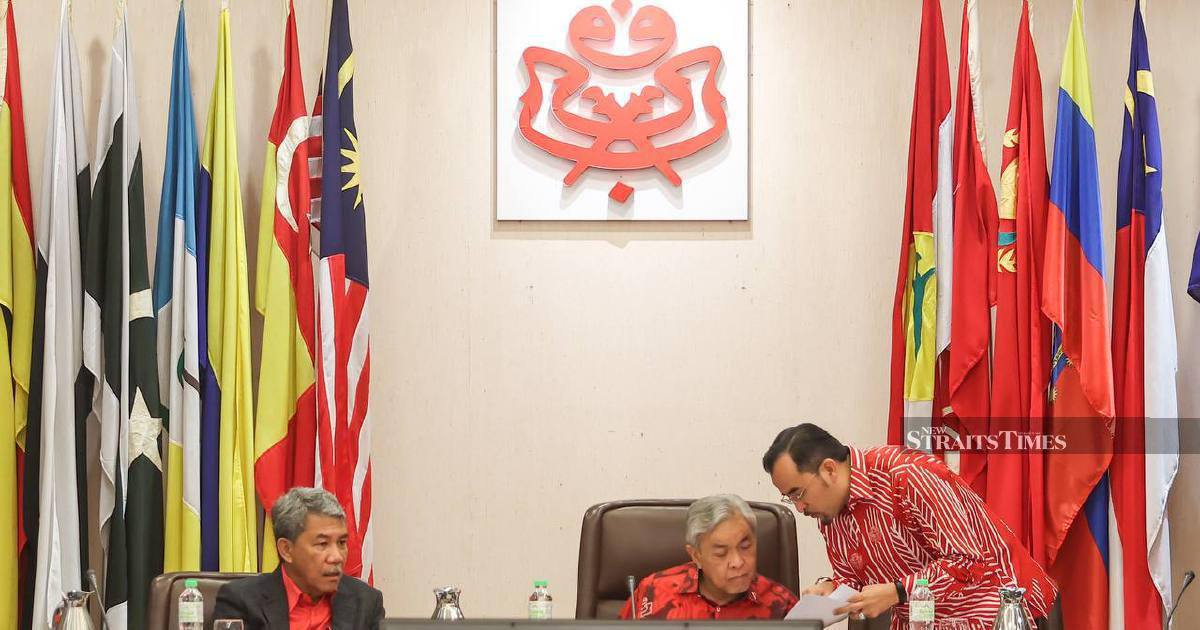
Umno secretary-general Datuk Dr Asyraf Wajdi Dusuki has reaffirmed a fundamental principle of Malaysian justice: those held for questioning or investigation should not face public judgment or prejudgment as guilty parties before standing trial and receiving a court verdict. His statement underscores a critical distinction within the legal system between investigative detention and criminal conviction, a boundary that remains particularly relevant as Malaysia navigates high-profile cases and intensified public scrutiny of law enforcement activities.
The principle invoked by Asyraf reflects a cornerstone of modern jurisprudence enshrined in Article 5 of the Malaysian Constitution, which guarantees the right to life and liberty. Under this framework, the moment a person is arrested or detained for investigative purposes, they enter a vulnerable period where their legal status remains indeterminate. They have not yet been charged, let alone found guilty. Yet in an era of instant communication and social media amplification, the boundary between investigation and conviction has become increasingly blurred in public perception. Preliminary reports, speculation about evidence, and commentary from interested parties often circulate widely before formal charges are even filed, potentially poisoning the well of public opinion against the accused.
This cautionary note carries particular weight in Malaysia, where recent years have witnessed several high-profile detention cases attracting intense media and political attention. The distinction between investigative detention and presumption of innocence becomes not merely academic but practically important for the dignity and welfare of those caught up in the system. When detainees are routinely referred to as guilty or their alleged wrongdoings are presented as established fact during the investigative phase, the actual trial becomes almost ceremonial. Defence arguments struggle against narratives that have already solidified in public consciousness, and the burden of proof—theoretically resting with the prosecution—shifts effectively onto the accused to prove their innocence despite contrary public sentiment.
Ashraf's emphasis also addresses a systemic challenge within Malaysia's enforcement framework: the duration and conduct of investigative detention. While the law prescribes limits on how long suspects may be held without charge—typically 24 hours initially, extendable to 14 days in certain cases—the conditions and treatment of detainees during this period remain variable. Without robust protection of the presumption of innocence, detainees may face psychological and reputational damage even if ultimately cleared or acquitted. The public narratives constructed during detention can haunt individuals long after charges are dropped or they are found not guilty, effectively imposing a lifetime sentence of social suspicion regardless of legal outcome.
The political dimension of Asyraf's statement deserves consideration as well. As the ruling Umno party's secretary-general, his intervention carries implicit messaging about how the party views due process protections at a moment when various political actors face investigation. By articulating support for the presumption of innocence, Umno simultaneously defends its own members potentially under investigation while projecting commitment to rule of law principles. This positioning matters for Malaysia's broader political stability, as confidence in independent judicial processes depends partly on the willingness of major political actors to respect those principles even when facing adverse scrutiny.
The statement also resonates within the context of Southeast Asian legal development more broadly. Many nations in the region have inherited Westminster-derived legal systems but have grappled with varying degrees of success in maintaining separation between investigative authority and judicial judgment. Malaysia's track record has attracted international attention, particularly from human rights bodies monitoring whether detained individuals receive fair treatment and whether investigative processes remain genuinely separate from punitive ones. Statements from high-ranking political figures affirming core principles help establish protective normative frameworks, even if implementation remains imperfect.
Furthermore, Asyraf's remarks speak to media responsibility and public discourse standards. When detainees are routinely described using language suggesting guilt or when their cases are tried in the court of public opinion, media and political actors contribute to the erosion of due process protections. Malaysian news organisations, civil society groups, and political commentators play crucial roles in maintaining these distinctions through careful language and responsible reporting practices that do not presuppose guilt.
The practical implications for detainees themselves are substantial. Being held for investigation already carries inherent stress, uncertainty, and disruption to personal and professional life. Without adequate protection of the presumption of innocence, detainees face compounded harm through reputational damage, social ostracism, and employment difficulties that persist even if they are ultimately cleared. Their families suffer collateral effects, and their ability to mount an effective legal defence may be compromised by prejudicial publicity that has already shaped witness perceptions and community attitudes.
Moving forward, Asyraf's statement implicitly calls for a multifaceted commitment to safeguarding the presumption of innocence across institutional actors. Law enforcement must conduct investigations professionally and confidentially where possible. Prosecutors must base charging decisions on evidence rather than public pressure. Courts must maintain independence in evaluating cases without regard to external narratives. Media outlets must employ precise terminology distinguishing between investigation, charging, and conviction. And political leaders across the spectrum must consistently affirm these principles through both rhetoric and action. Only through such coordinated commitment can Malaysia strengthen public confidence in its justice system and ensure that investigation genuinely remains a neutral procedural stage rather than a gateway to public condemnation.

