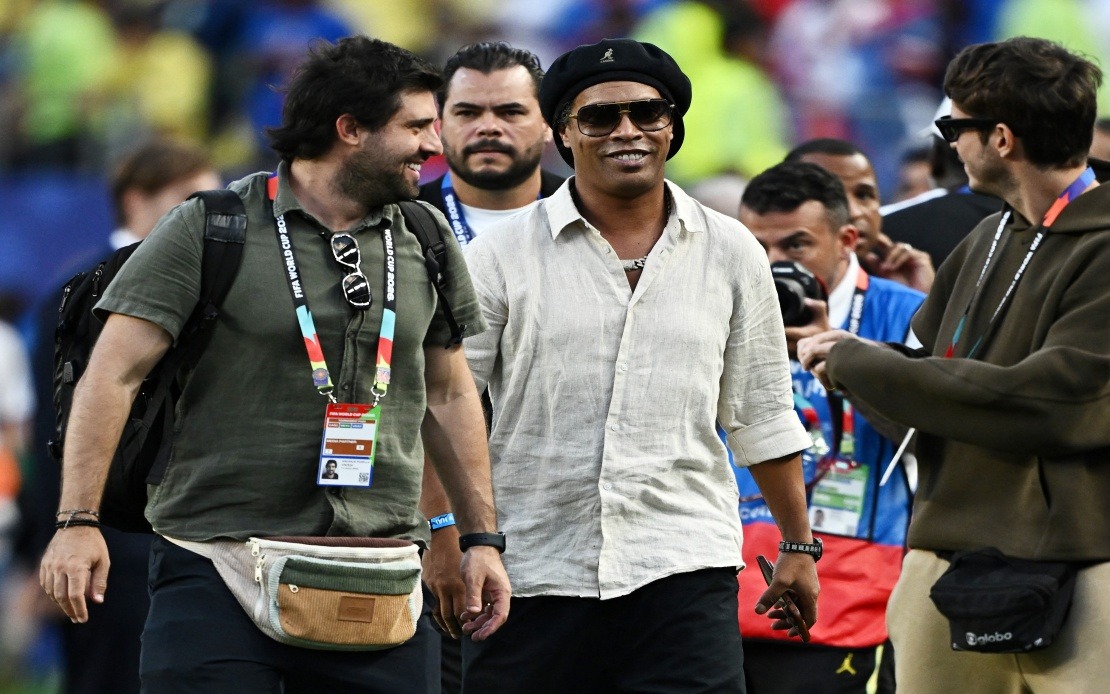
At 46 years old, Ronaldinho appears ready to lace up his boots once more. The Brazilian football legend is on the verge of signing with Ravenna, a third-tier Italian football club, according to reports from the German Press Agency. While the formal announcement is expected at an event in Miami on Tuesday, the precise nature of his involvement—whether he will actively take to the pitch or serve in a different capacity—remains unclear. Gazzetto dello Sport first reported the development, sparking fresh speculation about whether the ageing maestro truly intends to play or merely leverage his iconic status in another capacity.
Ronaldinho's cryptic statement to the press provided little definitive clarity but captured his characteristic optimism and passion. "I can't wait to dance with the ball again and write a new story with Ignazio and the whole Cipriani family," he was quoted as saying, referencing Ignazio Cipriani, the club's owner and a successful businessman with extensive hotel industry holdings. The poetic language suggests genuine enthusiasm, though it stops short of confirming he will actually compete in matches. The phrasing has nonetheless reignited debate among football observers about whether the Brazilian icon merely seeks another platform for his brand or harbours legitimate aspirations to return to the pitch.
Ravenna's leadership offered an equally measured response when confronted with the obvious question. Vice-president Ariedo Braida told Italian news agency ANSA that anything is possible, remarking: "Will he play? We will see but it can't be ruled out. He is a champion, he knows no age." This diplomatic response suggests the club itself may be uncertain about the arrangement or may prefer to keep options open pending Ronaldinho's physical assessment and motivation levels. The statement reflects both the club's respect for the Brazilian's pedigree and a pragmatic acknowledgment that elite professional football at such an advanced age presents considerable physical demands.
Ronaldinho's resume speaks to his status as one of the finest midfielders of the modern era. The former Brazil international claimed the prestigious World Footballer of the Year award twice, cementing his place among football's elite during his peak years. His career achievements include lifting the FIFA World Cup with Brazil in 2002, an honour that defined an entire generation of Brazilian players. Four years later, he secured Champions League glory with FC Barcelona, the club where his talent flourished most spectacularly and where he became a global phenomenon through his skill and creativity.
Beyond European success, Ronaldinho continued winning trophies in South America, notably capturing the 2013 Copa Libertadores championship with Atletico Mineiro. This continental triumph demonstrated his enduring quality even as he transitioned into the latter stages of his career. Such accomplishments underscore why even at his advanced age, clubs like Ravenna see potential marketing and sporting value in associating with his name and legacy.
The footballer's professional journey effectively concluded in 2015 when he played his final match for Rio de Janeiro-based Fluminense. That appearance marked the end of his competitive era in traditional association football. However, he subsequently competed in India's Premier Futsal League across two separate periods, prolonging his engagement with professional football in a different format. He officially announced his retirement in 2017, making any potential comeback at Ravenna a remarkable reversal after nearly a decade away from formal competition.
For Southeast Asian football fans and Malaysian readers in particular, Ronaldinho's possible return carries broader significance. The Brazilian icon represented a style of play—creative, joyful, and skilfully exuberant—that transcended geographical and cultural boundaries. His performances at Barcelona and his World Cup triumph made him a household name throughout Asia, including Malaysia, where Brazilian football commands considerable admiration. The prospect of witnessing him in any competitive capacity, even in Italy's third division, holds nostalgic appeal for millions who grew up watching his wizardry.
Ravenna's decision to pursue Ronaldinho reflects the growing trend of heritage players and former superstars gravitating toward European lower divisions in their post-prime years. Italian football, in particular, has become a destination for ageing celebrities seeking one final chapter. Ravenna, competing in Serie C, likely views the Brazilian's presence as a catalyst for increased attendance, media attention, and commercial opportunities that extend beyond sporting competition itself.
The uncertainty surrounding whether Ronaldinho will actually play raises intriguing questions about the arrangement's true nature. Could this be primarily a commercial partnership, with the legend serving in an ambassadorial or mentorship role? Or does the club genuinely believe he retains sufficient physical capability to contribute on the pitch? Such ambiguity is characteristic of modern football's blurred boundaries between sport and entertainment, where celebrity and competition increasingly intertwine.
The Miami announcement scheduled for Tuesday will likely provide greater insight into Ravenna's intentions and Ronaldinho's personal motivations. Whether this represents a genuine sporting comeback or simply another chapter in leveraging his legendary status remains to be determined. Regardless, the prospect of the Brazilian icon in Italian football at 46 exemplifies how elite players continue rewriting football's narrative even after conventional retirement.