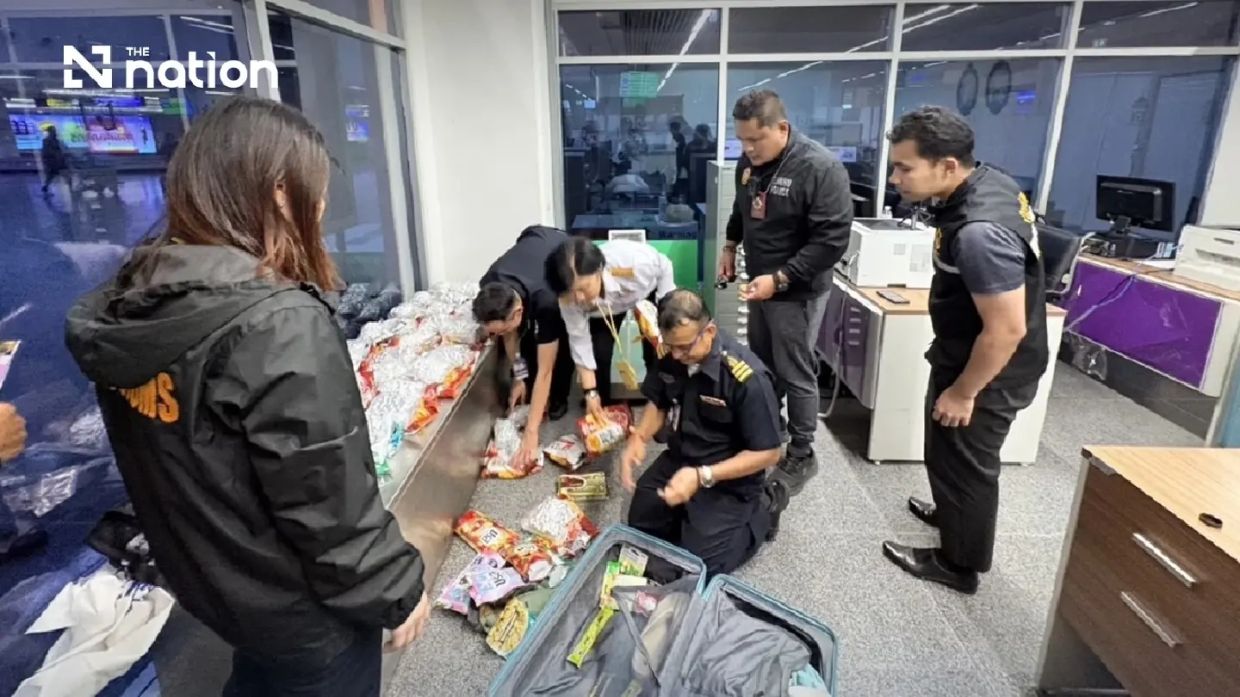
A Russian national was apprehended at Phuket International Airport on Wednesday, July 8, after customs officials discovered a substantial cache of cannabis products hidden within his luggage. The arrest represents another significant narcotics seizure at Thailand's popular tourist gateway, highlighting continued vigilance by authorities tasked with preventing drug trafficking through the kingdom's international terminals. The 30-year-old suspect, identified as Sergei Chalabari, was detained in the international departure terminal at Mai Khao subdistrict, Thalang district, as he prepared to board a flight out of the country.
Customs personnel led by Nucha Jeeradit, chief of the Phuket Airport Customs House, conducted an inspection of two blue BP WORLD wheeled suitcases weighing approximately 8 kilogrammes combined. The examination uncovered an extensive collection of cannabis products distributed across multiple vacuum-sealed packages. Officers discovered 35 individually wrapped packs of cannabis flowers totalling 11.4 kilogrammes in gross weight, complemented by 12 packs of cannabis resin weighing 6.2 kilogrammes. The total haul amounted to 17.6 kilogrammes, representing a substantial quantity well above personal use thresholds under Thai law.
During preliminary questioning at the airport, Chalabari acknowledged ownership of both the suitcases and all recovered contraband, according to officials overseeing the case. The admission of responsibility streamlined initial investigation procedures, though the case still requires full legal processing through Thailand's criminal justice system. The suspect's cooperation during questioning did not alter the severity of charges he now faces, as Thailand maintains stringent penalties for drug trafficking and smuggling offences.
Thailand's customs legislation prohibits the transportation of controlled substances through international borders without proper authorisation. Chalabari was formally charged with attempting to smuggle goods out of the kingdom without passing through prescribed customs procedures—a technical classification that carries substantial penalties under Thai law. The charge encompasses both the failure to declare prohibited items and the deliberate concealment of narcotics within luggage intended for departure. Such offences typically result in lengthy prison sentences when prosecuted successfully, particularly given the quantity of drugs involved.
The investigation proceeded under the supervision of Sakhu Police Station's leadership, including Pol Col Salan Sankhisasanakun in his capacity as superintendent and Pol Lt Col Rattanawut Nukaew serving as deputy superintendent for investigations. The coordination between customs authorities and police representatives reflects Thailand's multi-agency approach to border security and drug interdiction. Pol Capt Chaphinya Surithamkul, functioning as deputy investigation inspector, received custody of the suspect for advancement through formal legal channels.
Phuket's status as a major international travel hub means the airport terminal processes thousands of departing passengers daily, creating significant operational challenges for security personnel. Customs officers must balance thorough screening procedures against maintaining efficient passenger flow, a tension that becomes particularly acute during peak travel periods. The successful detection of Chalabari's contraband demonstrates the effectiveness of targeted inspection protocols, though it also underscores the ongoing cat-and-mouse dynamic between enforcement agencies and smuggling networks.
For Malaysian travellers and residents, the arrest serves as a cautionary reminder regarding Thailand's uncompromising stance on drug-related offences. Many Southeast Asian nationals pass through Phuket Airport regularly for tourism or transit purposes, and awareness of Thai narcotics laws remains essential to avoid serious legal consequences. Thailand distinguishes between trafficking and personal use but maintains severe penalties for both categories, with even modest quantities capable of triggering serious charges depending on circumstances and intent demonstrated through evidence such as packaging and distribution methods.
The involvement of multiple government agencies in this case reflects institutional coordination aimed at preventing Phuket from becoming a transit point for regional drug smuggling operations. Beyond individual arrests, such operations generate intelligence useful for tracking larger smuggling networks and their operational patterns. The careful documentation of evidence and officer involvement ensures prosecutorial readiness and reduces opportunities for legal challenges based on procedural deficiencies.
Chalabari's attempted departure with the cannabis cache illustrates why outbound screening deserves equivalent attention to inbound inspections at international airports. While most enforcement emphasis focuses on preventing drugs from entering countries, the attempted export of Thai cannabis supplies represents an equally pressing concern for authorities managing the kingdom's drug control obligations. The specific targeting of cannabis products—increasingly sought internationally following legalisation developments in various jurisdictions—suggests potential involvement in commercial smuggling operations rather than personal consumption patterns.
The case now proceeds through Sakhu Police Station's investigative division, where prosecutors will compile comprehensive documentation supporting charges before presentation to Thai courts. Depending on final determinations regarding Chalabari's intentions and any potential connections to larger trafficking organisations, sentencing recommendations could vary substantially. The suspect's nationality as a Russian citizen adds a transnational dimension to the case, potentially involving diplomatic communications and legal processes spanning multiple jurisdictions should extradition or consular matters arise during prosecution.

