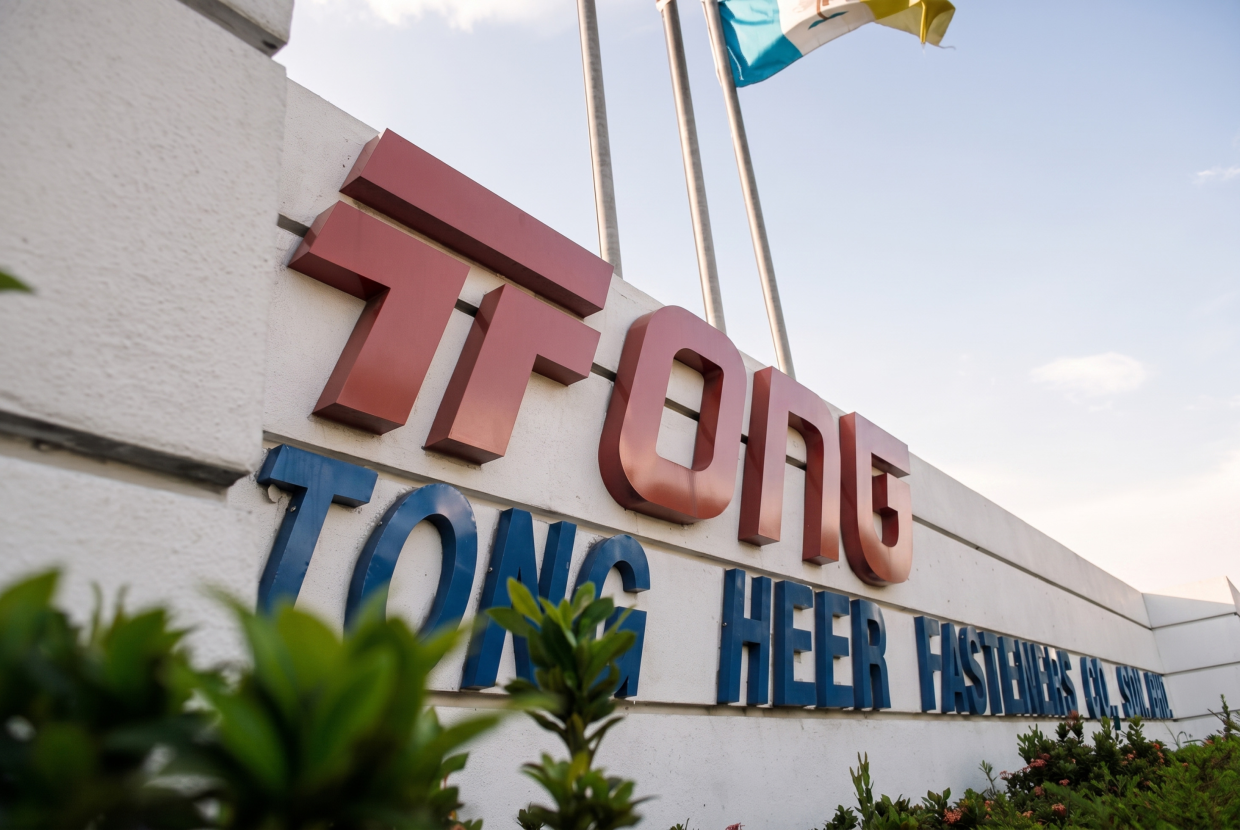
Major shareholders of Tong Herr Sdn Bhd have initiated moves to privatise the stainless steel fastener and aluminium extrusion manufacturer, proposing an offer price of RM2.55 per share. The bid represents a significant uplift from the company's last closing price of RM1.90, translating to a 34.2% premium that aims to incentivise shareholders to accept the delisting proposal. The pricing reflects valuations calculated using closing prices and volume-weighted averages through August 5, 2026, indicating a 41.7% premium to the RM1.80 closing price recorded on that specific date.
The delisting initiative originates from two principal shareholders acting in concert: Allrich Corp holds a 39.68% stake while Richard Holdings Ltd commands 31.95% ownership of the company. Combined with their joint ultimate offerors and persons acting in concert, these entities collectively control 114.38 million shares representing approximately 74.5% of Tong Herr's total issued capital. This substantial holding provides them with sufficient influence to pursue the privatisation strategy, which they have formally communicated to the company through an official filing with Bursa Malaysia.
The proposed delisting mechanism will operate through a selective capital reduction and repayment exercise, a structured approach that provides minority shareholders with a defined opportunity to exit their investments at a predetermined valuation. This method has become increasingly common among controlling shareholders seeking to delist underperforming or illiquid public companies, as it offers both a clear exit mechanism and legal protections for all stakeholders involved in the transaction. The joint offerors have explicitly stated their intention not to maintain Tong Herr's listing status on Bursa Malaysia's Main Market, and they will subsequently request the company to submit a formal delisting application once the transaction completes.
A fundamental motivation driving the privatisation proposal centres on operational flexibility and cost considerations. According to the offerors' rationale, remaining listed on a public market imposes substantial ongoing expenses and management resources devoted to regulatory compliance, corporate governance, and market-related disclosures. By transitioning to private ownership, the company could reallocate these resources toward organic growth initiatives and strategic value creation without the constraints and administrative burdens inherent in public company obligations. This argument reflects a broader trend among Malaysian publicly listed companies where controlling shareholders determine that listing costs exceed tangible benefits, particularly for smaller or slower-growing enterprises.
The liquidity position of Tong Herr's shares presents another compelling justification for delisting. Over the preceding three years, the company recorded an average daily trading volume of merely 21,075 shares, a figure that constitutes just 0.05% of the company's free float. This exceptionally low trading activity indicates that minority shareholders face substantial practical difficulties in buying or selling significant share quantities without materially affecting the share price. The privatisation proposal thus positions itself as a constructive solution, enabling entitled shareholders to immediately realise their investments at a fair valuation rather than remaining trapped in an illiquid security with minimal exit opportunities.
The transaction structure incorporates multiple regulatory safeguards designed to protect the interests of non-controlling shareholders who might face displacement by the privatisation. The proposal requires approval from non-interested shareholders through a special resolution at an extraordinary general meeting, with voting requirements establishing demanding thresholds. Specifically, the resolution must receive support from a majority in number of non-interested shareholders and attract 75% affirmative voting by value of shares held by these non-interested parties. Additionally, the proposal cannot succeed if more than 10% in value of all non-interested shareholders' votes oppose the measure, providing minority shareholders with genuine blocking power over an unfavourable transaction.
Following approval by non-interested shareholders, the transaction remains subject to confirmation by Malaysia's High Court, which possesses discretionary authority to scrutinise whether the selective capital reduction scheme treats all shareholders equitably and serves legitimate corporate purposes. This judicial review mechanism provides an additional protective layer, ensuring that the mechanism does not exploit minority shareholders or achieve outcomes that contravene shareholder rights principles. The High Court's involvement reflects established Malaysian corporate law practice regarding schemes of arrangement and capital modifications affecting shareholder status.
Tong Herr's board of non-interested directors will now undertake deliberations concerning the proposal and determine the appropriate next steps. The company has committed to announcing further developments following this internal evaluation process, which will likely encompass the board's assessment of whether the offer price represents fair value, whether the privatisation rationale aligns with shareholder interests, and what recommendation the board will ultimately communicate to the broader shareholder base. This deliberative phase typically involves engagement with independent advisers and detailed financial analysis.
For Malaysian investors and the broader market, this privatisation proposal reflects evolving attitudes toward public listing status among family and founder-controlled enterprises. The relatively modest scale of Tong Herr's trading activities and the substantial majority ownership held by the controlling shareholders suggest that maintaining public market status may no longer align with the company's operational requirements or the shareholders' strategic objectives. The RM2.55 pricing establishes a clear valuation benchmark that non-interested shareholders can evaluate against alternative investment opportunities, enabling them to make informed decisions regarding their participation in the company's future as a private entity.

