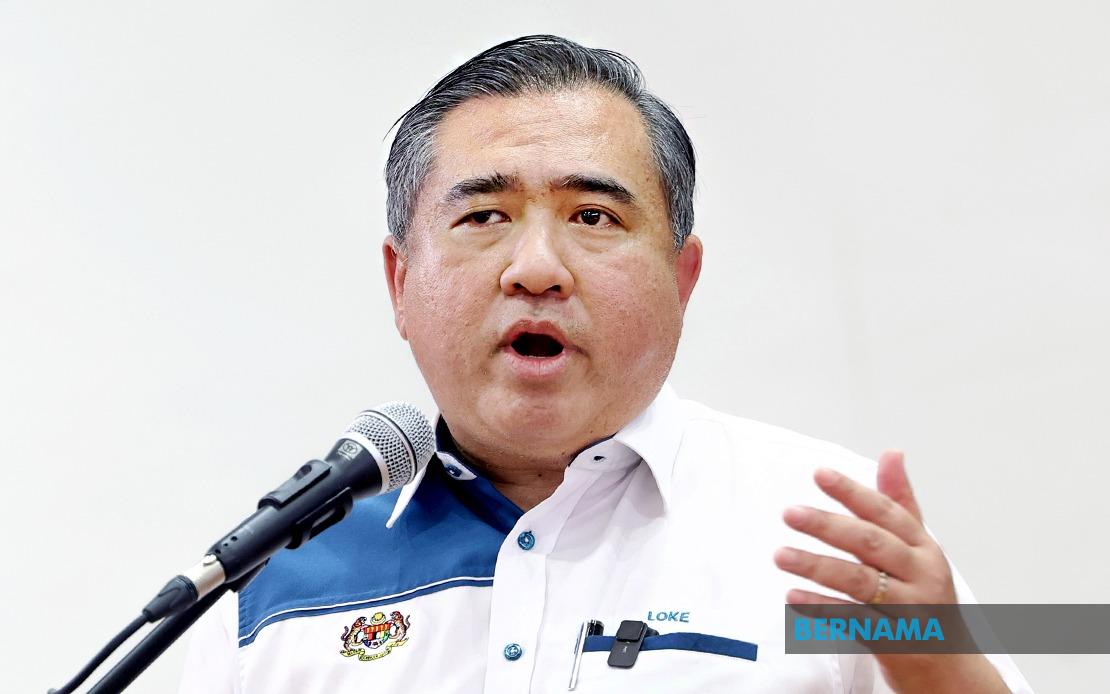
The Ministry of Transport has directed the Road Transport Department to take enforcement action against anyone caught riding motorcycles without helmets during the Johor state election campaign, drawing on evidence from videos circulating on social media. Transport Minister Anthony Loke announced the directive on July 10, emphasising that legal consequences would apply uniformly across all political affiliations, including members of the ruling Pakatan Harapan coalition.
Loke's announcement reflects a hardening stance on road safety compliance during election periods, a principle he has consistently advocated across different political cycles. Nearly six years earlier, during the Slim by-election campaign, Loke had raised similar concerns when Barisan Nasional leaders were observed conducting campaign activities on motorcycles without proper safety equipment. His position then, and now, distinguishes between the legitimacy of campaign activities themselves and the mandatory nature of safety regulations that apply universally.
The Transport Minister stressed that campaign work on motorcycles is not inherently problematic, provided riders adhere to legal obligations. However, he argued that public figures and campaign workers bear particular responsibility as role models, since their conduct influences broader compliance rates within society. By visibly disregarding helmet laws during high-profile campaign activities, riders risk normalising unsafe practices among the general population.
In a significant display of principle, Loke declared his willingness to enforce these regulations even against his own political allies and campaign colleagues. As secretary-general of the Democratic Action Party, which forms part of the Pakatan Harapan government, Loke faced particular scrutiny when viral videos surfaced showing DAP campaign workers and other PH operatives riding without helmets during Johor campaigning. Rather than minimising or deflecting criticism, he characterised the matter as serious and warranting intervention.
Loke's insistence on consistent application of road safety laws across political boundaries addresses a persistent Malaysian challenge: the selective enforcement of regulations based on political considerations. Traffic violations, including helmet non-compliance, carry significant public health implications. Malaysia continues to record substantial motorcyclist fatality rates, with head injuries accounting for a disproportionate share of severe outcomes. When political figures ignore these safety standards, the message to ordinary citizens becomes confused, potentially undermining injury prevention campaigns.
The enforcement directive also reflects evolving standards of political accountability in Malaysia. Election campaigns generate intense media attention and social media scrutiny, creating opportunities for citizens to document violations and hold candidates accountable. The viral videos in this case demonstrate how digital platforms have shifted the dynamics of campaign oversight, making it increasingly difficult for violations to pass unnoticed regardless of political affiliation.
For voters and the public, Loke's stance presents a test case of whether institutional safeguards can function independently of political calculation. Road safety regulations exist in theory to protect all citizens equally. Yet enforcement patterns have historically shown variation based on political status and connections. A consistent application during a high-stakes state election would signal that the Transport Ministry prioritises safety principles over political convenience.
The broader context matters for Southeast Asia's road safety landscape. Malaysia, alongside other regional nations, faces persistent challenges with two-wheeler safety. Campaign seasons often intensify motorcycle usage for political mobilisation, particularly in constituencies with dispersed populations. If election campaigns become occasions where safety standards are relaxed or selectively enforced, the public health costs extend beyond the campaign period itself.
Loke's articulation of principle carries particular weight given his own position within government. As a senior cabinet minister from the governing coalition, his willingness to order enforcement against his own party demonstrates either genuine commitment to institutional rules or sophisticated political positioning. Either way, the outcome—consistent enforcement—addresses a legitimate public concern about selective justice in Malaysia's regulatory frameworks.
The Road Transport Department now faces the operational challenge of identifying and processing violations based on video evidence. This raises questions about investigation procedures, due process, and how enforcement action will be documented and pursued. The department will need to establish clear criteria for determining whether individuals in videos can be conclusively identified and located for summonses.
For campaign organisers across all parties, the directive signals a need to brief participants on safety compliance during election activities. What might have been overlooked in previous campaigns now carries explicit risk of legal sanctions. This creates incentives for better safety practices during future electoral periods, potentially delivering a secondary public health benefit beyond the immediate Johor context.
The enforcement action also reflects Malaysia's broader commitment to road safety improvement under Loke's tenure at the Transport Ministry. Various initiatives addressing motorcycle safety, licensing standards, and enforcement have been announced and progressively implemented. Applying these standards consistently during high-visibility campaign periods strengthens the credibility of the broader safety agenda.

