Police in Singapore have arrested two foreign nationals in connection with perfume thefts at Changi Airport, demonstrating how persistent investigative work and modern surveillance technology can track down suspects across international borders. A 37-year-old Australian man and a 50-year-old American man now face charges scheduled for August 17, with prosecutors alleging theft committed within airport commercial spaces—a charge that carries penalties of up to seven years imprisonment, substantial fines, or both.
The case involving the Australian traveller highlights the challenges airports face in apprehending transient offenders. On November 19, 2025, staff at a perfume retailer in the transit zone of Changi Airport Terminal 2 discovered two boxes of premium fragrance missing from a display shelf. Security footage subsequently revealed the man pocketing merchandise valued at approximately $430 around 4:50 pm, then departing the store without paying. However, the suspect left Singapore before authorities could identify and locate him, effectively disappearing into the international travel system.
For more than eight months, the case remained unresolved. The breakthrough came unexpectedly when the same individual attempted to transit through Changi Airport again on August 4. Airport authorities, alerted by the earlier theft documentation and identification data now on record, intercepted him before he could continue his journey. This development underscores an important reality for international travellers: airports maintain detailed records and surveillance archives that transcend individual trip cycles, creating accountability mechanisms that extend far beyond an offender's initial escape.
The American suspect's case unfolded with greater urgency and different circumstances. Early on August 5, around 1:25 am, staff at a duty-free outlet in Terminal 1's transit area noticed a perfume box missing from display stock. Video evidence showed a man taking the item, priced over $310, and leaving without payment approximately 45 minutes earlier. Crucially, police were able to apprehend this traveller before he boarded his connecting flight, preventing his departure from the jurisdiction.
During the arrest process and subsequent investigation, authorities discovered this individual had engaged in a pattern of theft across multiple locations within the airport. Additional CCTV review revealed he had also stolen a second perfume box valued at approximately $170 and a premium perfume tester worth over $230 from separate retailers in the transit area. The cumulative value of his alleged theft exceeded $717. All stolen merchandise was recovered during the arrest, allowing retailers to mitigate their losses and providing prosecutors with clear evidence for the charging process.
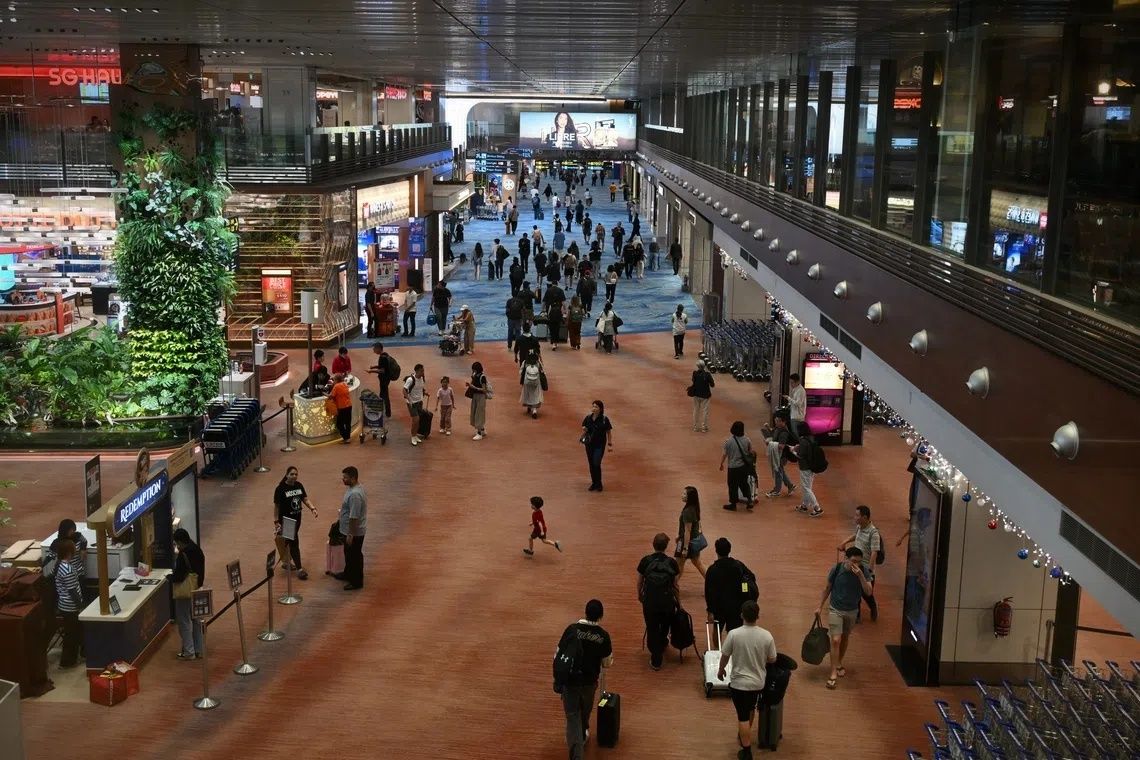
These incidents reflect broader challenges facing Singapore's aviation hub, which processes millions of passengers annually through its transit facilities. The retail landscape in Changi Airport's transit zones has become a target for opportunistic theft, particularly involving high-value cosmetics and fragrances that are compact, easily concealed, and command premium pricing. The transient nature of the travelling population creates unique vulnerabilities—many offenders calculate that they may escape detection before departing the country, or that pursuing international theft cases proves administratively burdensome.
Airport authorities have responded by significantly enhancing their technological infrastructure and inter-agency coordination mechanisms. Assistant Commissioner of Police M. Malathi emphasised during an official statement that the force maintains an uncompromising position toward retail theft at aviation facilities. He specifically highlighted how advancements in closed-circuit television technology, now deployed comprehensively throughout the airport, have dramatically improved detection capabilities. The message is clear: retailers and security personnel now possess tools that create a persistent evidentiary record, making evasion increasingly difficult.
Particularly notable is Malathi's acknowledgement that initial escape from detection no longer guarantees immunity from prosecution. Even when suspects manage to depart the country, ongoing investigations can eventually lead to identification and apprehension, particularly when those individuals attempt to transit through Changi again or travel through regional networks where Singapore police maintain cooperation agreements. This reality should serve as a deterrent to would-be thieves who might assume that boarding an international flight represents a clean getaway.
The airport police unit has formalised its commitment to sustained prevention and deterrence efforts through ongoing collaboration with retail stakeholders, ground handling operators, airline partners, and immigration authorities. This multi-stakeholder approach recognises that no single agency can effectively combat organised or opportunistic theft without information-sharing and coordinated response protocols. Retailers now regularly share loss data and suspected offender descriptions, creating an informal but effective intelligence network across terminal facilities.
For Malaysian readers and Southeast Asian travellers, these cases carry practical implications. Changi Airport remains a major regional hub through which millions of Malaysians pass annually for business and leisure travel. The enhanced surveillance and enforcement measures described here apply equally to all nationalities and reflect the airport's commitment to security standards that protect legitimate commerce and passenger experience. Travellers should understand that airport retail zones, while offering convenience, operate under intensive monitoring designed to deter misconduct.
The broader context involves how international airports have become flashpoints for regulatory enforcement in an increasingly interconnected world. The ability to track suspects across months and international borders demonstrates that modern aviation infrastructure is not a space where criminal behaviour goes unnoticed. Changi Airport's success in these cases also reflects Singapore's broader reputation for efficient law enforcement and judicial processes that encourage compliance with local regulations among international visitors.
These arrests ultimately serve as case studies in contemporary airport security strategy, where technology combines with institutional memory and inter-agency cooperation to create accountability structures that transcend individual journeys. For retailers operating in competitive duty-free and premium goods sectors, the message reinforces confidence in local law enforcement capacity. For travellers, it underscores that airports are carefully monitored environments where suspicious behaviour rarely remains undetected indefinitely, regardless of initial escape attempts.

