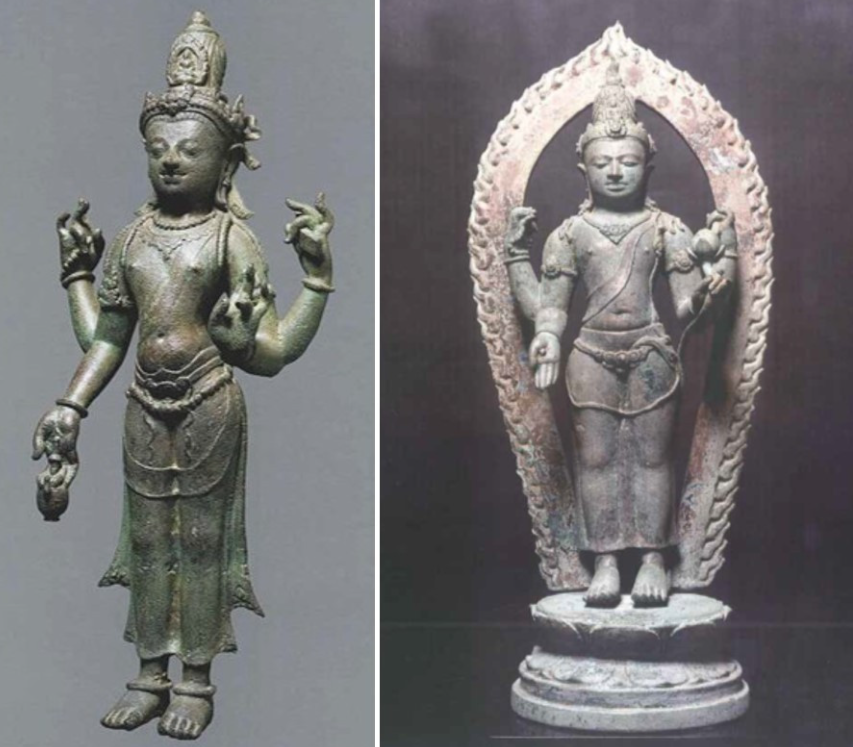
Two precious eighth-century bronze sculptures have been returned to Indonesia by the United States following their recovery from a decades-long smuggling operation orchestrated by one of Asia's most prolific antiquities traffickers. The statues, both depicting the four-armed Avalokiteshvara—a revered bodhisattva symbolising compassion in Buddhist tradition—were formally handed back during a repatriation ceremony held last week at the Indonesian Consulate in New York. The return marks another significant success in international efforts to stem the lucrative illicit trade in Southeast Asian cultural heritage, a problem that has plagued the region for generations.
The sculptures were originally looted from Indonesian archaeological sites decades ago before entering the hands of Douglas Latchford, a British antiquities dealer who operated primarily from Bangkok and became a Thai citizen in the 1960s. For over forty years, Latchford cultivated a reputation as one of the world's leading experts on Khmer and Southeast Asian art, trading extensively in both private collections and prestigious museum acquisitions. This facade of legitimacy masked a far more sinister reality. Between 2003 and 2007, Latchford sold the two Indonesian statues, alongside numerous other plundered artefacts, to a private American collector. Crucially, he deliberately obscured their true origins, suppressing critical provenance information and fabricating false histories to enable the stolen objects to circulate freely through international art markets.
The case against Latchford was initiated in 2019 when prosecutors from the US Attorney's Office for the Southern District of New York indicted him for orchestrating an extensive scheme to traffic looted Cambodian and broader Southeast Asian antiquities to wealthy buyers globally. The allegations painted a picture of systematic, large-scale looting coordinated over multiple decades. However, Latchford died in 2020 before facing trial, and the formal charges were subsequently dismissed. The investigation did not end there. In 2021, prompted by mounting pressure and renewed scrutiny of his network's activities, a private collector who had acquired these pieces from Latchford voluntarily surrendered thirty-four antiquities spanning both Cambodian and Southeast Asian origins, including the two Indonesian bronze statues now repatriated.
US Attorney Jay Clayton presided over the formal handover, framing the repatriation as both a celebration of restored cultural patrimony and a reflection of institutional commitment to combating art crime. "Today, we celebrate the return of Indonesia's cultural heritage to the Indonesian people," Clayton stated, emphasising that the Justice Department remains dedicated to disrupting smuggling networks and holding traffickers accountable. He explicitly acknowledged the critical role played by federal law enforcement partners, particularly Homeland Security Investigations, whilst also praising the anonymous collector's decision to voluntarily return the artefacts rather than litigate or conceal them further. This cooperative approach, Clayton suggested, demonstrated that accountability for cultural theft need not always require protracted prosecution.
The Latchford network's unravelling has had cascading consequences across the international art world. Following his death, his daughter agreed to repatriate his entire collection—valued at over fifty million US dollars—back to Cambodia. This extraordinary decision triggered a broader reckoning. Museums and private collectors throughout North America, Europe, and Australia have subsequently initiated their own reviews of pieces acquired through Latchford, leading to the voluntary return of dozens of Khmer artefacts. The effect has been transformative for Cambodian authorities, who continue systematic efforts to recover looted heritage and reconstruct the archaeological record of their nation's temples and monuments.
Indonesia itself has benefited from parallel enforcement initiatives. In 2024, US authorities returned three separate Indonesian artefacts valued at approximately 6.5 billion rupiah that had been smuggled into American territory through a different trafficking operation. This earlier repatriation involved a stone relief from the Majapahit period—a particularly significant find given the historical importance of that medieval Hindu-Buddhist empire—together with a seated bronze Buddha and a standing bronze Vishnu statue. These recoveries emerged from an investigation targeting Indian-American dealer Subhash Kapoor and his associate Nancy Wiener, whose Manhattan gallery, Art of the Past, served as a distribution hub for looted antiquities between 2011 and 2023.
The Kapoor network investigation revealed the staggering scale of Southeast Asian cultural theft. Homeland Security and Manhattan District Attorney investigators recovered more than twenty-five hundred antiquities allegedly trafficked by Kapoor and his associates, with combined values exceeding one hundred and forty-three million dollars. The case also resulted in the recovery of twenty-seven Cambodian artefacts, demonstrating how individual trafficking operations typically targeted multiple countries simultaneously, exploiting porous art market oversight and the fungibility of cultural goods across borders. The investigation underscores a sobering reality: the two Indonesian statues now returned represent merely a fraction of artefacts still circulating through private collections and institutional holdings worldwide.
These enforcement successes also illuminate broader structural vulnerabilities in global art markets. Latchford and Kapoor operated successfully for decades by exploiting weak provenance standards, the reluctance of wealthy buyers to scrutinise acquisition histories rigorously, and the opacity that characterises high-value antiquities transactions. Museums and collectors historically prioritised acquisition over ethical due diligence, accepting vague or incomplete ownership records as acceptable. The Latchford case catalysed a philosophical shift: the notion that acquiring looted artefacts—even unknowingly—carried reputational risk and legal exposure sufficient to incentivise voluntary repatriation. This cultural change, though incomplete, has proved instrumental in recovery efforts.
For Southeast Asia more broadly, these cases underscore both progress and persistent vulnerability. Investigations have successfully prosecuted dealers, recovered thousands of artefacts, and established legal precedents regarding trafficking liability. Yet the underlying conditions enabling smuggling remain largely intact. Archaeological sites across Cambodia, Indonesia, Thailand, and Laos continue facing looting pressure. Weak site security, limited archaeological capacity, and the extreme profitability of trafficking ensure that demand for stolen artefacts continues. The return of the Buddhist statues and related pieces represents justice for past violations, but regional authorities must simultaneously address root causes: strengthening site protection, expanding archaeological training, and building the institutional capacity necessary to defend cultural heritage against future theft.
The ceremony in New York thus carries symbolic weight extending beyond the immediate repatriation. It demonstrates that accountability mechanisms, though imperfect and often delayed, can eventually function across jurisdictional boundaries. It suggests that private collectors and dealers increasingly recognise reputational and legal risks associated with illicit provenance. And it illustrates that persistent international coordination—between Southeast Asian governments, US law enforcement, Interpol, and affected communities—can recover cultural patrimony thought permanently lost. The two Avalokiteshvara statues, after decades in clandestine circulation, now return to Indonesia to be preserved for future generations, reclaiming their rightful place within the nation's archaeological and spiritual heritage.

