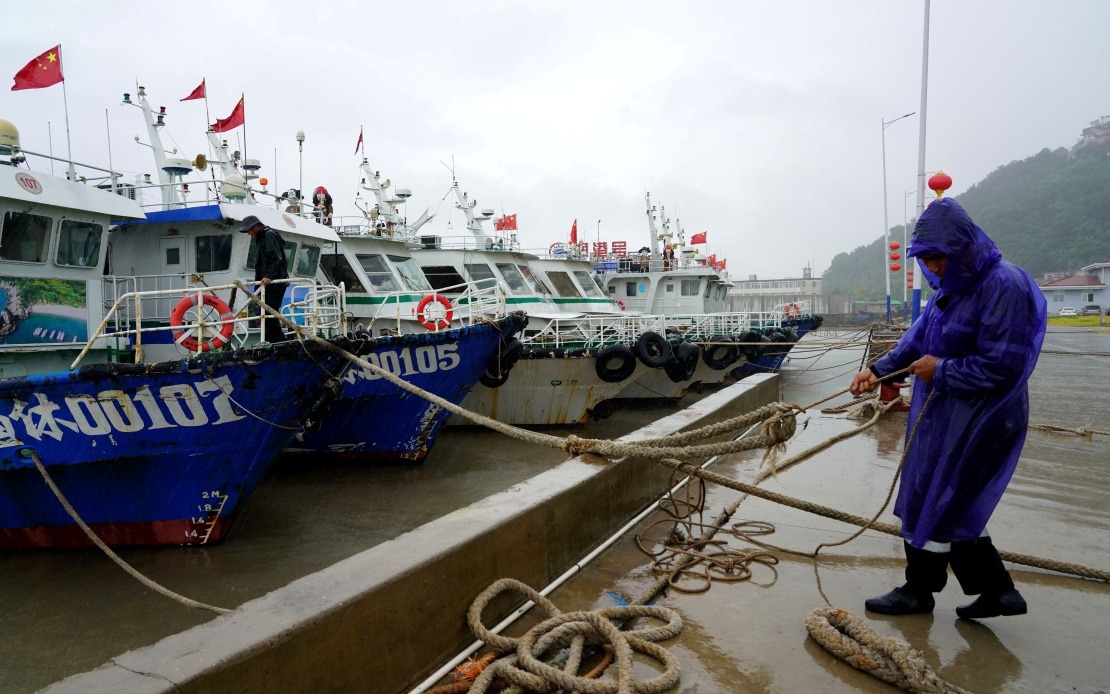
Zhejiang Province in eastern China has dramatically escalated its emergency preparedness measures for Typhoon Dolphin, upgrading its alert level from Level IV to Level III on Friday as the 13th tropical cyclone of 2026 bears down on the nation's eastern seaboard. The shift signals heightened official concern about the storm's trajectory and potential severity, prompting coordinated action across government agencies, maritime authorities, and industrial operators in one of China's most economically significant regions.
At 8 am on Friday, the typhoon was positioned approximately 763 kilometres east of Wenling in Zhejiang Province, according to data from the Zhejiang Meteorological Observatory. Forecasters anticipated the system would advance westward at a measured pace of 15 to 20 kilometres per hour, with its destructive potential expected to either remain consistent or intensify moderately as it approaches land. This relatively slow forward motion provides a window for comprehensive evacuation and preparation but also extends the period during which coastal communities face hazardous conditions.
China's National Meteorological Centre issued a yellow-level alert on Thursday evening, projecting landfall along the eastern coast between Shanghai and Fuqing in neighbouring Fujian Province sometime during the Sunday-Monday period. Should this forecast hold, the typhoon would make direct contact with one of Asia's most densely populated and economically vital corridors, potentially affecting millions of residents and disrupting critical supply chains. The projected intensity range of typhoon to severe typhoon classification indicates the system could produce damaging winds and catastrophic precipitation across a broad area.
Lou Xiaofen, the chief forecaster at the Zhejiang Meteorological Observatory, emphasised that Zhejiang faces particularly acute risk given its geographical position directly between Shanghai and Fujian. This central location along the anticipated strike zone creates substantial vulnerability for the province's cities, industrial zones, and agricultural areas. The forecaster's assessment reflected confidence that a direct impact scenario poses the most significant threat to the region's population and economic infrastructure.
The practical implications of this threat assessment became immediately evident in sweeping precautionary measures implemented across Zhejiang's maritime and construction sectors. By Friday morning, provincial authorities had suspended all 162 passenger ferry routes, effectively eliminating water-based transportation throughout the region. Simultaneously, all 193 offshore development projects were halted, and authorities issued mandatory port calls for 474 construction vessels. These coordinated shutdowns represent a substantial economic cost but reflect the seriousness with which officials view the approaching danger.
Maritime safety measures extended beyond simple closures and evacuations. Provincial maritime authorities disseminated approximately 86,000 early warning notifications to vessel operators and coastal communities, while conducting comprehensive inspections of 24,000 individual ships. This intensive communication and verification effort aims to ensure that mariners understand the threat level and comply with safety directives. High-powered tugboats were positioned on standby throughout the province to enable rapid emergency rescue operations should vessels encounter difficulties or distress situations during the typhoon's passage.
The activation of Level III emergency protocols triggers a standardised cascade of government responses designed to minimise casualties and property damage. Under these procedures, responsible authorities must maintain continuous monitoring of the typhoon's development and intensity, issue regular updated forecasts and warnings to the public, coordinate the evacuation of vulnerable populations to designated shelters, and provide comprehensive public guidance through multiple communication channels. The explicit objective of these comprehensive measures is to prioritise preservation of life while reducing economic and infrastructural losses where feasible.
For Malaysian and Southeast Asian observers, Zhejiang's response illustrates the scale and sophistication of disaster preparedness in China's developed coastal provinces. The region's rapid mobilisation of resources, pre-positioned emergency assets, and advanced meteorological monitoring reflect institutional capacities that many developing nations aspire to achieve. As climate patterns potentially drive more intense tropical cyclones across the region, the operational frameworks being demonstrated in Zhejiang may offer instructive models for other Asian governments seeking to enhance their own typhoon and hurricane response capabilities.
The economic implications of Typhoon Dolphin extend well beyond Zhejiang's borders. Shanghai, located immediately north of the projected landfall zone, represents China's premier financial and commercial hub, while the broader region contains critical manufacturing, logistics, and export facilities integral to global supply chains. Any significant disruption to these economic engines could produce ripple effects across Southeast Asian trade and investment patterns. Malaysian exporters, manufacturers with Chinese supply relationships, and regional logistics operators are monitoring the situation with considerable interest, given the potential for disrupted shipments and delayed deliveries affecting their operations.

