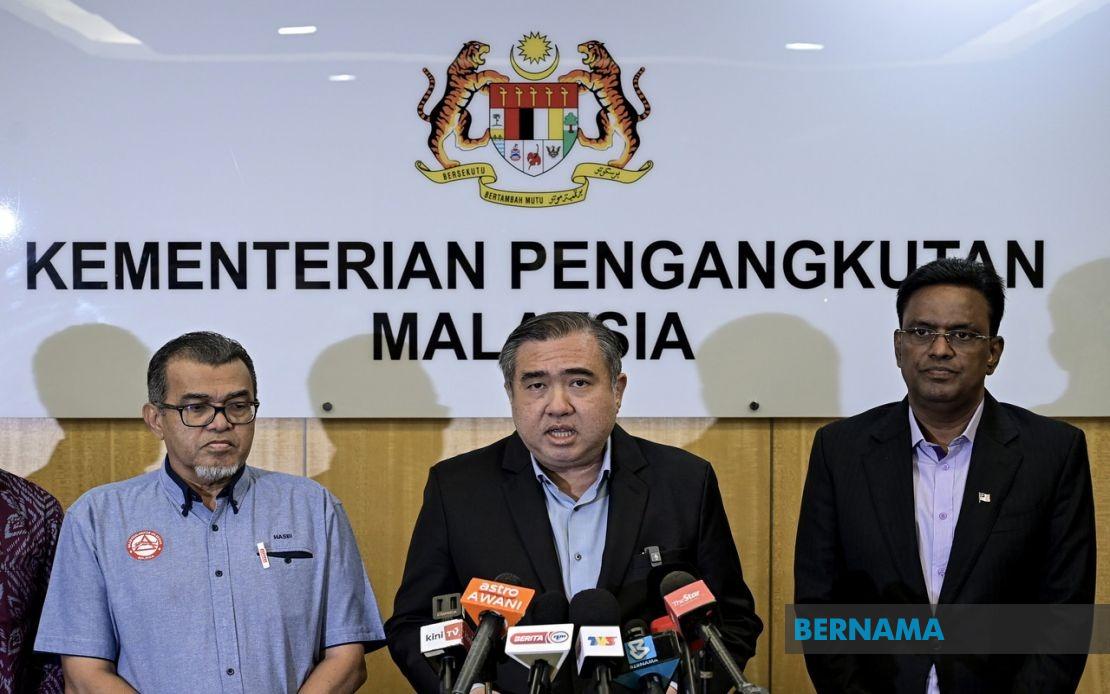
Malaysia's Cabinet has taken a significant step toward strengthening accountability in road safety by endorsing proposed amendments to the Road Transport Act 1987 (Act 333) that would empower courts to impose compensation orders on traffic offenders. Transport Minister Anthony Loke announced the decision on Wednesday, signalling a major shift in how the legal system will address the human and financial toll of road accidents across the country.
The proposed legislative changes represent an attempt to bridge a critical gap in Malaysia's road safety framework. While existing penalties—imprisonment, fines, and driving bans—have long formed the backbone of traffic law enforcement, they have done little to address the actual suffering experienced by victims and their families. Under the new framework, courts would have the authority to mandate that offenders make financial restitution to those harmed by their actions, creating a direct link between culpability and compensation that reflects the real consequences of dangerous driving.
Loke emphasised that the compensation mechanism would be determined judicially rather than through administrative formulae, ensuring that each award reflects the specific circumstances of the case. Courts would weigh multiple factors when deciding compensation amounts, including the severity of the traffic offence, the extent of injuries sustained or whether lives were lost, and the measurable financial and non-financial losses experienced by victims or their surviving family members. Critically, judges would also consider the offender's capacity to pay, preventing the imposition of punitive orders that bear no relation to reality.
The scope of offences targeted by these amendments is deliberately broad. Driving under the influence of alcohol or drugs—a persistent problem across Southeast Asia—would fall squarely within the new regime. So too would reckless driving, a catch-all category encompassing dangerous speeding, aggressive manoeuvres, and other conduct that endangers other road users. This expansiveness reflects recognition that road accidents stem from a spectrum of culpable behaviours rather than a narrow set of defined acts.
Crucially, Loke made clear that the compensation orders would function as an additional layer of accountability rather than replacing existing criminal and administrative penalties. Imprisonment sentences would remain unchanged, as would fines and driving disqualifications. Instead, offenders would face the cumulative burden of all three forms of sanction—traditional penalties plus compensation—creating a more comprehensive deterrent effect. This approach avoids the trap of viewing compensation as a softer alternative to existing measures, instead positioning it as complementary enforcement.
The proposed changes also leave untouched the right of victims and their families to pursue alternative remedies through the insurance system or via civil litigation in courts. The compensation orders envisioned by Act 333 amendments would operate alongside these existing channels rather than superseding them, providing victims with multiple avenues through which to seek redress. This layered approach acknowledges the reality that different victims may have different needs and that no single compensation mechanism can address all outcomes.
Before the amendments reach Parliament, the Transport Ministry will undertake extensive consultation with other government agencies, regulatory bodies, and external stakeholders including the insurance industry. These engagement sessions are designed to resolve operational complexities that will inevitably arise during implementation. Key questions requiring resolution include which specific offences should qualify for compensation orders, how serious injuries should be precisely defined for legal purposes, and what procedures should apply when an offender proves genuinely unable to pay court-ordered compensation.
Loke indicated the ministry is targeting the year-end parliamentary sitting for tabling the bill, conditional upon completing the drafting and stakeholder engagement phases. However, a Parliamentary Special Select Committee would be established to scrutinise the legislation in detail, signalling the government's intention to build cross-party consensus on this reform. This committee approach suggests the Transport Ministry recognises the sensitivity of the issue and seeks to avoid the appearance of partisan legislation on road safety matters.
One significant limitation built into the proposal is that the amendments will apply only to offences committed after Parliament enacts the legislation, reflecting established common-law principles against retrospective application. This means victims of historical accidents will gain no remedy through the new compensation mechanism, potentially creating fairness concerns for those injured before the law's passage. However, this constraint is standard legislative practice and necessary to avoid legal challenges based on constitutional protections against retroactive punishment.
For Malaysia's road safety landscape, these amendments represent a philosophical departure from viewing traffic law enforcement primarily through a punitive lens. By adding compensation as a mandated consequence of road offences, the legislation effectively internalises the true costs of dangerous driving, forcing offenders to confront the material harm their actions inflict. This approach aligns with evolving global thinking on road safety, which increasingly emphasises victim-centred justice alongside traditional deterrence.
The regional context makes Malaysia's initiative particularly significant. Across Southeast Asia, road fatalities and serious injuries remain stubbornly high, with limited progress despite decades of awareness campaigns. The introduction of compensation orders could influence policymaking in neighbouring countries facing similar challenges, potentially spurring comparable reforms throughout the region. Moreover, by strengthening accountability mechanisms, Malaysia demonstrates commitment to the United Nations' Sustainable Development Goal 3, which targets reducing traffic deaths by half by 2030.
For road users and accident victims, the practical implications are substantial. Families devastated by loss of a breadwinner or permanently disabled survivors facing mounting medical costs will have a statutory avenue to obtain financial relief directly from the person responsible for their injuries. While compensation orders cannot restore lives or reverse paralysis, they acknowledge the legitimate financial claims that flow from traffic violence and create enforceable obligations rather than leaving victims dependent on the voluntary benevolence or insurance coverage of offenders.
The amendment process will test the Transport Ministry's capacity to balance competing interests—strengthening victim protections while maintaining proportionality in sentencing, enhancing deterrence while ensuring rules remain just and workable. The stakeholder consultations ahead will be critical in determining whether the final legislation achieves these equilibriums or tilts too heavily in one direction.

