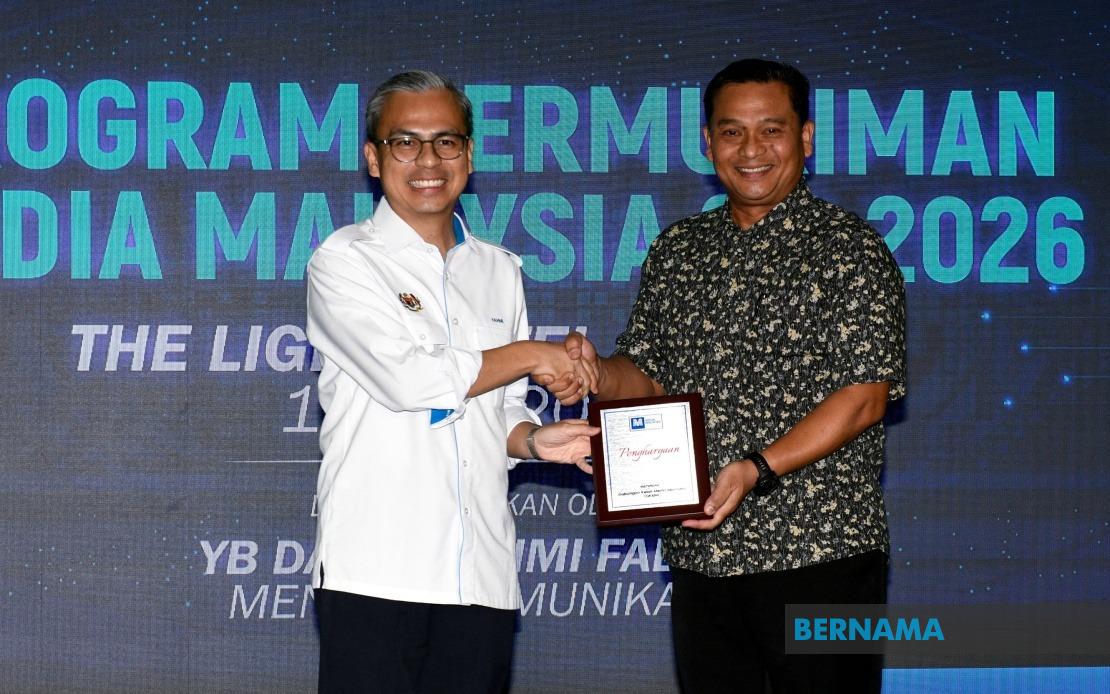
Communications Minister Datuk Fahmi Fadzil has unveiled a fresh financial commitment to support Malaysia's journalism sector, pledging RM10,000 to each state media club affiliated with the Malaysian Media Clubs Association (GKMM) alongside a dedicated grant of RM30,000 for the national body itself. The announcement, delivered at the Malaysia Media Retreat Programme 2.0 in Butterworth on June 19, signals the government's intent to invest in the welfare infrastructure of practitioners working across the country's diverse media landscape.
The dual funding mechanism reflects a structured approach to supporting journalism at both grassroots and coordinating levels. State media clubs, which serve as professional gathering points and advocacy platforms for journalists in each region, will gain immediate access to resources for local initiatives. Simultaneously, GKMM receives funding explicitly designated for activities and programmes that address the broader concerns affecting the entire industry, spanning everything from professional development to support mechanisms for working journalists facing economic pressures.
Fahmi framed the contribution as an investment in preserving professional journalism at a moment when technological disruption threatens traditional media employment. He stressed that journalists cannot be substituted by artificial intelligence, positioning human reporters as irreplaceable witnesses to events and curators of information from primary sources. This argument carries particular weight in Southeast Asia, where misinformation campaigns and the rapid spread of unverified content have prompted governments across the region to reassess the strategic value of professional news gathering.
The minister's remarks acknowledged a persistent tension in Malaysian media policy: GKMM functions as an important forum for raising practitioner concerns, yet operates without formal union status. By framing the association as a legitimate channel for government to receive feedback on journalist welfare issues and industry aspirations, Fahmi positioned the financial support as recognition of GKMM's de facto advocacy role. This arrangement allows the government to engage with media practitioners' interests without formally recognising collective bargaining structures that might be perceived as challenging state authority.
The timing of the announcement connects to broader policy developments in Malaysian journalism governance. Fahmi explicitly referenced the recently drafted Malaysian Media Council Act, noting that its formulation incorporated suggestions and views solicited directly from industry stakeholders. This indicates a consultative approach to media regulation, where government officials claim to balance public interest concerns with professional autonomy through dialogue rather than unilateral directive. For Malaysian readers, this suggests the government intends to maintain engagement with journalists on policy matters affecting their profession.
The presence of senior officials at the Butterworth gathering—including Communications Ministry secretary-general Datuk Abdul Halim Hamzah and Malaysian National News Agency (Bernama) leadership—underscored the event's significance within government circles. Bernama's participation carries particular weight given its role as the national news agency; its presence alongside the minister reinforced the government's perspective that supporting professional journalism infrastructure strengthens the nation's information ecosystem.
From a regional perspective, Malaysia's explicit government funding for journalist organisations reflects patterns visible across Southeast Asia, where governments frequently employ financial incentives and structural support to maintain influence over media dynamics. Unlike some regional neighbours, Malaysia's approach emphasises rhetoric about preserving professional standards and journalist employment rather than restricting media operations outright. However, the conditionality embedded in such grants—that funds be used for "welfare" and "activities"—creates implicit expectations about how recipients should prioritise their work.
The announcement also addresses economic pressures confronting Malaysian journalism. Many media organisations have contracted in recent years due to declining advertising revenue and shifting audience habits. Journalists and media professionals increasingly struggle with employment instability and reduced real incomes. By directing funds toward state clubs and GKMM, the government attempts to create support mechanisms that might ease pressures on individual practitioners, potentially reducing the urgency for collective wage negotiations or union organising that could challenge government influence over media narratives.
For state-level media clubs, the RM10,000 allocation offers modest but meaningful resources for activities that might otherwise depend on volunteer labour or member contributions. These funds could support professional development workshops, equipment purchases, or social welfare initiatives for members facing hardship—all of which enhance practitioners' capacity to perform their work. Yet the amount remains modest relative to the operational needs of professional associations coordinating journalists across entire states.
The emphasis on preserving journalism's human element against artificial intelligence encroachment responds to genuine concerns within the industry but also reflects broader anxieties about algorithmic automation displacing newsroom employment globally. By positioning human journalism as strategically valuable and irreplaceable, Fahmi's rhetoric attempts to frame government support as part of a coherent strategy to maintain professional information gathering capacity—though whether actual newsroom employment stabilises will depend on market dynamics and organisational investment decisions beyond government control.
Looking forward, the impact of these allocations depends significantly on how GKMM and member clubs deploy the funds. If resources concentrate on welfare initiatives and professional support, they may meaningfully improve conditions for working journalists. Conversely, if funds primarily support administrative operations or social functions, their broader effect on journalist employment stability may remain limited. The announcement establishes the principle of government financial engagement with journalism sector welfare, creating a precedent that could shape future funding discussions.