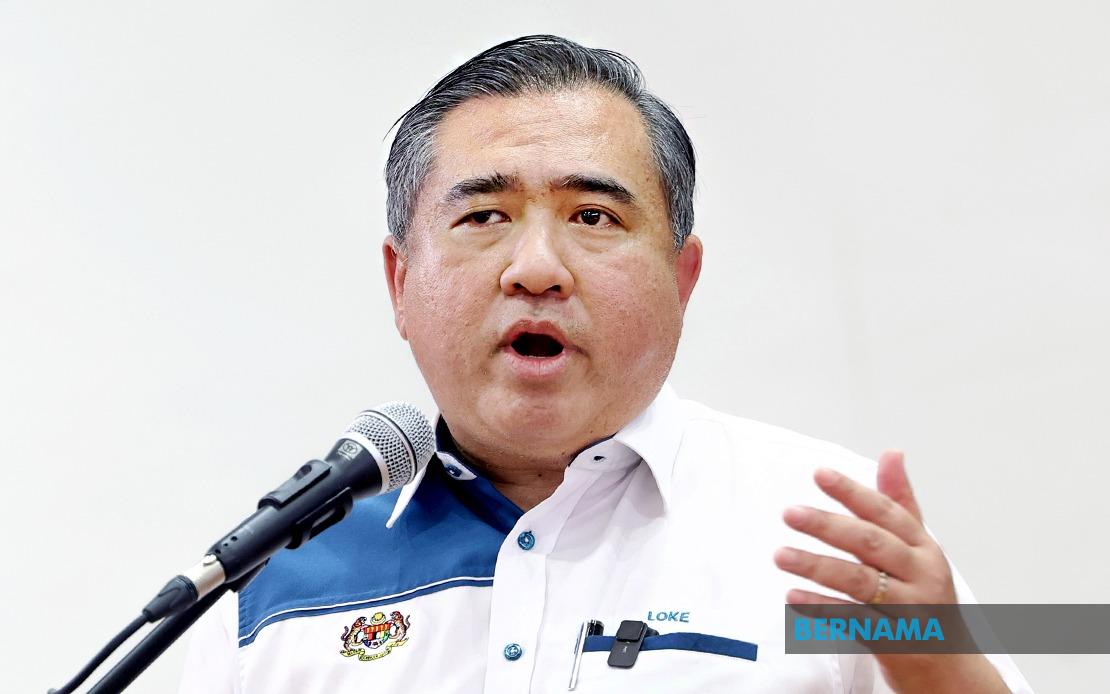
Transport Minister Anthony Loke has moved to address criticism over the Southern Shuttle service's reliance on diesel-powered trains, positioning the arrangement as a pragmatic interim solution rather than a permanent fixture. Speaking via Facebook from Johor Bahru on June 20, Loke explained that the decision to deploy existing diesel trains reflects the Ministry of Transport's commitment to delivering rail connectivity to southern Johor residents without forcing them to endure lengthy delays while waiting for new rolling stock to be manufactured and deployed.
The core challenge facing transport planners centres on timing. Ten new Electric Multiple Unit (EMU) train sets are currently in production, with completion expected within two to three years. Rather than maintaining the status quo until these vehicles enter service, the ministry chose to activate existing diesel trains immediately. This approach prioritizes early service delivery over technological consistency, a trade-off that Loke argued serves the practical interests of commuters who would otherwise remain without improved transport options. The logic underlying this decision reflects broader challenges in Southeast Asian infrastructure development, where waiting for optimal solutions often means denying current generations access to improved services.
Financial support for the initiative is substantial, with the Ministry of Transport committing annual subsidies ranging from RM11 million to RM15 million specifically to enhance rail-based public transport accessibility across the southern region. These subsidies aim to make passenger rail more affordable and attractive, encouraging modal shift away from private vehicle use on congested routes. The scale of this commitment indicates the government's determination to establish rail as a viable transport alternative in areas where it has historically played a secondary role compared to road-based services.
The Southern Shuttle itself represents significant infrastructure investment in Johor's transport network. The service connects three key locations—Kulai, JB Sentral, and Pasir Gudang—offering journey times of approximately 40 minutes between Kulai and JB Sentral, with Kempas Baru to Pasir Gudang requiring 40 to 45 minutes. These timeframes make the service competitive with road transport for many journeys, particularly during peak congestion periods. The network's expansion includes opening the Kempas Baru-Pasir Gudang corridor to passenger services for the first time, a route previously dedicated exclusively to freight operations. This dual-use capability demonstrates how existing railway infrastructure can be repurposed to serve multiple transport functions simultaneously.
Loke acknowledged that diesel trains represent an interim phase destined for replacement. Once the Gemas-Johor Bahru electrified double-tracking project reaches completion, diesel services will be discontinued entirely and replaced by the more modern Electric Train Service (ETS). This planned transition ensures that the temporary measure carries a defined endpoint, with technological upgrades built into the service's long-term evolution. The electrification project itself represents significant capital investment in rail infrastructure quality, suggesting that the government views southern Johor as strategically important for broader transport network development.
Criticism of the current arrangements has emerged from multiple quarters, with detractors questioning both the use of older diesel-powered trains and the fare structure. Comparisons drawn with services operating in Kuala Lumpur and Seremban are particularly pointed, with complaints that Southern Shuttle fares are approximately three times higher than equivalent services in other regions. This pricing disparity raises questions about equity in public transport subsidization and whether commuters in southern Johor are bearing disproportionate costs for service provision. Loke's public statement suggests the ministry anticipates such complaints and seeks to frame the current situation as temporary and transitional rather than accepting this arrangement as the permanent service standard.
The decision to activate diesel services immediately rather than wait for EMU completion reflects a philosophical shift in Malaysian transport planning. Historically, major infrastructure projects have prioritized comprehensive solutions even when delivery timelines stretched across years. The willingness to deploy intermediate technologies suggests recognition that perfect should not become the enemy of good, particularly when transport disadvantage imposes real costs on communities. For Johor residents, diesel trains today represent tangible mobility improvement compared to the counterfactual of continued reliance on road transport.
From a regional perspective, Malaysia's approach offers lessons for Southeast Asian nations grappling with rapid urbanization and transport demand growth. Investment in electrified rail represents long-term infrastructure development, yet the practical pressure to deliver services quickly reflects the reality of expanding metropolitan areas where transport gaps impose economic and social costs. The Southern Shuttle model demonstrates one approach to managing this tension—deploying available resources immediately while investing in superior systems for future deployment.
The broader context involves Malaysia's commitment to developing a modern, integrated transport system that reduces dependence on private vehicles. Rail networks, when properly funded and operated, deliver significant economic benefits through congestion reduction, pollution mitigation, and improved accessibility. The southern region's growing economic importance, particularly around Pasir Gudang's industrial base and JB Sentral's commercial functions, makes transport connectivity increasingly critical. Diesel trains, despite their technological limitations, represent measurable progress toward these strategic objectives.