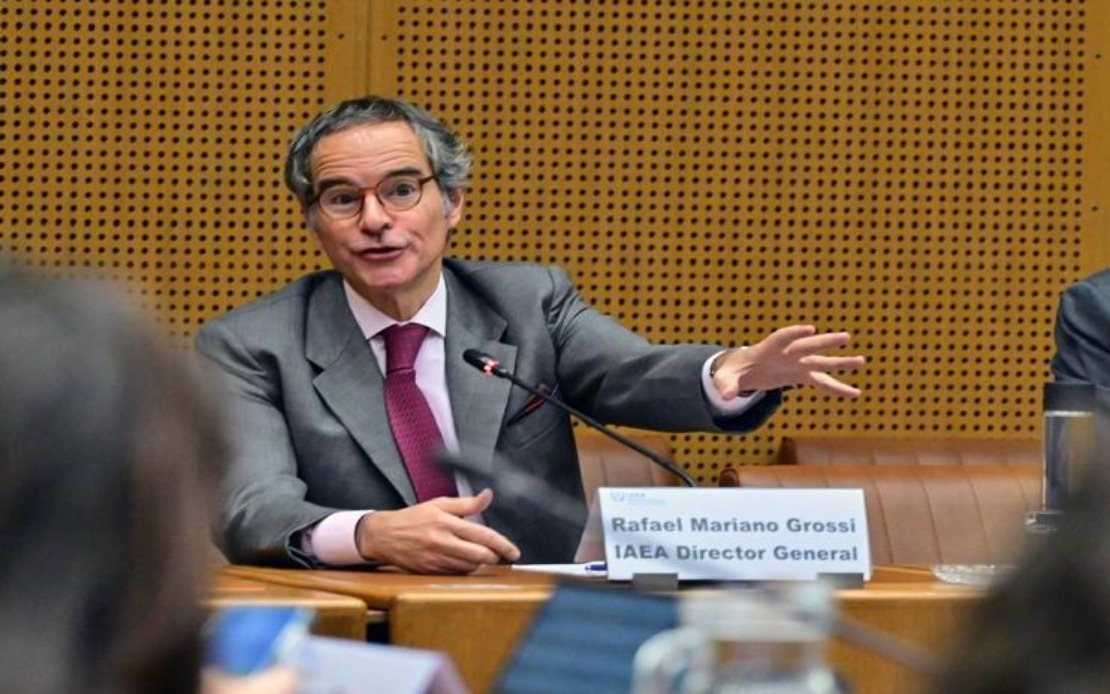
The International Atomic Energy Agency's leadership has underscored the necessity of pursuing diplomatic channels as Washington and Tehran approach a significant moment of direct engagement. Rafael Mariano Grossi, the IAEA Director General, emphasised that the coming negotiations represent a critical juncture requiring sustained commitment to dialogue. Speaking through social media, Grossi highlighted that this moment demands unwavering support for diplomatic solutions, signalling the international community's backing for de-escalation efforts between the two nations.
Swiss territory has emerged as the chosen venue for this high-stakes encounter, with Burgenstock serving as the location where delegations will hold face-to-face discussions. The decision to conduct talks in Switzerland reflects the country's long-standing reputation as a neutral ground for sensitive international negotiations. Switzerland's Foreign Minister Ignazio Cassis has been actively engaged in facilitating these discussions, meeting separately with both Iranian and American representatives to ensure all parties are aligned on the negotiation framework.
Cassis's bilateral engagement with Iranian Foreign Minister Abbas Araghchi represents a crucial preparatory step before the formal talks commence. These preliminary discussions allow each side to clarify positions, identify potential areas of agreement, and establish ground rules for productive engagement. The Swiss government's deep involvement demonstrates its commitment to supporting multilateral diplomacy and its willingness to invest political capital in resolving the longstanding tensions between Washington and Tehran.
The foundation for these upcoming negotiations was laid earlier in the week when United States President Donald Trump and Iranian President Masoud Pezeshkian signed the Islamabad Memorandum of Understanding. This agreement represents a significant breakthrough, marking a shift towards direct engagement after a prolonged period of strained relations. The signing ceremony, conducted in Islamabad, served as a catalyst for the scheduled talks in Switzerland, transforming rhetoric into concrete diplomatic action.
The IAEA's positioning as a central actor in these negotiations underscores the centrality of nuclear matters to the broader diplomatic framework. Grossi's direct engagement with Swiss officials reflects the watchdog's mandate to monitor and verify compliance with international nuclear agreements. By actively supporting the diplomatic process, the agency seeks to ensure that any eventual accord incorporates robust verification mechanisms and maintains the integrity of non-proliferation commitments.
For Malaysia and Southeast Asia, these negotiations carry significant implications for regional stability and international security frameworks. The outcome of US-Iran talks could influence broader geopolitical patterns across Asia, affecting trade routes, energy markets, and security arrangements. A successful diplomatic resolution would strengthen global confidence in multilateral problem-solving and reinforce the principle that even deeply entrenched disputes can be addressed through sustained engagement.
Grossi's public statement carries weight beyond its immediate diplomatic context, serving as a reminder that the international community views these talks with considerable importance. By emphasising the critical nature of the moment, the IAEA chief is signalling that the window for productive dialogue remains open, but only if all participants approach negotiations in good faith. This messaging is particularly significant given the complex history between the United States and Iran, marked by mistrust and conflicting strategic interests.
The role of Switzerland in hosting these negotiations reflects a broader diplomatic tradition where neutral countries serve as convening powers for resolving international disputes. Swiss neutrality, enshrined through centuries of careful diplomatic positioning, makes it an ideal venue for sensitive talks. The country's experience hosting previous high-level negotiations, combined with its institutional capacity, positions it as a reliable intermediary.
Grossi's gratitude towards Switzerland for its "longstanding support" of the IAEA emphasises the institutional backing required to maintain effective international oversight mechanisms. The IAEA, as a technical body dependent on international cooperation, relies on countries like Switzerland to maintain the diplomatic relationships necessary for the agency to function effectively. This support extends beyond symbolic endorsement to include practical assistance in monitoring and verification operations.
The scheduled negotiations represent a convergence of diplomatic momentum, institutional support, and political will from multiple stakeholders. Success would require each delegation to demonstrate flexibility on core issues while maintaining red lines deemed essential to national interests. The IAEA's presence as a technical advisor in these discussions adds another layer of complexity, as nuclear verification standards must be integrated into any eventual agreement.
Regional observers in Southeast Asia will be watching these developments closely, as the outcome could reshape international dynamics affecting trade, investment, and security partnerships across the Indo-Pacific region. An agreement between Washington and Tehran could free substantial international resources currently directed towards managing their bilateral tensions, potentially redirecting attention and resources to other regional priorities.