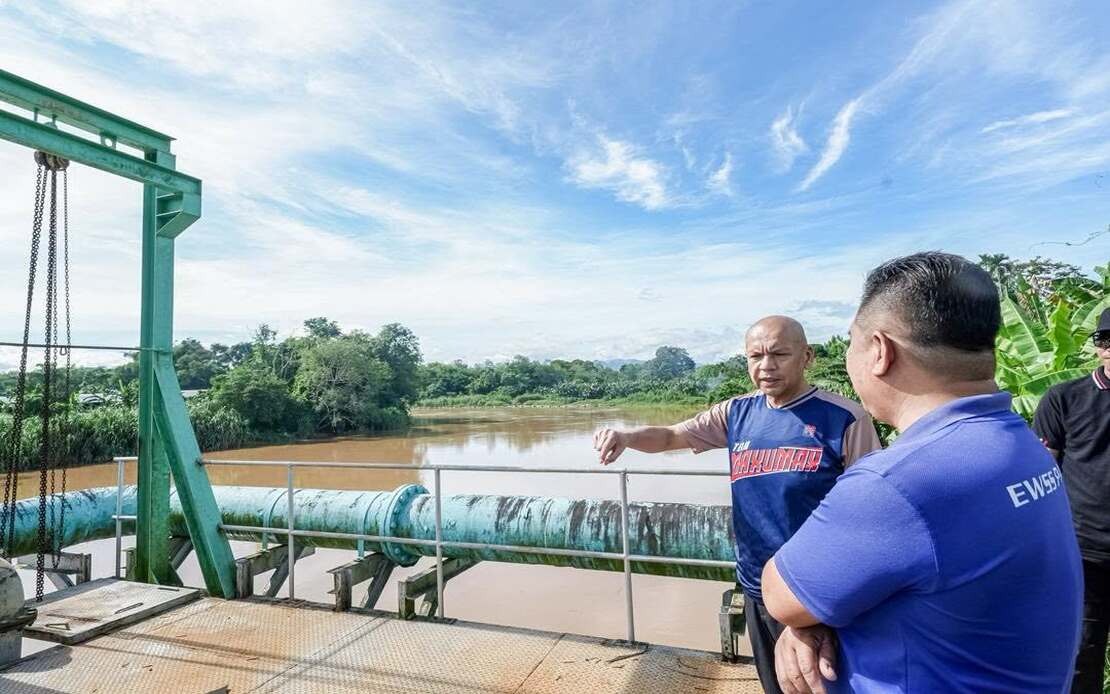
Domestic Trade and Cost of Living Minister Datuk Armizan Mohd Ali conducted a site inspection in Papar on June 19 to assess the progress of multiple water supply stabilisation initiatives designed to tackle persistent supply challenges in the district. The visit followed a June 15 coordination meeting focused on examining implementation timelines and identifying bottlenecks that could delay resolution of water availability issues affecting residents across the region.
Two major infrastructure projects are currently in progress to expand and modernise Papar's water treatment capacity. The Kogopon Water Treatment Plant is undergoing an upgrade to double its daily processing capability from 40 million litres per day to 80 million litres per day, representing a substantial expansion in the district's capacity to serve growing demand. Simultaneously, work continues on the Kampung Kabang intake facility to improve the source infrastructure feeding the broader distribution network. These complementary projects address both the supply volume and source reliability dimensions of water security in the area.
The timing of Armizan's inspection proved particularly relevant given recent operational disruptions at two critical facilities. The EWSS Plant and the JETAMA Limbahau Plant experienced forced shutdowns during the previous week due to elevated turbidity levels in raw water supplies. These temporary closures highlighted vulnerabilities in the system's resilience when water quality deteriorates, forcing plants offline until inlet water conditions return to treatable standards. The turbidity problems, measured in nephelometric turbidity units (NTU), prevented normal treatment processes and forced operational suspensions until raw water quality stabilised sufficiently for safe treatment.
Armizan's direct observation of conditions at both affected plants served multiple purposes within his oversight responsibilities. Field-level monitoring provides decision-makers with unfiltered intelligence about operational challenges that purely administrative reporting might obscure or downplay. Understanding the precise technical constraints facing treatment facilities—such as the NTU threshold conditions determining operational viability—informs more targeted interventions than generic capacity increases alone could achieve. The minister emphasised that on-the-ground assessment proved essential for grasping the genuine scope of difficulties and for calibrating response measures appropriately.
Water supply challenges in Papar reflect broader infrastructural pressures emerging across Malaysian districts as populations grow and consumption patterns intensify. The district faces perpetually rising demand for reliable domestic water access, straining systems designed for earlier population levels and usage patterns. Seasonal fluctuations in raw water availability compound these pressures, particularly during dry periods when intake sources become depleted and turbidity spikes from reduced flow volumes. The combination of growing consumption and climatic variability necessitates the kinds of capacity expansion and intake improvements currently underway.
The raw water turbidity incidents that triggered recent plant closures underscore the fragility of treatment chains dependent on consistent input quality. Elevated NTU values can overwhelm conventional treatment processes, forcing plants to suspend operations rather than risk producing sub-standard water or equipment damage. This vulnerability particularly affects plants relying on surface water sources prone to sediment mobilisation during weather events or upstream disturbances. Infrastructure improvements like the Kampung Kabang intake upgrade likely include measures to protect against such variability through better source protection or pre-treatment settling mechanisms.
For Papar's residents, the intersection of rising supply requirements and operational disruptions has created genuine hardship. Supply interruptions from treatment plant closures represent more than minor inconveniences—they disrupt household routines, compromise hygiene and sanitation, and create disproportionate impacts for vulnerable populations lacking storage capacity. Businesses relying on consistent water availability face operational constraints, and the cumulative effect of repeated disruptions erodes public confidence in utility reliability.
Armizan's role as Papar's Member of Parliament adds political weight to his ministerial oversight. His direct involvement signals governmental commitment to resolving local issues rather than relegating them to routine bureaucratic processing. This combination of ministerial authority and constituency representation potentially accelerates decision-making and resource allocation, though sustained progress ultimately depends on execution by implementing agencies and timely project completion.
The dual-track approach of expanding treatment capacity while improving intake infrastructure represents a logical sequencing of interventions. The Kogopon upgrade directly addresses bottlenecks in processing volume, while the Kampung Kabang work tackles source-level vulnerabilities. When completed, these projects should provide substantially greater resilience against the demand spikes and quality fluctuations currently forcing operational compromises. However, project timelines remain critical—delays in either initiative will defer relief for residents and defer return to normal operations for affected treatment plants.
For Malaysian water utilities more broadly, the Papar situation exemplifies infrastructure challenges requiring sustained capital investment and operational refinement. Districts throughout the nation face comparable pressures from population growth, climate variability, and aging systems requiring augmentation. Success in Papar provides a model for other regions confronting similar circumstances, demonstrating how targeted capacity expansion combined with source-level improvements can address multiple dimensions of supply reliability simultaneously.