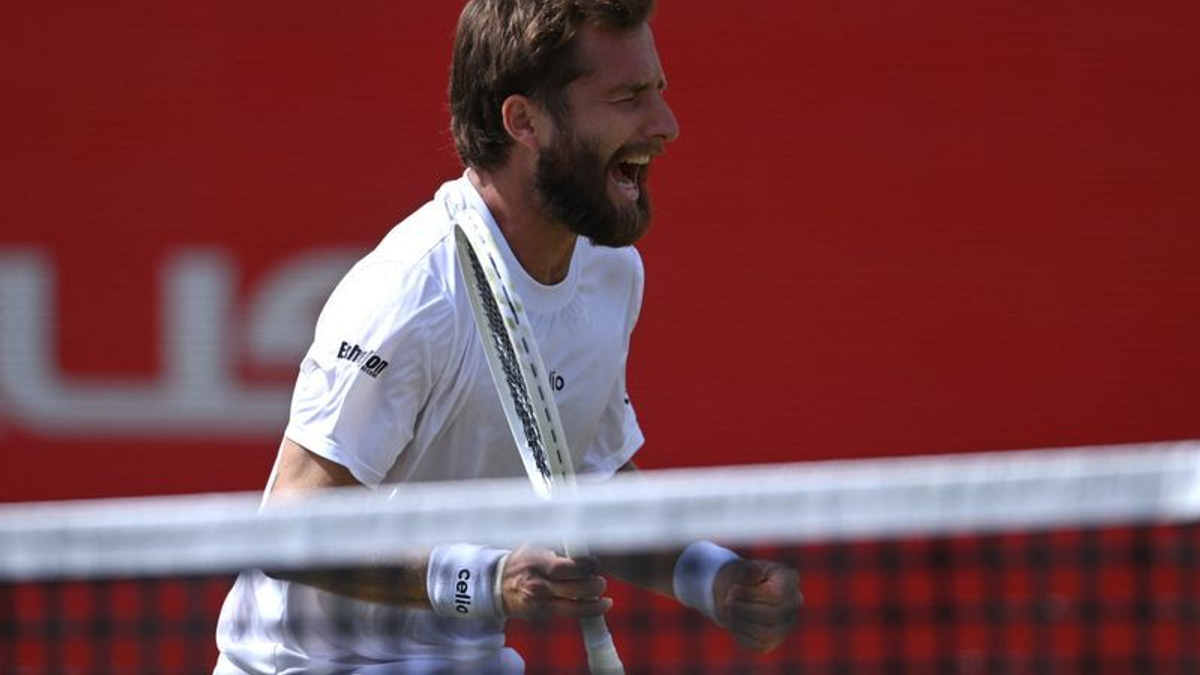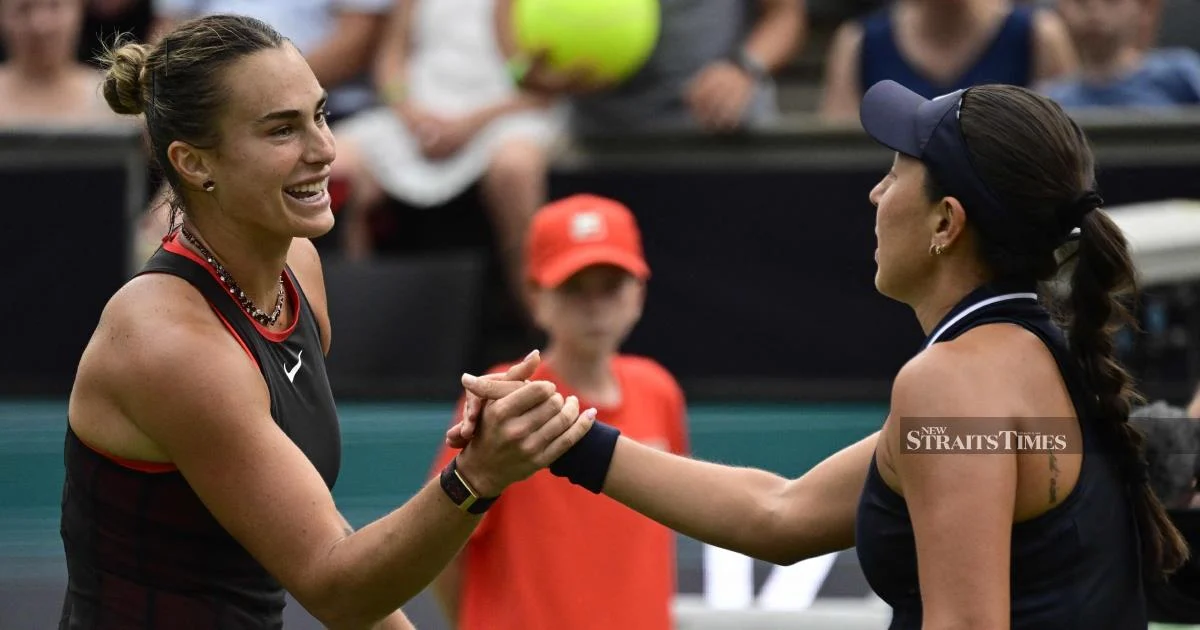
Jessica Pegula has booked her spot in the Berlin WTA grass-court final after a commanding performance against world number one Aryna Sabalenka, claiming a 6-2, 6-7 (4-7), 6-0 victory in their semi-final clash. The American's progression marks her second appearance in the championship match of this prestigious tournament, positioning her as a legitimate contender for the title.
The encounter unfolded as a tale of two distinct halves, with Pegula establishing early dominance before Sabalenka mounted a stern resistance in the second set. In the opening frame, the American's aggressive baseline game and precise serving proved too much for the top-ranked player to handle, and she raced to a commanding 6-2 advantage. This opening statement suggested that Pegula might cruise through to victory with relative ease, setting the stage for what appeared to be a straightforward progression.
However, Sabalenka demonstrated precisely why she holds the world number one ranking by dramatically elevating her performance in the second set. The Belarusian player tightened her groundstrokes and began to assert her considerable power and court dominance, forcing Pegula to work considerably harder to maintain her momentum. The set developed into a closely contested affair that would require a tiebreaker to determine the victor, reflecting both players' refusal to surrender the advantage easily.
The tiebreak itself became a turning point in the match's psychological narrative. Pegula managed to edge through the decisive moments, winning 7-4 in the tiebreaker to take the second set and effectively put the match beyond Sabalenka's reach. While the tiebreak was relatively tight, Pegula's superior execution at crucial junctures demonstrated her ability to perform under pressure on grass, a surface where precision and quick decision-making prove paramount.
Once Pegula secured the second set advantage, Sabalenka's resistance evaporated entirely. The third set became a procession as the American showcased why she has developed into one of the most formidable players on tour, delivering a clinical 6-0 whitewash that left the world number one unable to find answers. This dominant final set suggested that Pegula had perhaps been executing a calculated game plan all along, taking risks in the opening set before weathering Sabalenka's comeback attempt.
The significance of this victory extends beyond the immediate tournament context. Pegula's success against the world's top-ranked player on grass demonstrates her evolution as a competitor across different surfaces. Grass-court tennis demands a distinct skill set, particularly in serve-and-volley tactics and reactive speed, qualities that Pegula has clearly refined to devastating effect. Her ability to neutralise Sabalenka's powerful groundstrokes while maintaining her own offensive options illustrated tactical sophistication that should concern her remaining competitors in Berlin.
This triumph also carries implications for the broader WTA landscape. Sabalenka's loss reinforces that even the sport's dominant figure remains vulnerable on surfaces outside her comfort zone, particularly when facing opponents who understand how to exploit the specific demands of grass-court play. The Belarusian has built her ranking dominance primarily on hard courts, and her inability to adapt effectively here suggests that tournament draws could still produce unexpected upsets regardless of seeding.
For Pegula, the path to the final represents progress on a surface where American players have traditionally found success. The United States has a storied tradition of excellence in grass-court tennis, and Pegula's advancement continues that legacy. Her previous appearance in a Berlin final indicates she understands the nuances required to succeed in this environment, and the confidence gained from defeating the world number one should provide substantial momentum heading into the championship match.
The semi-final result also underscores the unpredictable nature of grass-court tournaments generally. The surface rewards players with superior net skills, excellent serve execution, and the tactical intelligence to construct points efficiently. Pegula's performance demonstrated all three elements in abundance, particularly her willingness to come forward and finish points at the net rather than engaging in extended baseline exchanges where Sabalenka's raw power might prevail.
As Pegula prepares for the final, she will have benefited significantly from what amounts to a complete victory across three sets. Rather than emerging exhausted from a gruelling encounter, she will approach the championship match with confidence boosted by her display of dominance in the third set. This psychological advantage could prove decisive if her opponent in the final emerges from their own semi-final encounter fatigued or mentally diminished.
The Berlin tournament continues to deliver compelling tennis at the highest level, with Pegula's advancement ensuring that the final will feature a player in peak form and clear confidence in her grass-court abilities. Her previous experience in a Berlin final means she understands what victory requires, combining the aggressive baseline play that characterised her opening set performance with the mental fortitude demonstrated during the tight second-set tiebreaker.